





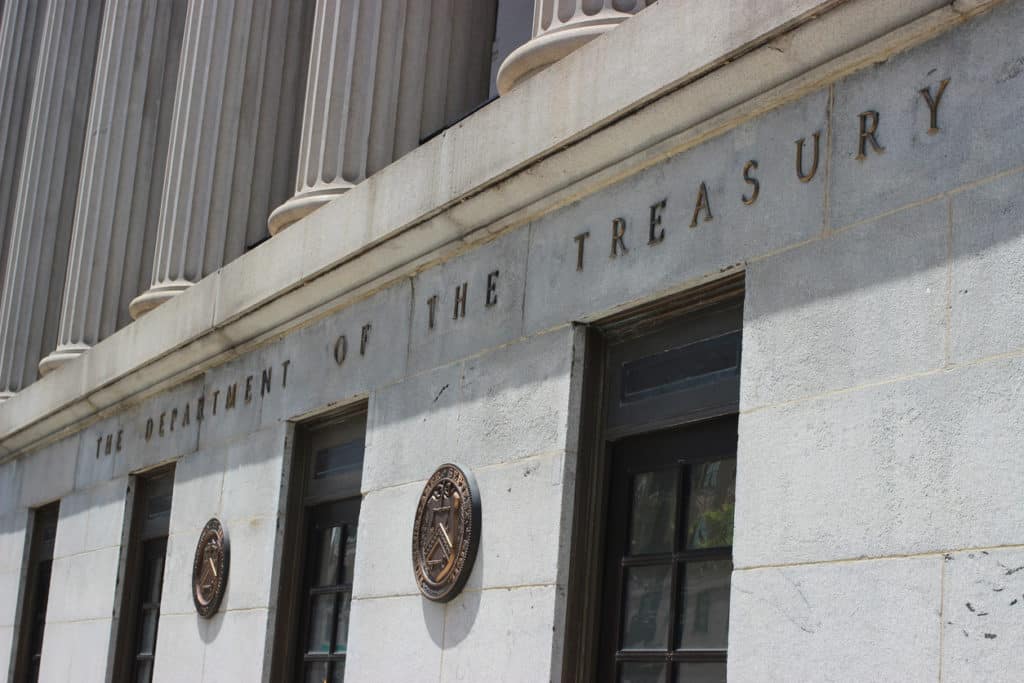
Clear rules will ensure the U.S. remains an attractive place to invest
MFA urged the Department of the Treasury and the Internal Revenue Service (IRS) to preserve the longstanding tax treatment that allows certain foreign investment funds to make passive investments in U.S. credit markets. The letter, MFA’s second on proposed regulations under Section 892 of the Internal Revenue Code, recommends clear rules that distinguish ordinary investment activity from commercial banking.
“Foreign investment in the U.S. supports American businesses, innovation, manufacturing, and jobs,” said Bryan Corbett, MFA President and CEO. “Rules that create uncertainty will drive capital elsewhere. Treasury and the IRS should preserve the distinction between passive investment and commercial lending to keep capital flowing to American businesses and maintain U.S. competitiveness.”
Section 892 generally exempts passive investment income earned by foreign governments from U.S. tax. The proposed facts-and-circumstances test is vague and could reclassify routine loans and debt investments as commercial activity, making them ineligible for the Section 892 exemption. This uncertainty would discourage certain foreign investors from providing capital to U.S. funds, businesses, and credit markets.
MFA recommends that Treasury and the IRS replace the proposed facts-and-circumstances test with a clear standard that evaluates whether:
- The investor receives a return on capital or earns payment for providing services.
- The lender treats the borrower as a customer and provides banking services, rather than simply investing capital.
MFA also urged Treasury and the IRS to protect existing investments by ensuring that routine loan modifications and draws under existing credit facilities do not trigger the new rules.
Read the full letter here.
Source: MFA

NEWSLETTER SIGN UP
And receive exclusive articles on securities markets

🏆 The 2026 Global Markets Choice Awards are here! 🌍 Nominations are officially OPEN for the celebration of excellence in global capital markets trading & technology. Nominate below:
https://www.jotform.com/form/260086385121150

Delaware Life Insurance Company is becoming the first insurance carrier to offer an index that contains cryptocurrency, adding the BlackRock U.S. Equity Bitcoin Balanced Risk 12% Index to its fixed index annuity (FIA) portfolio.
As the digital assets industry pushes toward
Franklin Templeton is expanding its tokenized fund suite, signaling growing institutional demand for blockchain-based fund infrastructure and regulated investment products moving onchain. Read the full article below:
$50 billion in active ETF inflows helped fuel a record year for @BlackRock 's iShares business, as investors continue to lean into active strategies.
Related articles
-

Weimin Zhu, Head Fixed Income Trading (Americas) at GIC, discusses the desk and trends shaping the market.
-

The firm has launched a local-to-local trading and post-trade workflow on its ATS in Saudi Arabia.
-

Jean-Michel Manry, head of fixed income trading at Vontobel‘s investments arm, discusses his desk.
-

This is the first exchange-traded future linked to a transparent leveraged loan benchmark.
-

Clearing members and their clients realized margin offsets reaching 60% of the total FX initial margin.