



After cardboard prices crashed more than 70% three times in 20 years, a Mecha-backed recycler uses a new Kalshi market, structured and priced by Susquehanna Predictions, to protect against the next drop
Tomorrow Recycling, the AI- and robotics-driven recycling company backed by Mecha, Kalshi, the CFTC-regulated derivatives exchange, and Susquehanna Predictions, a leading market maker and liquidity provider, announced the first hedge on cardboard prices by a recycler on a regulated exchange. Tomorrow Recycling hedged its cardboard price exposure using Kalshi event contracts tied to the U.S. Bureau of Labor Statistics price index for cardboard, with Susquehanna Predictions structuring and pricing the transaction and providing the institutional-scale liquidity necessary for its execution.
The most recycled material in America has one of its most volatile prices
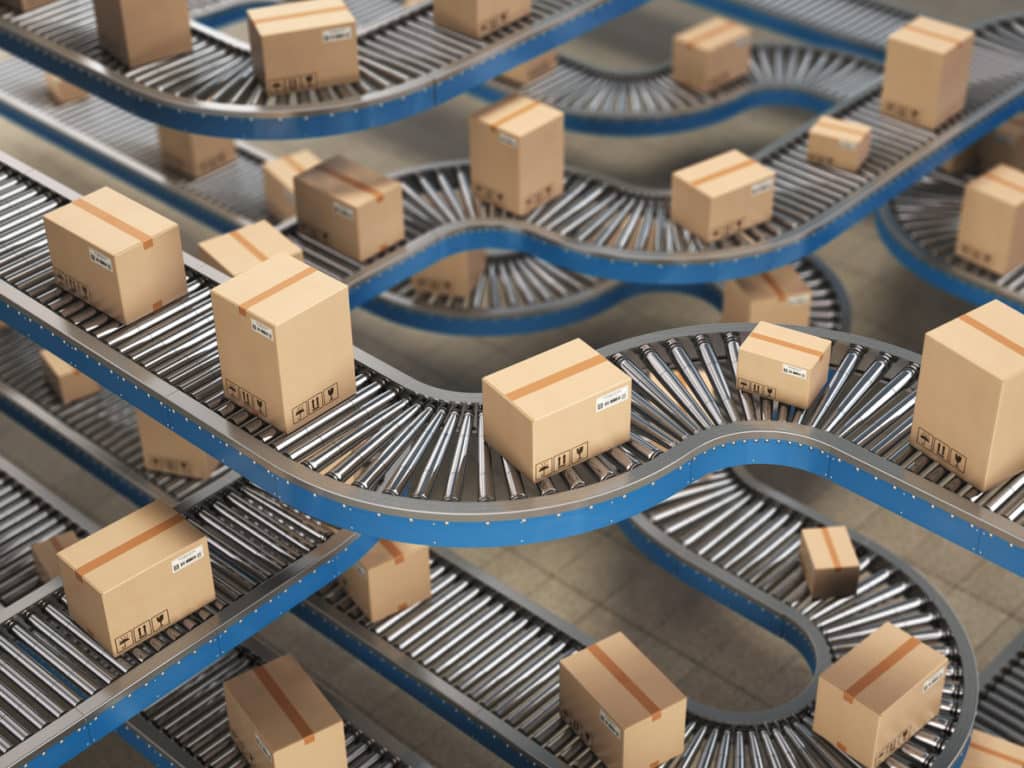
Cardboard is the backbone of American recycling. Baled cardboard, which the industry calls OCC (old corrugated containers), is one of the highest-volume commodities that recyclers produce and sell. It goes back to paper mills to become the boxes that carry almost everything Americans buy.
Its price is anything but steady. The BLS cardboard index roughly tripled from late 2022 to mid-2024, then fell by about half by late 2025. Over the past 20 years it has crashed by more than 70% three times: in 2008, 2019 and 2022.
For a recycler, those swings go straight to the bottom line. When cardboard prices fall, revenue falls with them, while the cost of collecting, sorting and baling stays the same. In the worst downturns, some programs have sent recyclable material to landfill because it wasn’t worth selling and some programs have even gone out of business because of these uncontrollable price swings. This first-of-its-kind transaction gives the industry a new tool to manage that risk.
A market that didn’t exist, built for a risk that couldn’t be hedged
Unlike corn, copper or oil, cardboard has never had a widely traded hedging market. Recyclers have had little choice but to absorb the swings, one reason the industry runs on thin margins.
Kalshi changed that by listing monthly contracts that settle to the BLS cardboard price index.
Tomorrow Recycling placed the first trade, which Susquehanna Predictions helped design and price, buying protection that pays out if cardboard prices fall below [strike level] by [contract month]. The market trades on an open, public order book. Participants set the prices, and Kalshi does not take either side of any trade.
The same market works in reverse for buyers. Paper mills and packaging producers face the opposite risk, a price spike, so they can use it to lock in their costs. With both ends of the supply chain trading, everyone can plan ahead.
Tomorrow Recycling operates materials recovery facilities that sort curbside and commercial recycling and sell the recovered material to paper mills and other buyers. It also provides product destruction and construction and demolition waste diversion services. The company is backed by Mecha, an investment firm founded by early Uber executives and technology investors. Mecha acquires and scales businesses in fragmented, essential industries by bringing in AI, robotics and automation. Tomorrow Recycling’s goal is to make recycling a more stable, predictable business. Its robotics and AI make operations more efficient, and protecting the price of what it sells is the financial side of the same goal.
Hundreds of recycling facilities across the U.S. share the same exposure. So do haulers, and the cities whose recycling contracts depend on commodity prices.
Brent Hildebrand, CEO, Tomorrow Recycling, said, “Our industry has never had a tool like this. We’ve been at the forefront of bringing robotics and AI to recycling, and now we’re proud to bring the financial tools to match, not just for us, but as a path for our peers across the industry.”
Josh Branham, CFO, Tomorrow Recycling, said, “Commodity prices, especially cardboard, are one of the biggest factors impacting a recycler’s financial results, and they’re largely outside our control. Historically, the few ways to manage that risk have been available mainly to the largest companies in the industry. Being able to hedge on a regulated exchange, tied to a public government index, gives us a much more practical way to manage that exposure and bring more predictability to our business. Agriculture and energy have been doing this for decades, and there’s no reason recycling shouldn’t have access to the same tools.”
“Cardboard is a strong example of a commodity subject to meaningful price volatility, yet with limited tools available to manage that exposure,” said Nick Volbi, Head of Institutional at Susquehanna Predictions.
“For industries like this, prediction markets provide a new avenue to address risks that have historically been underserved by traditional financial markets, and we’re pleased to support Tomorrow Recycling by providing our expertise in structuring, pricing and liquidity provision.”
Nicolas Hull, Director of Business Development at Kalshi, said, “Every business has a price it can’t control, and most have never had a way to hedge it. Cardboard already has a government-published index that tracks domestic price changes for recycled cardboard, and its price risk runs through the entire supply chain, from recyclers to paper mills. What it hasn’t had, until now, is a market. First tungsten, now cardboard. If your business depends on a number you can’t control, we want to build the market for it.”
Source: Kalshi

NEWSLETTER SIGN UP
And receive exclusive articles on securities markets

🏆 The 2026 Global Markets Choice Awards are here! 🌍 Nominations are officially OPEN for the celebration of excellence in global capital markets trading & technology. Nominate below:
https://www.jotform.com/form/260086385121150

Delaware Life Insurance Company is becoming the first insurance carrier to offer an index that contains cryptocurrency, adding the BlackRock U.S. Equity Bitcoin Balanced Risk 12% Index to its fixed index annuity (FIA) portfolio.
As the digital assets industry pushes toward
Franklin Templeton is expanding its tokenized fund suite, signaling growing institutional demand for blockchain-based fund infrastructure and regulated investment products moving onchain. Read the full article below:
$50 billion in active ETF inflows helped fuel a record year for @BlackRock 's iShares business, as investors continue to lean into active strategies.
Related articles
-

Annualized trading volume exceeds $1 trillion across prediction markets, commodities, crypto & perpetuals.
-

Critical mineral supply is at the forefront of every major economy.
-

The group also reported record average daily volume for Q3.
-

Commodity derivatives are the prediction market's fastest-growing product.
-

EEX will transition its dairy indices underpinning existing futures to CME before the end of 2027.