





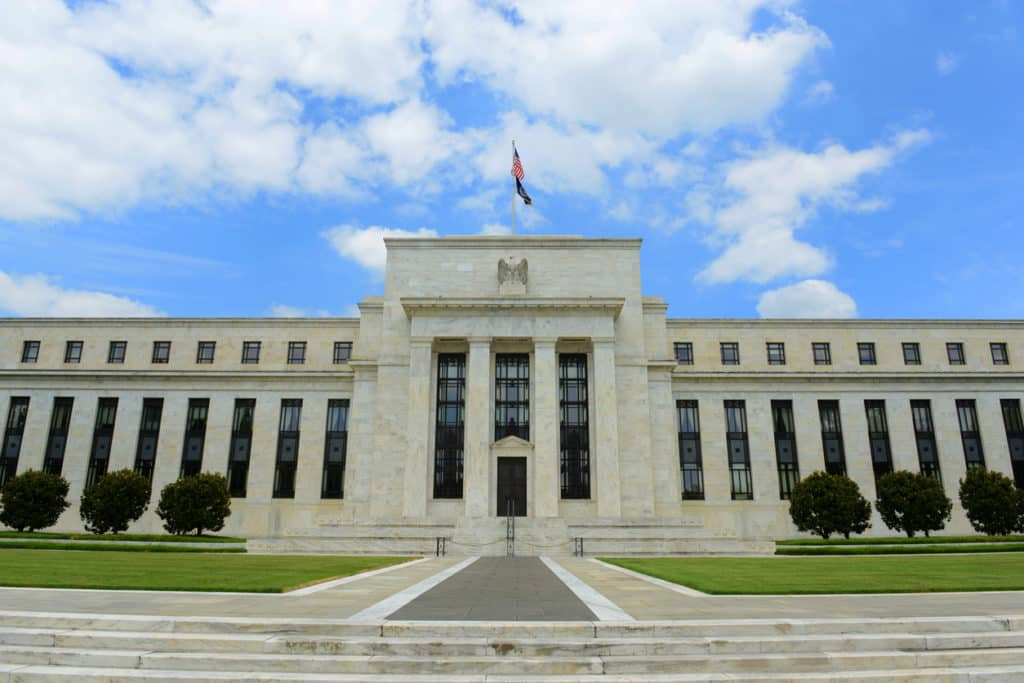
The results of the Federal Reserve Board’s annual bank stress test confirmed that large banks are well positioned to weather a severe recession and able to continue to lend to households and businesses. Despite absorbing more than $708 billion in total loan losses under this year’s hypothetical scenario, capital declined only 1.6 percentage points in aggregate, staying above minimum capital requirements.
“The results underscore the strength of the banking system,” Vice Chair for Supervision Michelle W. Bowman said. “As we work to increase the transparency and accountability of the stress test, public feedback will help us continue to improve and instill greater confidence in the stress test and its results.”
As the Board previously announced, the results will not impact large bank capital requirements, which have been published today. The current capital requirements will stay in place until 2027, when the stress test will be run with loss-estimating models that take public feedback into consideration.
All 32 banks tested remained above their minimum common equity tier 1 capital requirements during this year’s hypothetical recession scenario, which was similar in severity to the prior test. The hypothetical scenario this year included a severe global recession with a 39 percent decline in commercial real estate prices and a 30 percent decline in house prices. The unemployment rate also increased to a peak of 10 percent, and economic output declined commensurately.
Three main factors influenced the results of this year’s test, with two leading to a larger decline in the aggregate capital ratio than last year, and one more than offsetting this decline:
- Projected capital decreased from higher loan losses due to increased loan balances and the increased severity of certain scenario variables;
- Projected capital decreased from lower projected unrealized gains in bank securities due to smaller hypothetical declines in interest rates during the scenario; and
- Projected capital increased from higher interest income due to recent bank financial performance and smaller hypothetical declines of interest rates during the scenario.
The total projected losses include roughly $200 billion in credit card losses, $160 billion in losses from commercial and industrial loans, and $75 billion in losses from commercial real estate.
Source: Federal Reserve

NEWSLETTER SIGN UP
And receive exclusive articles on securities markets

🏆 The 2026 Global Markets Choice Awards are here! 🌍 Nominations are officially OPEN for the celebration of excellence in global capital markets trading & technology. Nominate below:
https://www.jotform.com/form/260086385121150

Delaware Life Insurance Company is becoming the first insurance carrier to offer an index that contains cryptocurrency, adding the BlackRock U.S. Equity Bitcoin Balanced Risk 12% Index to its fixed index annuity (FIA) portfolio.
As the digital assets industry pushes toward
Franklin Templeton is expanding its tokenized fund suite, signaling growing institutional demand for blockchain-based fund infrastructure and regulated investment products moving onchain. Read the full article below:
$50 billion in active ETF inflows helped fuel a record year for @BlackRock 's iShares business, as investors continue to lean into active strategies.
Related articles
-

Among survey respondents, 74% recognise at least one stablecoin use case.
-

Modern market infrastructure can bring established institutional products together with real-time settlement.
-

Banks can easily manage smart contracts on both their own ledgers for tokenized deposits and the Swift ledger.
-

Pairing Coinbase with Citi’s regulated banking rails gives a direct path between tradFi & digital assets.
-

Financial institutions of all sizes will be to clear and settle tokenised deposit transactions.