





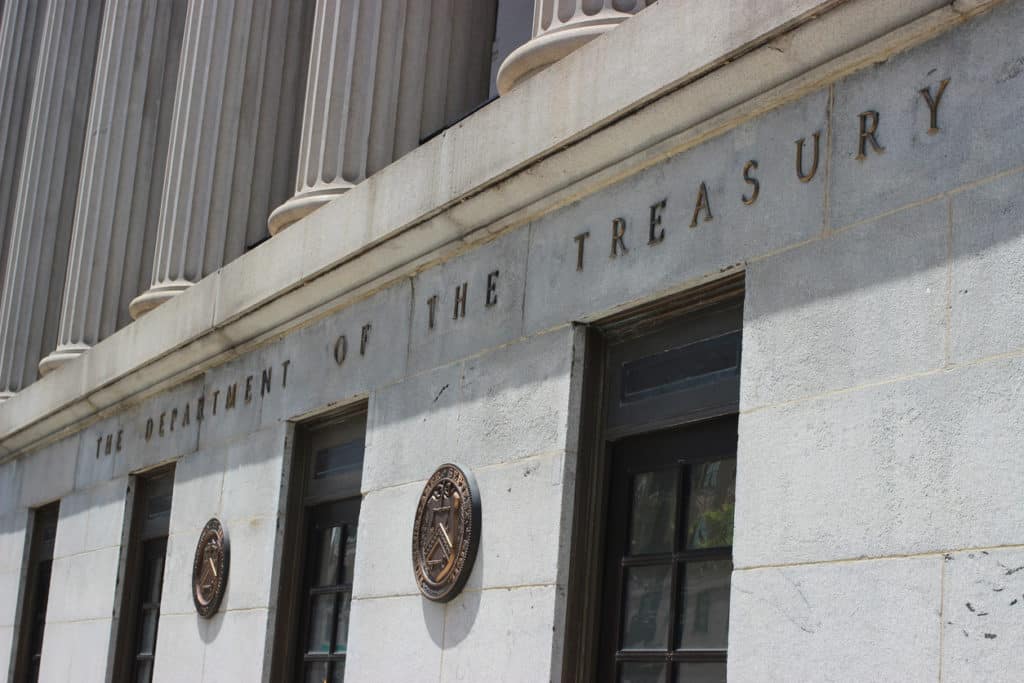
SIFMA, BNY, Broadridge, and The Depository Trust & Clearing Corporation (DTCC), in collaboration with The ValueExchange, released key findings from the “U.S. Treasury Central Clearing Pulse Survey,” which draws upon key insights and feedback from 340 experts worldwide. The survey, conducted in June 2026 by The ValueExchange, was designed to provide insight into industry preparedness for the December 31, 2026 cash implementation deadline and the June 30, 2027 deadline for eligible Treasury repo transactions.
The survey suggests the industry is positioned well for the cash implementation but there remains considerable work to do as the industry prepares for the repo deadline. Survey respondents include buy-side (45%) and sell-side (46%) firms, custodians and CCAs in the U.S., Europe, and Asia. A similar survey was conducted in 2025.
The main findings capture an industry moving firmly from preparation into execution, while also highlighting where readiness, cost and implementation challenges remain:
- 86% of respondents are at least somewhat confident of meeting the overall mandate.
- Within that 86%, 44% of firms are “very confident” of meeting the deadline, with 13% “not confident” for cash and 16% for repo.
- 87% of buy-side firms and 84% of sell-side firms are in execution mode for repo trades.
- More than half of respondents now have funded repo-clearing projects underway (up from 38% in 2025).
- Of those programs that are delayed, 88% cite legal/contract negotiation as the cause, and 44% now call contract negotiation “very challenging.”
- 45% of firms say they still need more regulatory clarity to progress their readiness.
- 67% of respondents are seeing delays caused by technology integration issues.
- 50% expect ongoing costs to rise.
“The survey shows broad industry readiness for the cash go-live date in December, while also demonstrating that significant hurdles remain for us to navigate between now and the June repo deadline,” said Steve Byron, Managing Director and Head of Technology, Operations, and Business Continuity at SIFMA. “As firms move into the final stretch before the cash implementation deadline, the operational and documentation work underway across the industry is substantial, and getting it right matters given the central role U.S. Treasuries play in the global financial system. SIFMA remains committed to supporting our members through this transition, including through the standardized documentation and implementation guides we’ve made available to market participants. With the December 31 deadline now just months away, we look forward to continuing to work alongside the industry to ensure a smooth and successful transition in this critical market.”
U.S. Treasury Clearing is still a North American topic, with lower levels of preparations overseas, according to survey responses:
- While North America respondents have moved furthest into delivery, 53% of respondents from Europe remain concentrated in scoping and 20% are engaged in no activity.
- In Asia-Pacific, 51% have not undertaken any activity, and 25% are still scoping.
The costs of mandatory clearing are still being estimated:
Ongoing costs are substantially less understood than implementation spend. Firms are still working to fully understand the economics of the operating model they are building.
- 57% of respondents still have not quantified the ongoing cost impact of mandatory clearing.
- 24% have identified an expected cost increase, while 19% expect no change or a reduction in costs.
- Margin costs are expected to rise 37% on average.
- 64% expect their one-off implementation costs to remain below $5 million.
- Among firms planning to use FICC’s Collateral in Lieu (CIL), 96% expect it to make central clearing cheaper. 71% of buy side firms plan to use CIL before the repo clearing deadline.
“The industry has made real progress toward central clearing, with firms gaining a clearer understanding of what compliance requires and how to compete and grow in a more complex Treasury market structure,” said Nate Wuerffel, Head of Market Structure and Head of Product for the Global Collateral Platform at BNY. “As the deadlines approach, firms need to stay focused and keep implementation moving. Clearing readiness is not just about meeting the SEC mandate – it is essential to maintaining access to the U.S. Treasury market, the deepest and most liquid government bond market in the world.”
Model choice is about operations and cost:
The main driver of clearing model choice is operational capability for a third of respondents, while margin requirements have fallen sharply in importance and cost considerations have increased.
- 67% of buy side firms plan to use FICC’s Sponsored models, but the majority are using multiple models.
- 74% of sell side firms will use direct clearing.
“FICC has remained committed to helping firms prepare for the impacts of the U.S. Treasury clearing mandate for several years, providing new access models, insightful calculator tools, and on-going education to promote readiness. We are pleased to see that many firms are progressing towards readiness but recognize that more work remains, especially as it relates to the repo implementation,” said Laura Klimpel, Managing Director, Head of DTCC’s Fixed Income and Financing Solutions. “With much of the industry coalescing around FICC’s offerings in the lead-up to the cash and repo deadlines, our focus remains on working closely with our clients to address open items and to ensure a smooth transition to central clearing.”
Clarity remains a key barrier to readiness:
The findings also highlight the need for further regulatory clarity and system changes to support mandatory clearing:
- 72% of firms need more clarity on key rules to be ready.
- Firms finding regulatory clarity very challenging have risen from 29% to 45%.
- Technology builds are causing delays for 74% of sell-side firms. 88% of delayed buy-side programs cite legal and account documentation, making this their dominant constraint.
Deadlines approach:
Q4 is a critical window for project delivery.
- Up to 59% of project activity will complete after the cash deadline.
- 51% of firms have no formal contingency plan for missed readiness.
“The survey shows the industry is moving in the right direction, but the next phase will be defined by disciplined execution,” said Ami Vora, Vice President, Product Management, Broadridge. “Organizations should prioritize technology readiness, operational resiliency, testing and clear fallback plans including stronger contingency planning. Taking these steps now will be critical to supporting a smooth transition to mandatory U.S. Treasury central clearing.”
Survey results are available at the following link: https://www.sifma.org/research/white-papers/us-treasury-central-clearing-pulse-survey
Source: SIFMA

NEWSLETTER SIGN UP
And receive exclusive articles on securities markets

🏆 The 2026 Global Markets Choice Awards are here! 🌍 Nominations are officially OPEN for the celebration of excellence in global capital markets trading & technology. Nominate below:
https://www.jotform.com/form/260086385121150

Delaware Life Insurance Company is becoming the first insurance carrier to offer an index that contains cryptocurrency, adding the BlackRock U.S. Equity Bitcoin Balanced Risk 12% Index to its fixed index annuity (FIA) portfolio.
As the digital assets industry pushes toward
Franklin Templeton is expanding its tokenized fund suite, signaling growing institutional demand for blockchain-based fund infrastructure and regulated investment products moving onchain. Read the full article below:
$50 billion in active ETF inflows helped fuel a record year for @BlackRock 's iShares business, as investors continue to lean into active strategies.
Related articles
-

A DCO is a regulated clearinghouse for derivatives.
-

SEC's rule for central clearing of eligible Treasury cash transactions goes live on 31 December.
-

The regulator is reviewing if tokenised collateral could be used safely by EU CCPs.
-

Financial institutions and market infrastructures are moving to always-on operations.
-
Central clearing has been introduced to a securities financing transactions market that operated bilaterally.