





Private Market Evolution Attracts New Participants, Challenges Asset Servicers
01.14.2026
The evolution of private markets is a multi-faceted dynamic that goes beyond just expanding the size and scope of the asset class. After many years of being the exclusive purview of private equity firms, today’s private markets feature blurring lines between managers and investors, the emergence of hybrid investment strategies, and new wealth and retail participants.
“It’s a totally different market space than what it was before,” said Montserrat Serra-Janer, Global Head of Private Market Sales, PFS-SS (Prime Finance Sales and Securities Services) at JP Morgan. “Everybody knows there’s alpha involved in these names, so people want to hear more and they want to learn more.”
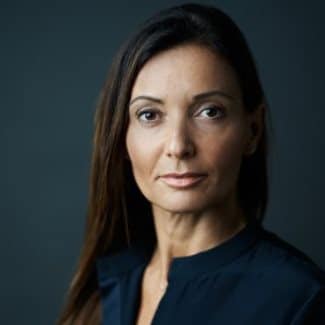
Montserrat Serra-Janer
Serra-Janer discussed trends, opportunities, challenges and the outlook for private markets with Larry Wise, Head of Fund Financing within Global Structuring at J.P. Morgan. A transcript of the conversation was provided to Markets Media.
Wise level-set by defining a private asset as something that doesn’t trade readily on an exchange, and for which information is not easily accessible to the entire market. Whereas real estate can be considered the original private asset, the asset class now spans multiple markets.
“Private credit, private equity, venture capital, infrastructure – all those things are private assets,” Wise said. “One of the things that’s really been interesting the past few years is the explosion in people actually trading private assets, and banks originating private assets. That’s changed the definition, because private assets used to be things that never traded and things that banks were not involved in.”
LP Empowerment
Serra-Janer noted that when she started in the private markets business eight years ago, the predominant strategy was private equity firms, as general partners (GPs), raising capital and actively managing PE funds on behalf of buy-side investment managers, who were passive limited partners (LPs). “It was really the GPs calling the shots,” she said.
LPs are much more empowered today. “The insurance companies and the traditional asset managers have become very smart in looking for alpha, and they’re demanding more” opportunities to generate higher investment returns, Serra-Janer said.
In addition to alpha, buyers and sellers of private assets are also demanding liquidity in a market that historically has been liquidity-challenged. The path to liquidity is through secondaries, where investor stakes, once tied to lockup terms set by GPs, are more frequently changing hands in a rapidly developing marketplace.

Larry Wise
“LPs are coming in and saying, ‘Where’s my liquidity?’” Wise said. “We have found some ways to help with that, together in pretty good size…our private equity clients have been coming up with increasingly creative means to get money back to LPs.”
To emphasize the liquidity point, Wise recalled a person on the LP side who once wore a t-shirt that said ‘DPI is the New IRR’, meaning that cash returned to investors in the form of distributions to paid-in capital is as important as unrealized paper gains.
JP Morgan provides a range of services for the full life cycle of private assets, including financing, fund administration, custody, block trading, intermediation of secondaries, and regulatory compliance; the bank’s Fusion platform collates data from multiple sources and presents it in standardized views for GPs and LPs. “What we are really doing is helping investors run their businesses,” Wise said.
Those investors are increasingly holding both liquid and illiquid assets, for which they need the same quality of data and asset servicing capabilities. That convergence tracks the evolution on the market participant side: “We can no longer call a client a sponsor or a private equity, or this and that,” Serra-Janer said. “They’re just private-market players, because everything has become so blurry and so hybrid.”
There’s also the wealth and retail angle to private markets, highlighted by the August 2025 executive order to make private assets available in 401(k) plans. Wise has observed more retail fund formation in private markets, which he said represents a helpful democratization as long as retail has safe ways to invest in the asset class.
50/30/20?
In its 2026 Private Markets Outlook, BlackRock noted that private markets are becoming more transparent, more holistic, and more accessible; the investment giant even said the rise of the asset class is shifting portfolios away from the traditional 60% stocks / 40% bonds allocation to 50% stocks, 30% bonds, and 20% private assets.
BlackRock noted the number of public companies in the US has decreased from about 8,000 in the mid-1990s, to less than 4,500 today. “As the world’s capital seeks resilience in a changing global economy, private markets hold the key to many pressing challenges and opportunities,” the report stated. “In 2026, they have the potential to redefine the ways that states and corporations build infrastructure, how businesses finance their growth and how investors build diversified portfolios.”
While complexity and opacity remain challenges, “as investor familiarity and data transparency improve, the trend of more varieties of investors adding to their private markets allocations is one worth watching.”

NEWSLETTER SIGN UP
And receive exclusive articles on securities markets

It's been a month since we had our Women In Finance Awards in New York City at the Plaza! Take a look back tab some moments, and nominate for our upcoming awards in Mexico City and Singapore here: https://www.marketsmedia.com/category/events/
4
Citadel Securities told the SEC that trading tokenized equities should remain under existing market rules, a position that drew responses from various crypto industry groups. @ShannyBasar for @MarketsMedia:
SEC Commissioner Mark Uyeda argued that private assets belong in retirement plans, saying diversified alts can improve risk-adjusted returns and that the answer to optimal exposure “is not zero.” @ShannyBasar reporting for @MarketsMedia:
COO of the Year Award winner! 🏆
Discover how Jennifer Kaiser of Marex earned the 2025 Women in Finance COO of the Year recognition.
Related articles
-

The two firms aim to deliver investment solutions across retail, private banking & institutions.
-

Indosuez Corporate Advisory brings together more than 80 specialists.
-

The launch helps advance BNY’s ambitions to support onchain cash for institutions.
-
They are laying the foundation for regulated, interoperable digital money that moves across markets.
-

Interest is growing in new forms of digital money based on tokens transacted on public blockchains.