




The Long-Term Stock Exchange was founded in 2012 by Eric Ries and John Bautista, with the goal of creating a public market designed for trading the stocks of companies organized to sustain long-term thinking. The idea is to unite long-term companies and investors for mutual benefit, enabling businesses to innovate consistently and operate with stakeholder stewardship, rather than catering to short-term demands.
LTSE launched its exchange in 2020, and the exchange operator currently accounts for approximately 0.01% of total U.S. equities market volume, according to Cboe Global Markets data. 2020 was also the year Maliz Beams joined LTSE, after holding senior leadership positions at financial firms including Zurich Scudder Investments, TIAA-CREF, and Voya Financial.
Traders Magazine caught up with Beams, CEO and Chair of parent company LTSE Group and interim CEO of LTSE, to learn more about the exchange operator’s current initiatives and the vision for its future.
Big picture: more than a decade since LTSE was founded, how would you characterize the state of the company currently?

Maliz Beams, LTSE
LTSE is focused on execution and growth. The foundations are in place: an operating exchange, differentiated liquidity programs, and listing standards that let companies codify their commitment to long-term value creation. The task now is to earn a larger role in the market.
Our immediate priorities are to deepen member participation and differentiate the Exchange to drive greater liquidity and, ultimately, volume.
You spent about 30 years at large financial firms before joining LTSE. What led you to align yourself with a disruptive startup like LTSE?
My career has focused on leading global category leaders in financial services to record growth and profitability. That experience gave me a firsthand understanding of what companies, members, and trading firms need from capital markets, and the importance of building for the long term.
LTSE offered an opportunity to apply that experience to building an exchange that connects companies committed to long-term value creation with investors who share that focus. LTSE serves an important purpose and addresses a tremendous market need.
What have been major achievements or milestones in your tenure as LTSE CEO?
Since I joined LTSE in 2020, we have launched trading and attracted listed companies across the technology, consumer, and financial services sectors.
The results show measurable progress in long-term investor alignment. ThredUp reported 360% outperformance against its goal for attracting qualified long-term investor ownership after listing on LTSE. Its long-term investor quality also outperforms its public peers by 115%, as measured by LTSE’s Long-Term Score℠. Beyond investor alignment, a co-branded campaign identifying ThredUp as an LTSE-listed company exceeded its customer purchase target by 1,317% and achieved customer acquisition costs 93% below target.
Asana has also made significant progress, reporting 290% outperformance against its goal for attracting qualified long-term investor ownership. Its long-term investor quality increased 177% since listing, as measured by LTSE’s Long-Term Score℠.
LTSE also earned an endorsement from then-MFS President Carol Geremia, recognition from one of the world’s largest asset managers.
Can you describe your typical day-to-day as CEO?
Every day starts and ends with customers and how we can create differentiated value together. To that end, I work with the Exchange team on member participation, trading performance, technology to better support members, and operational readiness. Across LTSE Group, I talk with public company CEOs, board members, and long-term investors.
Those conversations shape LTSE’s priorities. What do customers need? How can we help members achieve better trading outcomes? The answers guide where we invest our time and resources to deliver lasting value.
LTSE has made waves by advocating for reduced earnings reporting frequency. Can that premise gain real traction in a fast-moving market?
Long-term value creation takes sustained investment in research and development, strong governance, and long-term strategy. Reporting requirements should give durable companies room to focus on that work while keeping investors informed.
That approach is gaining traction. In May, the SEC proposed allowing companies to choose semiannual reporting, following LTSE’s September 2025 petition. Companies would retain the option to report quarterly, and obligations to disclose specified material events would remain.
That is meaningful progress toward giving companies and investors greater flexibility in determining the reporting cadence that serves them without sacrificing transparency.
Traders need timely, reliable information. The question is whether every company should be required to prepare a full quarterly report regardless of its business or investors’ needs. A faster market does not shorten the time required to execute a long-term strategy. Reporting should reflect that reality while preserving transparency and accountability.
What are the practical challenges to scaling volume while staying true to long-term principles?
The challenge is turning member participation into sustained trading activity. Market quality matters. Incentives can encourage firms to provide and access liquidity, but dependable volume requires competitive quotes, meaningful size, and consistently available liquidity. LTSE’s programs are designed to encourage those conditions and support long-term participation.
That focus on durability extends to LTSE’s listings business. The listing standards codify companies’ commitments to long-term stakeholders, strategy, compensation, board oversight, and investor engagement. Those companies and their long-term investors need a liquid, efficient market. LTSE’s task is to support their long-term goals while giving trading firms a compelling economic reason to participate.
What have been 2026 highlights for LTSE?
The Liquidity Incentive Program (LIP) and Co-Lead Program have helped build momentum through LTSE revenue sharing and fee incentives tied to quoting criteria. Member participation has supported greater liquidity.
Displayed orders have increased 152% over the past six months, non-displayed orders are up 205% year over year, and sub-dollar share volume has increased 300% since LTSE launched its incentive program in April.
LTSE also strengthened the Exchange board with five new directors bringing experience across trading, regulation, and institutional investing. Beyond trading, the SEC’s optional semiannual reporting proposal marked important progress following LTSE’s petition.
What are your major initiatives currently, and into 2027?
The near-term priority is to contribute to market quality by deepening participation and bringing more firms onto the platform. Growth opportunities span displayed, midpoint, non-displayed, and sub-dollar trading.
LTSE introduced fee changes in early November to support that effort, including midpoint peg trading that is free to add and take, and lower fees for taking displayed and non-displayed liquidity.
Over the next 12 months, members should expect closer engagement and continued refinement of liquidity programs. Member feedback, trading performance, and operational results will guide priorities and help measure progress toward stronger markets for companies, traders, and long-term investors.
Are you satisfied with your market share?
No. We are building liquidity through programs designed to encourage more competitive quoting and create opportunities for quality executions. The goal is to turn that liquidity into sustained trading activity and greater market share.
What does success look like for LTSE over the next three to five years, and what is your longer-term vision for the company?
Over the next three to five years, success means earning a larger role in members’ trading strategies through differentiated liquidity programs, transparent pricing, and a reliable trading platform. Deeper liquidity and sustained volume growth will help measure that progress. Success also means more companies choosing LTSE to codify their long-term commitments and attract long-term investors.

NEWSLETTER SIGN UP
And receive exclusive articles on securities markets

🏆 The 2026 Global Markets Choice Awards are here! 🌍 Nominations are officially OPEN for the celebration of excellence in global capital markets trading & technology. Nominate below:
https://www.jotform.com/form/260086385121150

Delaware Life Insurance Company is becoming the first insurance carrier to offer an index that contains cryptocurrency, adding the BlackRock U.S. Equity Bitcoin Balanced Risk 12% Index to its fixed index annuity (FIA) portfolio.
As the digital assets industry pushes toward
Franklin Templeton is expanding its tokenized fund suite, signaling growing institutional demand for blockchain-based fund infrastructure and regulated investment products moving onchain. Read the full article below:
$50 billion in active ETF inflows helped fuel a record year for @BlackRock 's iShares business, as investors continue to lean into active strategies.
Related articles
-
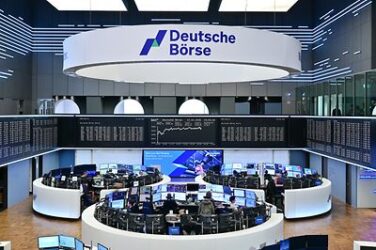
xStocks has deployed tokenized equities representing every constituent of the DAX 40.
-

It has become the first company in the United States to offer this product.
-

The stock exchange is now the fourth largest by volume behind Nasdaq, NYSE Arca and NYSE.
-

Canton Strategic Holdings' issuer-sponsored tokenized common stock traded on TSV.
-
Equity perpetual futures can trade for the first time on CFTC-registered exchanges.