






The NYSE’s latest Inside the ICE House Podcast History Series – Women Who Shaped Wall Street episode brought together curator Anna Melo, archivist Dave D’Onofrio, and author Michelle Young to tell the stories of women who broke barriers in finance from the 1870s through the 1960s. The conversation revealed that these were women who fundamentally changed how Wall Street operated.
The Bewitching Broker
Victoria Woodhull worked as a spiritualist in the 1860s. When Vanderbilt hired her to communicate with his deceased wife, she saw an opportunity.
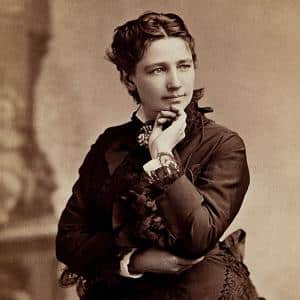
Victoria Woodhull
“She would rub shoulders with a lot of very rich men, a lot of investors, and they would be talking about their stock tips all the time,” Melo said. “So Woodhull starts to tell Cornelius Vanderbilt, hey, you know, your wife is giving me some really hot stock tips from beyond the grave.”
Vanderbilt used the tips. He gave Woodhull and her sister about $700,000 (roughly $15 million today). In 1870, they opened Woodhull Claflin and Company, the first female-operated financial firm on Wall Street.
Woodhull became the first woman to testify before Congress and ran for president in 1872. “A communist capitalist, believe it or not,” Melo said. “Figure that one out.”
The Witch of Wall Street
Known as the “Witch of Wall Street,” Hetty Green was “America’s first value investor” and one of the few people who saw the 1907 financial panic coming, Melo said, practicing “the discipline of purchasing assets only when prices fall comfortably below fair market value and selling them when prices exceed fair market value.”
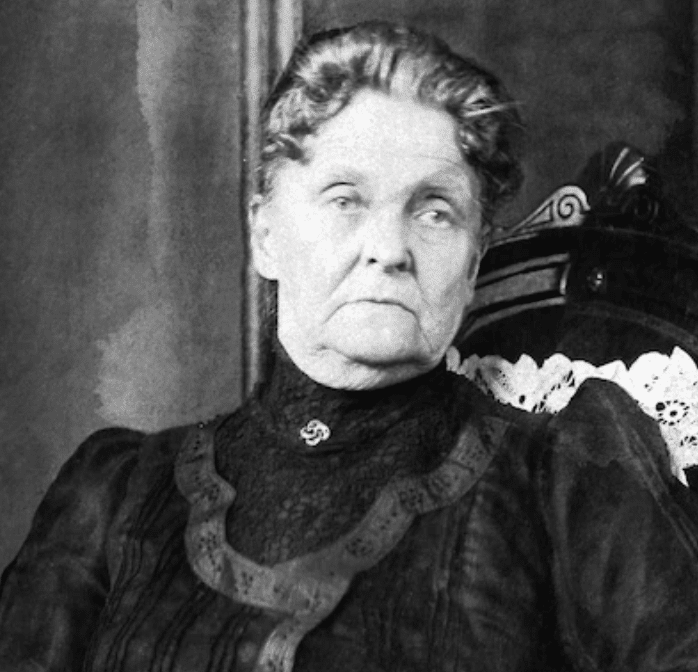
Hetty Green
Green kept so much cash that she became “the most liquid creditor in New York City,” lending money to banks and the city itself. About three years before the 1907 panic, she loaned New York City $4.5 million. At the bottom of the panic, she loaned another million.
“JP Morgan, thank you for saving America,” Melo said. “Hetty Green, thank you for saving New York.”
Her reward? D’Onofrio noted she was “very heavily” criticized rather than thanked.
At her death in 1916, Green was worth between $100 million and $200 million, “between $2.5 and $5 billion” today, Melo said. Her daughter “left nearly her entire fortune to universities and hospitals.”
Economics Over Typing
Isabel Benham wanted to major in economics at Bryn Mawr in the late 1920s. The school didn’t offer it.
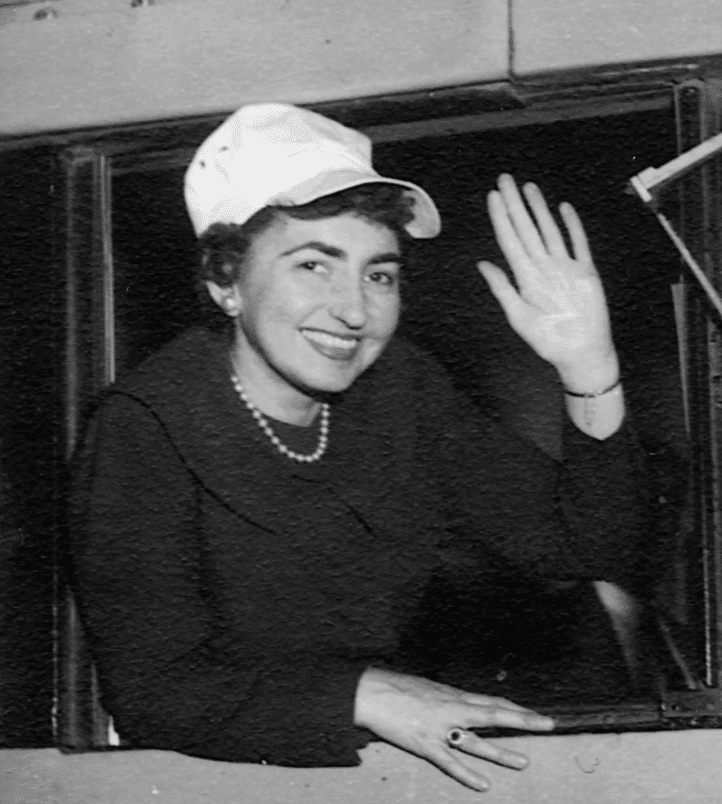
Isabel Benham
“Her advisor said, why don’t you take up typing?” Melo said. Other professors told her to “go home to mother and get married and have some children.”
Benham petitioned until the college created the major. She graduated in 1931.
Young drew parallels to women of that era “getting new freedoms, but kind of being prevented slowly, slowly along the way.”
Benham started on Wall Street in 1932, eventually focusing on railroad finance. “She would go out and ride the trains and see what’s it like to ride this route end to end,” Melo said. “Is this really a sound investment?”
In 1964, she became “the first female partner in the firm’s history and on Wall Street,” Melo said. “Her advice was sought by everyone, by railroad companies and by governments.”
The Porta-Potty Threat
Muriel Siebert bought her seat on the NYSE in 1967. The Exchange forced her to take out a $445,000 loan with “80% of it had to be a loan,” Melo said, even though she had the assets. “They asked her about her personal life, things that they didn’t ask any of the men,” Young said.
Siebert read the NYSE rulebook and “discovers that there were no rules against being a woman on the exchange,” Melo said. She became the first female member and “for about 10 years, she was the only woman on the Stock Exchange.”
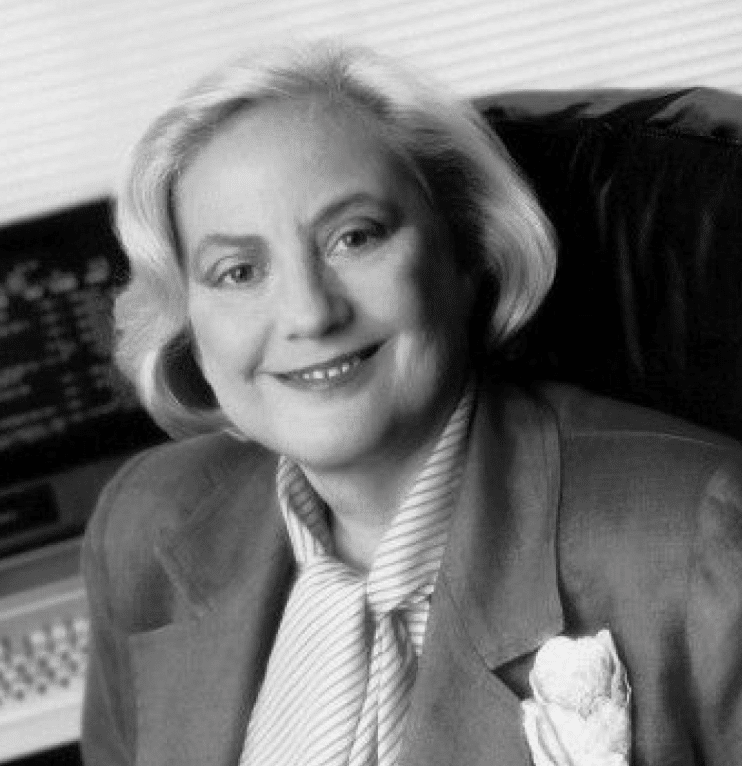
Muriel Siebert
In 1977, she became “New York’s first female Superintendent of banking.” During her tenure, “none of the banks in New York shut down,” despite the “Ford to New York drop dead” era.
The Exchange’s Luncheon Club only had men’s bathrooms. Siebert petitioned for a women’s room. The Board stalled. “She then says, all right, well, if you’re not going to install a women’s room, then I’m going to put a porta-potty in your elevator lobby,” Melo said.
A truck arrived with a porta-potty. They built a women’s room, accessed through “the back of phone booth #5.”
“Women’s bathrooms entering society was one of the first ways that women were able to enter society in the first place,” Melo said.
“The leadership of the Stock Exchange is now very much female today,” Melo said. “Our President, Lynn Martin is a woman. She is the second of our two fully operational female presidents. And our current chair is also a woman, Sharon Bowen.”
“What comes in the future, we’re going to find out,” she concluded.
(This article first appeared as FLASH FRIDAY on Traders Magazine, a Markets Media Group publication.)

NEWSLETTER SIGN UP
And receive exclusive articles on securities markets

🏆 The 2026 Global Markets Choice Awards are here! 🌍 Nominations are officially OPEN for the celebration of excellence in global capital markets trading & technology. Nominate below:
https://www.jotform.com/form/260086385121150

Delaware Life Insurance Company is becoming the first insurance carrier to offer an index that contains cryptocurrency, adding the BlackRock U.S. Equity Bitcoin Balanced Risk 12% Index to its fixed index annuity (FIA) portfolio.
As the digital assets industry pushes toward
Franklin Templeton is expanding its tokenized fund suite, signaling growing institutional demand for blockchain-based fund infrastructure and regulated investment products moving onchain. Read the full article below:
$50 billion in active ETF inflows helped fuel a record year for @BlackRock 's iShares business, as investors continue to lean into active strategies.
Related articles
-

She joined the developer of DLT-based wholesale payment systems from Federal Reserve Bank of New York.
-

40% to 60% of the gender pay gap remains unexplained even after controlling for role & qualifications.
-

20 women were chosen by the selection committee from the pool of nominations.
-

Longer-term trend lines indicate progress toward parity.
-
Two thirds of senior executives in FTSE 100 are men.