






12.02.2025

Anthony Gutman, co‑chief executive of Goldman Sachs International and global co-head of investment banking said initial public offerings are coming back to London in 20206 and beyond and that the change in stamp duty is very important to attract issuers to list in the UK.
Gutman spoke at the Financial Times Global Banking Summit in London on 2 December 2025 alongside Kunal Shah, co-chief executive of Goldman Sachs International and global co-head of FICC (fixed income, currencies and commodities).
In the Budget last month, UK Chancellor Rachel Reeves announced that investors will be exempt from paying stamp duty, currently 0.5%, on buying shares in companies that list in the UK for the first three years following its IPO. There have been concerns that UK companies are not choosing to list on the London Stock Exchange, and also that public companies are choosing to move their listing from London to other venues, particularly in the U.S.
In the third quarter of this year there were three just three new listings on AIM, London’s junior market, which raised £16.3m in total according to a report from EY-Parthenon. For the first nine months of this year there were 12 listings on both the main market and AIM, raising a total of almost £200m. This represented a fall of two thirds, 65.6%, during the same period in 2024.
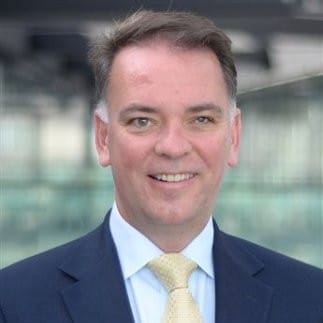
Scott McCubbin, EY
Scott McCubbin, EY-Parthenon UKI IPO Leader, said in a statement: “The UK IPO market has largely remained in ‘wait and see’ mode throughout 2025, as companies navigate the repercussions of prolonged geopolitical and macroeconomic instability.”
However, McCubbin also said there was a shift in sentiment and the IPO pipeline for the next six to 12 months is strengthening as market conditions improve, with prospective companies keen to move when the pricing window opens.
Gutman agreed that flotations are coming back to London. Goldman Sachs feels “quite positive” about the IPO environment in London and Gutman expects to see big issuance in 2026.
“But it is going to be incumbent on everyone around the tables, including the government and the regulators, to ensure that they continue to market London,” Gutman added.
He continued that regulatory change, such as the reforms of listing rules, has been really important and has resonated well.
“We also really welcome the stamp duty holiday news that came out of the Budger. That was a very important change, because it creates a much more level playing field relative to other listing jurisdictions,” he added. “I wouldn’t underestimate the importance of that.”
Issuers consistently complained about the stamp duty, according to Gutman. He highlighted that the world has changed dramatically in the last decade to 15 years ago when issuers had a few choices of where to list – such as New York, London or Hong Kong. In contrast, in the last few years there have been sizable IPOs in Stockholm, Amsterdam, Zurich and Madrid.
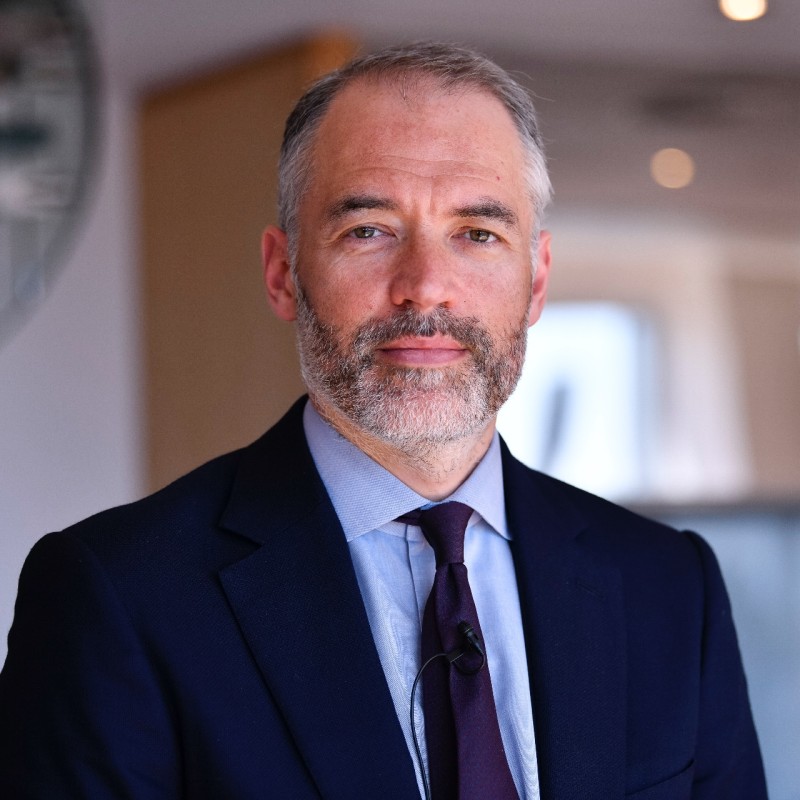
Anthony Gutman, Goldman Sachs
“That tells you how the world is changing,” said Gutman. “It tells you how listing venues have to compete to attract issuers and why it’s so important that the chancellor made these changes on stamp duty.”
At the Financial Times Global Banking Summit, Shah argued that it is a myth that trading volumes on the London Stock Exchange are low, or that the market is not deep and liquid markets and that London is not a good place to list.
“There is no issue with volumes in UK equities,” added Shah. “ That’s why I think that when we get a consolidated tape, that will show that we have deep, vibrant, liquid markets.”
In November this year the UK Financial Conduct Authority launched a consultation on its proposed framework for introducing an equity consolidated tape, run by a consolidated tape provider.
Shah highlighted that Shawbrook Group, the UK digital banking and specialist lending platform, went public in October this year and was the largest public offering by a domestic firm on the London Stock Exchange since 2021.
European growth
Gutman highlighted that the Europe, Middle East and Africa (EMEA) region is one of the most important regions for Goldman Sachs as the bank’s second biggest market outside the U.S. It represents about 25% of revenues and broadly the same amount of headcount.
“Right now we’re operating across 28 different offices, and we have well over 10,000 people,” said Gutman. “The region has been growing its headcount by over 30% over the past five years.”
Goldman Sachs is continuing to invest in the region, according to Gutman. He and Shah took on their role as co-chief executives of Goldman Sachs International in June last year and a significant focus has been to drive a model of local offices so that the bank is close to its clients.
Shah described London as “key” and said the office is thriving.
“We have also been growing, for example, in Birmingham,” he added. “We now have over 500 people in Birmingham and have plans to double that to over 1,000 in the next few years. “
In addition, Shah said the bank’s private wealth business has doubled in the past four years. He added: “There’s a lot of runway across the region where we think that can continue to grow.”
In asset management, Shah said the group has $525bn of alternative assets under management. This makes the firm a top five player in the space and he argued this benefits the capital solutions group.
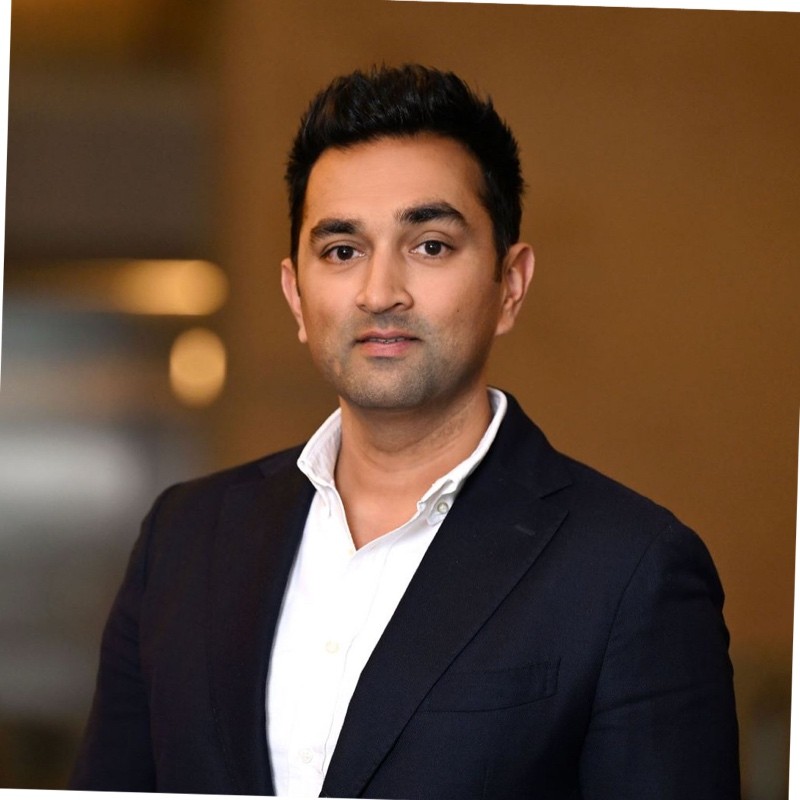
Kunal Shah, Goldman Sachs
“If you combine advisory, origination side and markets capabilities, we think there’s a lot to exploit across these businesses,” Shah said.
In January this year Goldman Sachs said it was creating the capital solutions group and expanding its alternatives investment team in asset & wealth management to ensure the best understanding and application of both investment sourcing and investing capability.
The capital solutions group combines capabilities in the firm’s financing group, financial sponsors coverage from investment banking and coverage of alternative managers from FICC and Equities to better coordinate, innovate and accelerate the delivery of services to these clients.
The alternatives origination group within capital solutions focuses on sourcing across investment grade credit, leveraged loans, real estate, infrastructure, other asset-backed finance and private equity.
Gutman explained that the group was created because Goldman Sachs felt the market was lacking someone who can sit in the middle and act as an intermediary, advisor, provide finance and be a counterparty for clients’ financing needs.
“The capital solutions group has been critical to us on the ground and is a very good example of One Goldman Sachs,” said Gutman. “It’s trying to bring all parts of the firm together under one umbrella to provide the financing needs that we think are required.”

NEWSLETTER SIGN UP
And receive exclusive articles on securities markets

🏆 The 2026 Global Markets Choice Awards are here! 🌍 Nominations are officially OPEN for the celebration of excellence in global capital markets trading & technology. Nominate below:
https://www.jotform.com/form/260086385121150

Delaware Life Insurance Company is becoming the first insurance carrier to offer an index that contains cryptocurrency, adding the BlackRock U.S. Equity Bitcoin Balanced Risk 12% Index to its fixed index annuity (FIA) portfolio.
As the digital assets industry pushes toward
Franklin Templeton is expanding its tokenized fund suite, signaling growing institutional demand for blockchain-based fund infrastructure and regulated investment products moving onchain. Read the full article below:
$50 billion in active ETF inflows helped fuel a record year for @BlackRock 's iShares business, as investors continue to lean into active strategies.
Shanny Basar
Senior writer
A Senior Writer at Markets Media who became a financial journalist in 2000 after working in banking for over a decade....
More about this authorRelated articles
-

Morgan Stanley Investment Management is commited to expanding its digital asset offerings.
-

This is ahead of the S&P/NZX 20 Index Futures launch on 28 April 2026.
-

Citi Sky provides actionable insights and anticipates client needs through advanced voice & avatar technology.
-

The bank would be required to hold additional CET1 capital of around $20bn.
-

The bank has set growth objectives for the delivery of personalized advice.