






12.11.2025

Caroline Crenshaw, commissioner at the U.S. Securities and Exchange Commission, spoke about the future of financial regulation at The Brookings Institution in Washington, DC on 11 December 2025. She is the only commissioner who is a Democrat and said her voice has become one of “ubiquitous dissent.”
“It’s been unsettling to see how precipitously one commission is willing to undo the work of the commission that came before, all without a single notice and comment rule making to date,” she said. “The commission has also been shrouding its policy making in darkness shunning public comment, and instead relying on hidden voices to drive its agenda in a mad dash to implement its policy preferences.”
She described the regulator’s approach as treating investors like “silly children to be ignored” rather than fully formed persons with ideas and concerns worth hearing.
The fundamental precepts upon which U.S markets are built are being eroded and that the core the country’s intricate market structure is under attack, according to Crenshaw.
“Instead of safeguarding our markets for investors to fund their retirements in safe and sustainable ways, we are moving in a direction where markets start to look like casinos,” she said. “The problem with casinos is that in the long run, the house always wins.”
Crenshaw continued that there is a trend towards devaluing investor rights which is “pervasive and already worn deep.”
She gave the examples of the SEC making it harder for investors to communicate their preferences to issuer management, showing hostility to investor proxy proposals, and dismantling private rights of action by allowing public issuers to force their shareholders into arbitration.
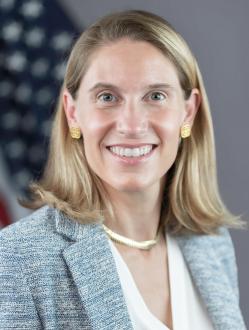
Caroline Crenshaw, SEC
“These actions seem fuelled by the fictitious notion that we need to punish investors in order to revitalize public markets, or purportedly to make IPOs great again, but IPOs can only be revitalized with investor money,” she said.
The SEC is also reducing transparency by reducing the cadence of public issuer filings which she argued will give investors less access to timely information, including audited financial statements; less analysis from management; fewer disclosures about evolving risk and less analyst coverage making it easier to smooth earnings shortfalls.
As a result, Crenshaw said investment decisions will be based on either stale data, data voluntarily released by companies that lack uniformity at best or are cherry picked at worst, or on information other than company metrics, such as social media posts.
In addition, the SEC has made clear that it intends to roll back the universe of people who must register and what information must be disclosed.
She also expressed concern that the budget for The Public Company Accounting Oversight Board, that oversees the audits of public companies and SEC-registered brokers and dealers and reports to the SEC, may be reduced.
Decline in lit trading
In addition, Crenshaw highlighted the shift of market activity away from lit trading on exchanges to dark markets which Crenshaw claimed obscures the true prices of stocks, raises the cost of trading and damages investor confidence.
“For this reason, it’s fundamentally important to support displayed liquidity and carefully consider any interventions that might impact transparency in our equity market structure, such as limiting or rescinding the order protection rule, which this commission seems poised to do,” she said.
Private markets
Crenshaw also objects to opening private markets to retail investors, especially their retirement assets. She said this was a “harmful policy choice” because it undermines the safer, more transparent and more efficient public markets.
“Private markets expose retail investors to more risky investments,” she added. “My colleagues use lots of buzz words like freedom, diversification, democratization but it’s risky and reckless.”
She argued that private markets do not offer a level playing field for retail investors as there is limited transparency, a lack of standardized disclosures and regulatory tools to detect fraud. Investors are kept in the dark about certain fees and expenses, and valuations are opaque and inconsistent.
“Smaller investors almost certainly will be subject to higher fees and therefore lower returns than large investors with the power to negotiate,” she added. “Unleashing the private markets’ insatiable hunger for capital on retail investors’ wallets will come back to bite regulators, but not before Main Street American savings have been looted.”
Crenshaw compared the trend toward deregulation in the current environment to the period prior to the stock market crash of 1929. She said: “I fear that the darkest depths of winter still lie ahead for America’s capital markets.”
Crypto
She recommended a return to market fundamentals and the promotion of policies that encourage trading based on actual fundamentals, issuer operations, cash flows and real financial metrics of companies, not tweets, and that policies should favor long-term buy and hold investing.
“One thing that consistently puzzles me about crypto is, what are cryptocurrency prices based on,” she added. “Many, but not all, crypto purchasers are not trading based on economic fundamentals but are speculating, reacting to hysteria from promoters feeding a desire to gamble wash trading to push up prices.”
Crenshaw expressed worries that loosening the basic fundamentals of the securities laws so that crypto can operate, but without any guardrails, could lead to significant market contagion. However, she believes there are ways to support this type of innovation, with the guardrails in place that are necessary to protect retirement assets.
“A lot of this exposure is coming through ETFs and ETPs,” she added. “I think there are ways to build those bridges, but they are going to have to accept a different regulatory regime.”
She concluded that the country should pursue policies that promote and ensure that the American economy works for everybody, not just those able to buy political influence.

NEWSLETTER SIGN UP
And receive exclusive articles on securities markets

🏆 The 2026 Global Markets Choice Awards are here! 🌍 Nominations are officially OPEN for the celebration of excellence in global capital markets trading & technology. Nominate below:
https://www.jotform.com/form/260086385121150

Delaware Life Insurance Company is becoming the first insurance carrier to offer an index that contains cryptocurrency, adding the BlackRock U.S. Equity Bitcoin Balanced Risk 12% Index to its fixed index annuity (FIA) portfolio.
As the digital assets industry pushes toward
Franklin Templeton is expanding its tokenized fund suite, signaling growing institutional demand for blockchain-based fund infrastructure and regulated investment products moving onchain. Read the full article below:
$50 billion in active ETF inflows helped fuel a record year for @BlackRock 's iShares business, as investors continue to lean into active strategies.
Shanny Basar
Senior writer
A Senior Writer at Markets Media who became a financial journalist in 2000 after working in banking for over a decade....
More about this authorRelated articles
-

Standard Chartered, Cumberland DRW were counterparties for inaugural spot crypto trade.
-
Proposals would create a tailored regime for certain investment contracts involving crypto assets.
-

The rollout brings Deribit onto the same core execution infrastructure as Coinbase International Exchange.
-

Prediction markets contracts and revenue grew 106% quarter-over-quarter.
-

The investment manager's suite of ETFs and ETPs has grown to $14bn in assets since debuting in 2023.