






05.07.2026

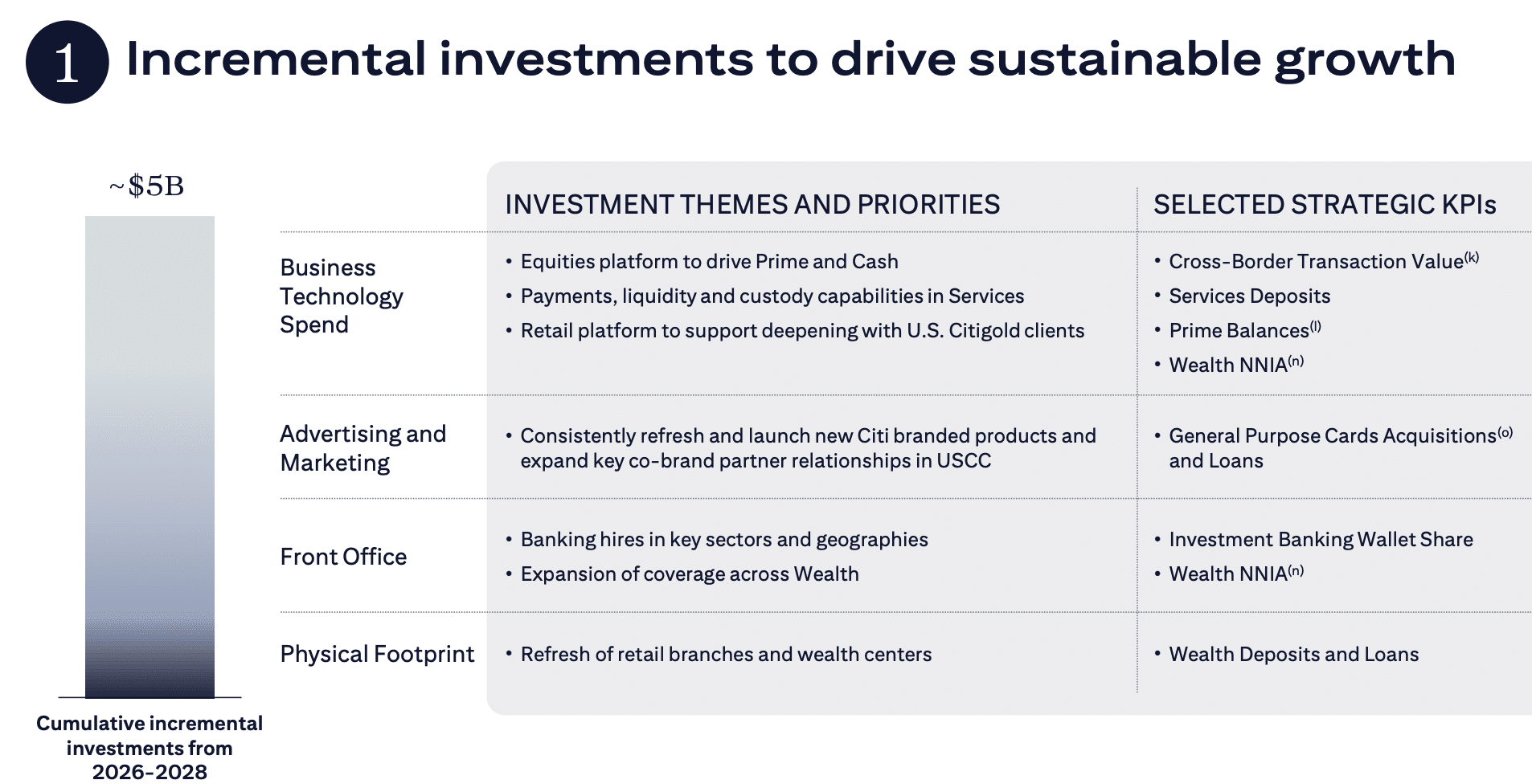
During its investor day Citi outlined plans to invest $5bn to sustain growth while making productivity savings through increased automation and AI across all five of its businesses.
Gonzalo Luchetti, chief financial officer at Citi, said on the U.S. bank’s investor day on 7 May 2026 that the $5bn in investments will be largely self funded through structural efficiency savings. The funding will be distributed among several areas including payments, trading, increased marketing for card acquisitions, strategic hiring in banking and wealth, and physical branch refreshes.

Luchetti highlighted that technology spending will shift from ‘change the bank’ to become increasingly business driven as the bank’s transformation programs are coming to an end and that AI will underpin a “step change” in productivity.
“We will continue to achieve productivity savings from past investments and efficiencies in functional and operational expenses,” he added. “This will happen primarily through technology automation and AI driven process reengineering.”
Andy Sieg, head of wealth at Citi, gave examples of AI being used in the business at the investor day including embedding agentic AI directly into Citi’s proprietary research and models to accelerate portfolio construction. Sieg said: “50 years ago Citi pioneered the ATM which was a bold bet on technology and that inspired the tagline ‘the city never sleeps.’ That boldness remains in our DNA, and we intend to reassert it.”
He cited the introduction of Citi Sky, an AI-powered virtual advisor, as an example of this continued innovation. Citi Sky was unveiled in April 2026 to enable seamless audio and video conversations that provide high-quality, personalized financial insights in compliance with regulatory standards.
The virtual advisor was developed using technology from Google Cloud and Google DeepMind using the Gemini Enterprise Agent Platform, a unified environment for building, scaling, governing and optimizing enterprise-grade agents. Citi Sky will be integrated over time into wealth platforms in the U.S. to work alongside financial advisors in helping clients make confident financial decisions.
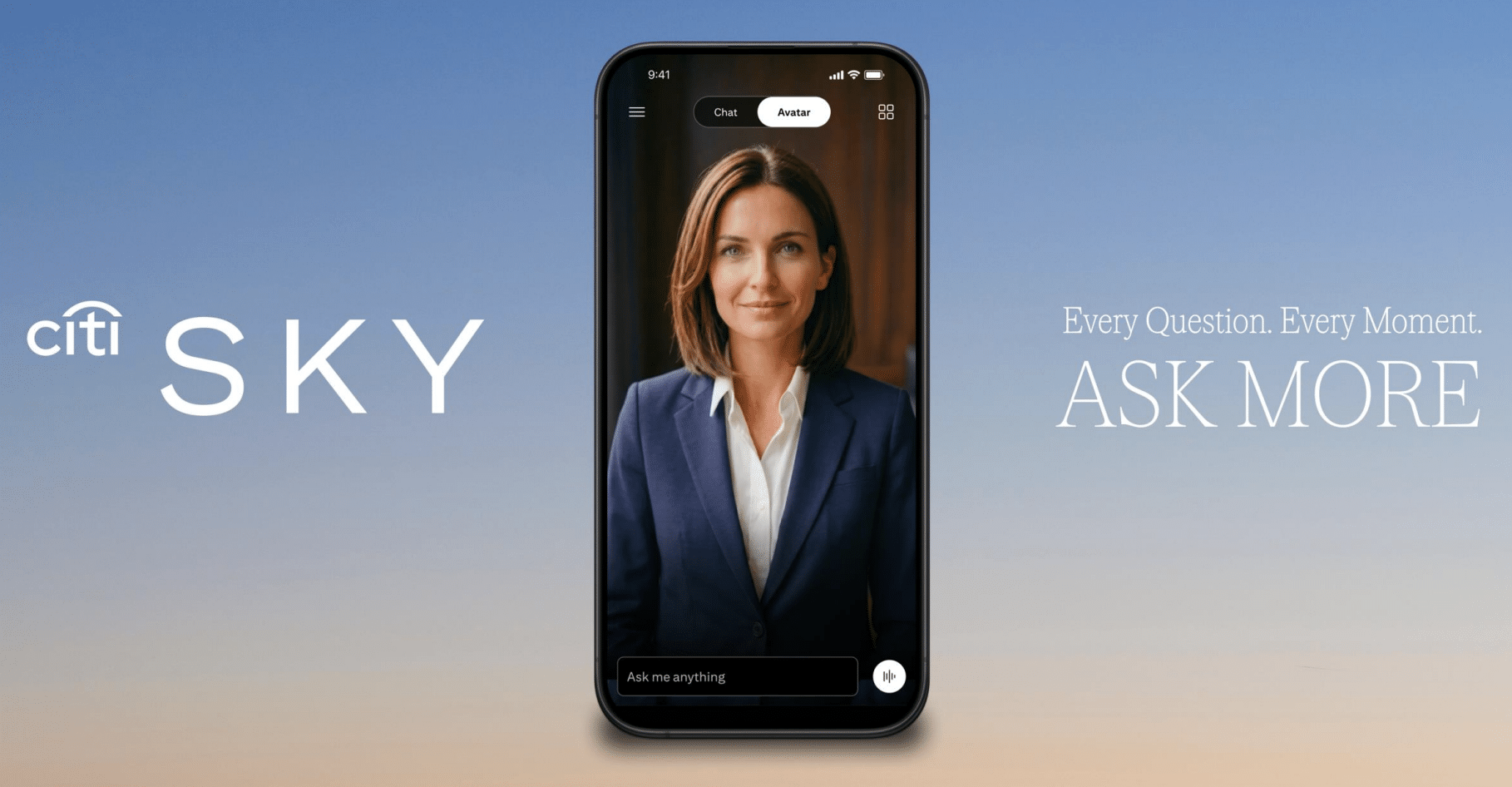
Sieg described Citi Sky as more than just a new digital tool as it provides clients with a new intelligence layer that is conversational, actionable and secure. AI orchestration enables intelligent routing of information and triggering actions in real time so that the right insights reach the right person at the right moment.
“Citi Sky will change the model of wealth management for clients and make our advisors vastly more productive,” he added. “We’re embedding AI seamlessly across our platform so that an autonomous intelligence system enables personalized insight for every client, 24/7 and at scale.”
He continued that Citi Sky is an “eye opener” in terms of productivity so the bank will invest in that technology while also adding advisors and bankers.
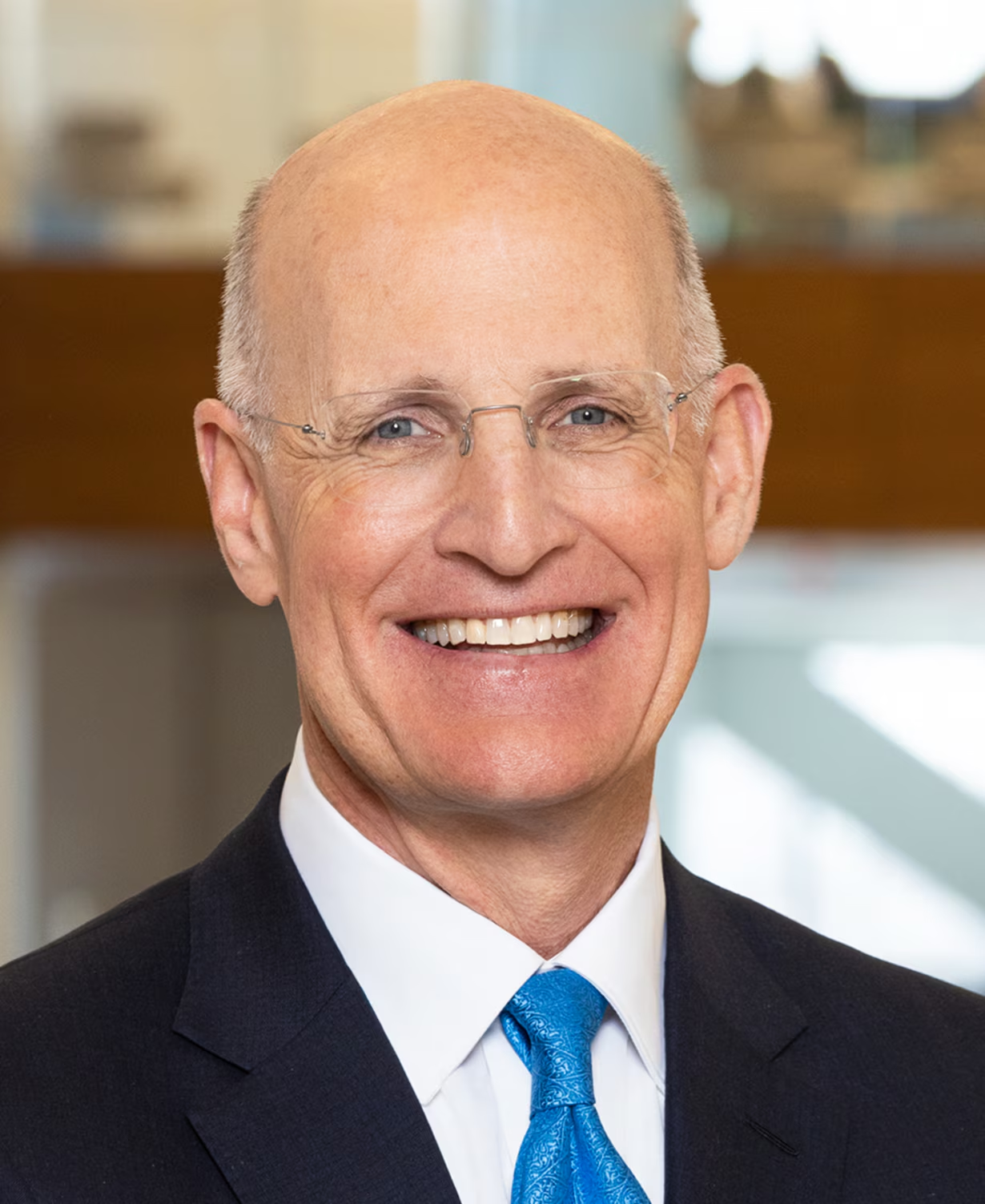
“To achieve our ambitions, we don’t need to spend 10 or 20 years recruiting to get to scale,” said Sieg. “Technology is giving us the opportunity to unlock scale in ways that we couldn’t have imagined just a few years ago.”
Jane Fraser, chair and chief executive of Citi said at the investor day that the wealth business is one of the most significant growth opportunities. She added: “We will steadily scale by continuing to invest in advisors, data, and technology, including AI, to improve productivity and client outcomes.”
Fraser continued that the transformation since the last investor day in 2022 has led to a simpler, modern technology stack, improved data quality, and increased automation. Data has been unified into two repositories, one for institutions the other for consumers, which reduces risk and unlocks capital. A hybrid cloud model allows the bank to run workflows in the most efficient environment and to scale dynamically.
She gave the example of wholesale credit, a corporate portfolio of nearly $1 trillion, that now runs on a unified end-to-end system and a single global process for underwriting, transaction management, and portfolio management. Fraser added: “It’s big. It was not a thing of beauty but it is now.”
AI and automation are being applied to the most complex, time-consuming processes including reconciliations, loan operations or document processing, which have been compressed from months to days to minutes. Last year Citi deployed core AI tools to more than 180,000 staff in 85 countries, and is continuing to build and scale AI agents across the firm to support more complex, multi-step work.
“We are not waiting to be disrupted,” said Fraser. “We are disrupting ourselves deliberately and from a position of strength and scale.”
Services
Shahmir Khaliq, head of services at Citi, said at the investor day that the strategy focuses on deepening client relationships especially with mid-sized corporates and firms in North America; furthering next generation platforms to support the future of transaction services, and driving innovation to deliver client solutions.
The services business invests more than $2bn annually to drive its platform strategy across its five segments. For example, the business has doubled the number of applications running on modern architecture, which Khaliq said has made services far more agile and efficient. In custody there has been a 37% increase in settlement volumes while the cost per transaction has also fallen by 25%.

“Both these examples illustrate our ability to leverage technology for enhanced productivity and revenue generation,” said Khaliq.
AI is integral to the strategy to enhance clients’ business models, while improving Citi’s internal processes and operational efficiency in close partnership with the risk and control teams. As a result, services has built a pipeline of over 50 use cases across the business, with some already live. For example, AI will be used to streamline nearly 10,000 complex annual client engagements, which should result in a significant reduction in the sales cycle, faster commercialization and improved client insights.
AI has also been used to cut technology development cycle times and automate client onboarding. Khaliq said: “Even in these early days, it is clear that AI is a powerful engine for growth.”
Digital assets
Citi has been building its blockchain and digital asset capabilities for about five years, according to Khaliq. He said the bank is open-minded about its role in the stablecoin ecosystem as the use in true payment activities is still nascent.
“A blockchain-based Citi token infrastructure gives us the ability to issue a Citi stable coin, and we will continue to evaluate this option as client needs evolve,” added Khaliq.
Citi has also built out token services, which allows the bank to move tokenized deposits around the world on an ‘always on’ and 24/7 basis. Token services is live in five global locations and supports both US dollars and Euros. Khaliq said: “Flows and client adoption have been strong, with hundreds of clients moving close to $1bn each day.”
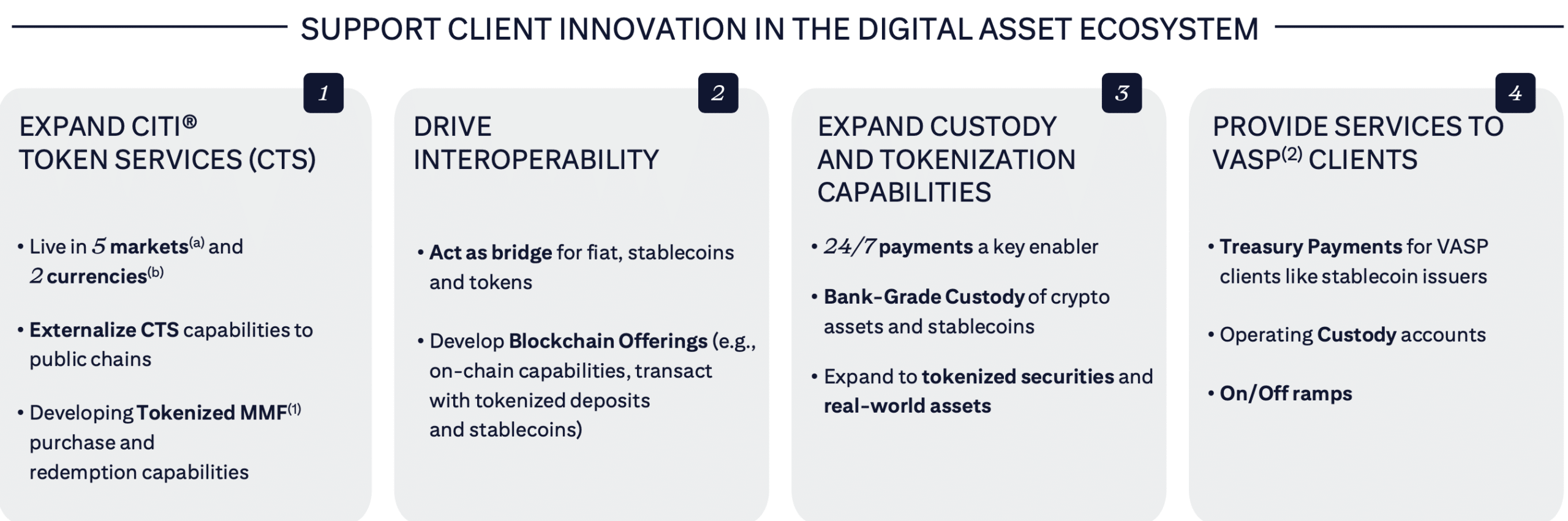
Currently, the most relevant use case for multinational clients has been using tokenized deposit capabilities to manage liquidity and working capital management more efficiently.
“We are also embedding this technology into our 24/7 US dollar clearing solution, building a vital bridge between blockchain and traditional payment networks,” Khaliq added.
In October 2025 Citi announced a collaboration with Coinbase to develop digital asset payment capabilities for institutional clients and streamline fiat pay-ins/pay-outs to bridge traditional and digital finance. Coinbase is in the process of being integrated with Citi’s cross-border payment platform, WorldLink. Khaliq said: “I would say we’re right in the thick of it. We’re in the very early stages of the first innings as our clients look to evolve their platforms.”
Citi will also continue to build out custody for digital assets, adding to its custody services for stablecoin reserves and crypto ETFs. In addition, Khaliq said Citi will soon launch custody services for native crypto assets such as bitcoin.
“This is mission critical as our institutional clients demand bank-grade custody solutions they can trust,” he said. “By delivering on all these fronts, we create real value for our clients as our proprietary network gives us the unique and non-replicable opportunity to deliver all of these solutions globally in an integrated fashion.”
Markets
Andy Morton, head of markets, said at the investor day that technology is a huge competitive advantage for the bank. He added: “What’s important to take away is that the level of investments we are making in our franchise has materially increased.”
Citi wants to grow share in equities, and a priority for investment is the prime platform in order to grow capacity and the volume and speed of trades. In commodities Citi is opening a precious metal vault in London this month. In rates, the investment will be in low latency and algo capabilities as Citi is a large U.S. Treasuries and swap dealer who gets big risk transfer flows from clients.

Morton highlighted that the biggest single impact of technology in markets has been the XiNG platform. which he described as an ultra-modern, scalable, decentralized risk management platform. XiNG was developed by Citi’s quant group but is now used for all of markets trades across asset classes, and by other parts of the bank such as risk and finance.
Each asset class maintains its own calculation library which must meet rigorous, common standards. As a consequence, complex calculations can be done in a robust and very scalable way. Morton argued this has huge long-term benefits in eliminating duplication of data and software and speeding up development.
“The best example of how cool this technology is that we can write a 20 line Python program that runs a scenario stress test on our entire market’s trading portfolio,” Morton added. “I would argue that in this case we have leapfrogged some of our competitors, who tend to have more big box ‘all or none’ systems that were built years ago.”
Financials
Fraser said Citi has been transformed since the last investor day four years ago by largely completing exits from certain consumer franshises and reshaping the firm around five core businesses – services, markets, banking, wealth and cards. Higher productivity, including from technology and AI, is one of the four drivers that will help the bank reach its 2028 financial targets alongside a more diversified revenue mix; continued investment; and maximizing capital productivity.

The first quarter of 2026 marked Citi’s highest quarterly revenue growth in a decade, with growth in all five businesses, according to Fraser. This follows record revenue growth in 2025, improved returns, positive operating leverage for the second consecutive year and $17.6bn of capital returned to shareholders.
She continued that Citi is on track to achieve the 2026 return on tangible common equity (RoTCE) target of 10 to 11% which the bank set on its investor day in 2022. She said: “That is not a destination, but a waypoint.”
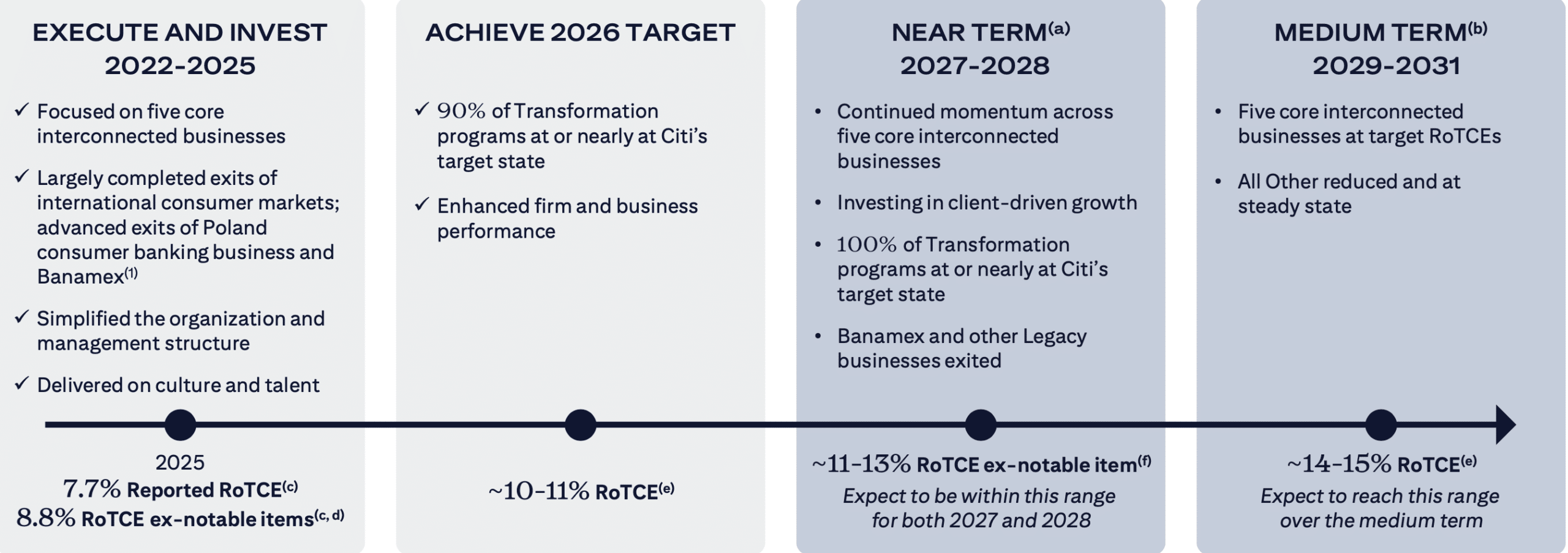
Citi has set higher RoTCE targets in the near term of between 11% and 13% in 2026 and 2027, and aims to move towards the higher end of that range in 2028. Over the medium term, Citi sees a “clear path” to returns of between 14% and 15%.

NEWSLETTER SIGN UP
And receive exclusive articles on securities markets

🏆 The 2026 Global Markets Choice Awards are here! 🌍 Nominations are officially OPEN for the celebration of excellence in global capital markets trading & technology. Nominate below:
https://www.jotform.com/form/260086385121150

Delaware Life Insurance Company is becoming the first insurance carrier to offer an index that contains cryptocurrency, adding the BlackRock U.S. Equity Bitcoin Balanced Risk 12% Index to its fixed index annuity (FIA) portfolio.
As the digital assets industry pushes toward
Franklin Templeton is expanding its tokenized fund suite, signaling growing institutional demand for blockchain-based fund infrastructure and regulated investment products moving onchain. Read the full article below:
$50 billion in active ETF inflows helped fuel a record year for @BlackRock 's iShares business, as investors continue to lean into active strategies.
Shanny Basar
Senior writer
A Senior Writer at Markets Media who became a financial journalist in 2000 after working in banking for over a decade....
More about this authorRelated articles
-

Governed agentic workers will address manual processes that persist across capital markets.
-

The French Bank is moving towards broader deployment of agentic AI.
-

The initial focus will be on how supervised entities use artificial intelligence and tokenisation.
-

Corporate bond trading is shifting toward more electronic and automated execution.
-

Essentia Data-Out delivers behavioral intelligence directly into an asset manager's own data and AI.