






06.16.2026

Interest in using perpetual futures has grown from zero to 21%, according to a poll at the IDX 2026 conference in London.
The first day of the FIA International Derivatives Expo in London was on 16 June 2026. A poll of the audience attending the digital asset derivatives panel found that exchange-traded funds and products were the preferred instrument for trading digital assets at 38%, followed by futures at 28%. Perpetual futures were in third place at 21%, but had been zero two years ago in the same poll, according to the moderator.
Perpetual futures track the price of an underlying asset like without an expiry or settlement date. In order to track the price of the price of the underlying asset, a funding payment is exchanged between long and short position holders. If the perpetual price is above spot, longs pay shorts (and vice versa).

John Palmer, Kraken
John Palmer, global head of derivatives at Kraken, said on the panel that just under $70 trillion crypto perpetuals traded globally last year, but only a small percentage of that was in the U.S. due to the lack of regulatory approval.
On 29 May 2026 the U.S. Commodity Futures Trading Commission said in a statement that it had approved KalshiEX, a designated contract market, to list a perpetual contract that references the spot price of bitcoin, as a futures contract. On the same day the CFTC issued a policy statement stating that, given the unique characteristics of perpetual contracts, the regulator will carry out a case-by-case review for the listing of perpetual contracts on other asset classes.
Subsequently, the regulator said in a statement on on 12 June 2026 that it had issued no-action relief to designated contract markets who want to convert their existing perpetual-style digital commodity futures contracts into true digital commodity perpetual futures.
On 15 June 2026 Kraken said it has launched CFTC-regulated perpetual futures in the U.S., giving eligible clients domestic access on Kraken Pro alongside spot, margin, and CME-listed futures.
“Kraken is happy to be along that ride,” said Palmer. “We now see a global landscape for perpetuals so trading perpetuals in the U.S. is a similar experience for someone sitting in London, India, or Hong Kong.”
Kraken’s perpetuals are listed on Bitnomial, a CFTC-regulated exchange acquired by its parent company, Payward, in May this year. The contracts trade with an eight-hour funding rate, matching the conventional structure for crypto perpetuals: at 7 pm, 3 am, and 11 am CT. Clients can trade spot crypto, perpetuals and CME futures In the same interface.
“Customers want access to additional products and they want to trade it the same way as they are trading the existing products,” added Palmer. “They want to use the same app, the same wallet and the same counterparty.”
At launch, eligible clients can trade a suite of major digital assets. Kraken intends to expand the contract set and product functionality, including broader collateral options, over time.
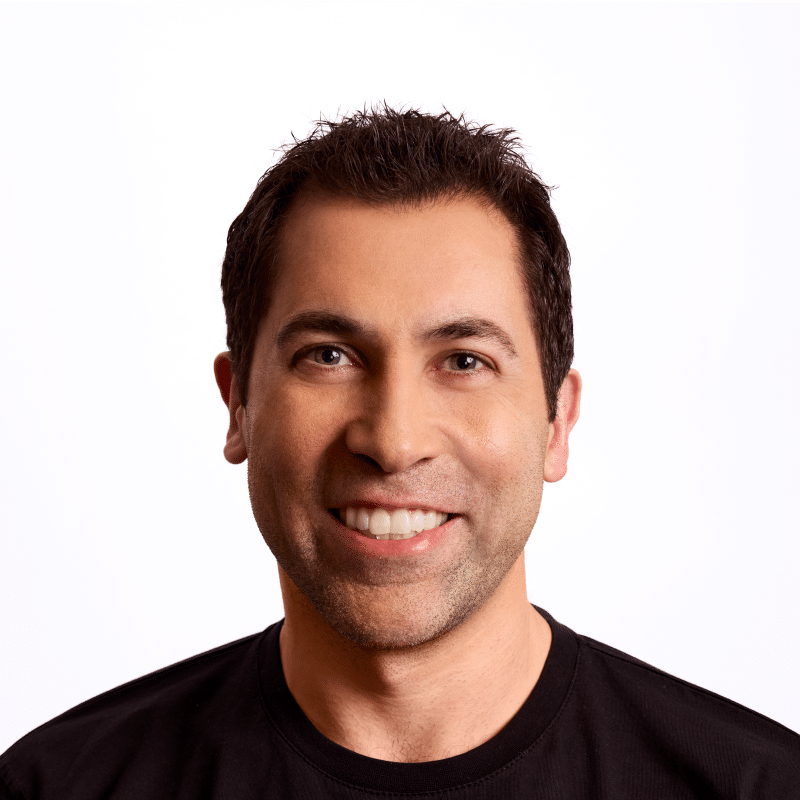
Darius Tabatabai, Kraken
Darius Tabatabai, head of Kraken Pro, said in a statement that U.S traders have been waiting for a regulated, domestic way to trade the product that defines global crypto derivatives markets.
Tabatabai added: “Bitnomial’s regulated infrastructure is what made this launch possible in short order. Their work on the regulatory and market structure side, combined with Kraken’s distribution and technology, is what brings this to U.S. traders at scale.”
Palmer added that Kraken and Payward have assembled all the regulated entities and licenses that the group requires globally. In addition to Bitnomial, Kraken completed the $1.5bn acquisition of U.S. retail futures trading platform, NinjaTrader, in May 2025 and then began to offer CME futures in October.
Bitnomial operates a futures commission merchant (FCM), a derivatives exchange (DCM), and a clearinghouse in the U.S. (DCO.) As a result, Palmer argued that Kraken has the full stack alongside NinjaTrader.

Sabrina Wilson, GFO-X
“We can now onboard, list, trade and clear products that we design for our customers,” added Palmer. “That is the path we have chosen in the U.S. which is similar to other vertically integrated entities around the globe.”
Sabrina Wilson, chief operating officer at GFO-X, the first regulated and centrally cleared trading venue dedicated specifically to digital asset derivatives in the U.K., highlighted that U.S has a “huge regulatory tailwind” because there is a retail ban on derivatives on digital assets in the U.K.
“We have had a retail ban since 2019 and that also extends to prediction markets,” she added. “Binary options are also banned in the UK for retail participation, so we have a very different distribution model.”

NEWSLETTER SIGN UP
And receive exclusive articles on securities markets

🏆 The 2026 Global Markets Choice Awards are here! 🌍 Nominations are officially OPEN for the celebration of excellence in global capital markets trading & technology. Nominate below:
https://www.jotform.com/form/260086385121150

Delaware Life Insurance Company is becoming the first insurance carrier to offer an index that contains cryptocurrency, adding the BlackRock U.S. Equity Bitcoin Balanced Risk 12% Index to its fixed index annuity (FIA) portfolio.
As the digital assets industry pushes toward
Franklin Templeton is expanding its tokenized fund suite, signaling growing institutional demand for blockchain-based fund infrastructure and regulated investment products moving onchain. Read the full article below:
$50 billion in active ETF inflows helped fuel a record year for @BlackRock 's iShares business, as investors continue to lean into active strategies.
Shanny Basar
Senior writer
A Senior Writer at Markets Media who became a financial journalist in 2000 after working in banking for over a decade....
More about this authorRelated articles
-

This was an extension of the round in the crypto exchange led by ICE.
-

Fund managers want prime brokerage across traditional and digital markets in a regulated framework.
-

The DIGIT pilot is expected to take place by Q1 2027.
-

A CSD will use a public blockchain to mirror securities ownership records for the first time.
-

21X Group operates the first fully regulated trading and settlement system for tokenized securities in the EU.