






07.20.2026
Industry Poised to Meet Retail Demand for Private Markets
07.20.2026
A large number of asset managers and their servicers are positioned to serve retail demand for private markets, according to Sven Eggers, head of private markets, EMEA, at State Street.
State Street’s fifth annual Private Markets Study, Resilience Meets Opportunity, found that more than 84% of asset and wealth managers either already offer or plan to offer private markets strategies for individual investors.

Joerg Ambrosius, State Street
Joerg Ambrosius, president of investment services at State Street, said in a statement: “Demand remains strong but delivering private markets to a broader investor base at scale is fundamentally reshaping how the industry operates. Success will depend on who can manage complexity and deliver consistent outcomes across a much wider set of clients.”
The survey also found that as firms scale private markets strategies to individual investors, operational complexity is the defining challenge.
Nearly 80% of respondents cited liquidity management as a key challenge, with specific pressure points including redemption management, cash forecasting and liquidity stress testing as firms adapt to more dynamic investor flows. Compliance, reporting and investor servicing are also increasing as firms move beyond institutional client bases.
As a result, Eggers argued that investors have more trust in the larger managers in terms of their technical capabilities, liquidity stress testing and handling and generally their more advanced capabilities.
In order to meet increased demand from individual investors, State Street’s investment roadmap focuses on two large buckets.
“The first is connectivity and our front to back-to-front office solution, which will be further enhanced over time,” said Eggers.
For example, when State Street processes a capital event initialised by clients, the firm provides proof of completion to the investor. The second bucket is how State Street interacts with the sources of capital, primarily the wealth manager side, but also the distributor side.
The survey said wealth management platforms are viewed as the primary channel for private markets access, while defined contribution structures remain a secondary pathway for most firms.

Sven Eggers, State Street
“We are handling far more subscriptions and redemptions for retail investors so our investments will focus on client-facing portals and direct connectivity on the transfer agency side,” added Eggers.
While retail demand is growing, the survey found that institutional investors’ demand for private markets remains resilient despite ongoing market and geopolitical uncertainty and reports of higher redemption requests. Just 7% of firms expect to reduce allocations to private markets, while half plan to increase exposure, reinforcing private markets’ role as a core component of long-term portfolio construction.
“There is not too much concern about market problems,” added Eggers. “The overall industry needs to ensure that asset managers make predictability of risk visible in products and that stress testing improves risk handling.”
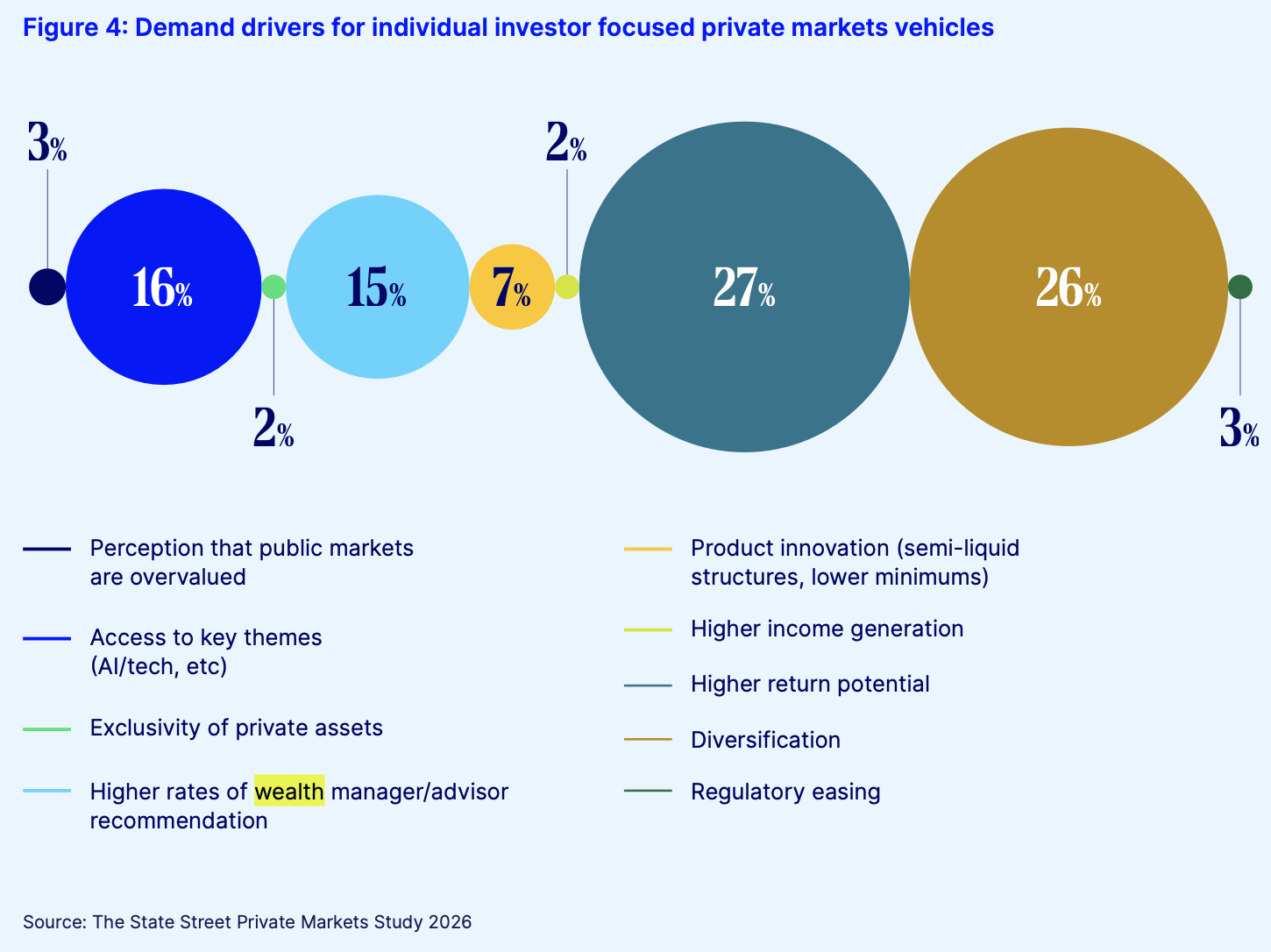
Source: State Street
Real estate data
Scott Carpenter, global head of Alternatives at State Street, said in a statement that delivering private markets strategies to individual inverses at scale requires more than product innovation. He continued that it also requires the infrastructure, data and operational capabilities to provide transparency, manage liquidity and meet the expectations of a very different investor base.
Eggers agreed that broader data needs to be provided to clients. He gave the sample, of a new initiative called REDI, that has been initiated by U.S. asset owners to provide investors level with more standardized real estate data. He said standardized data has the potential to get a footprint in other areas such as private credit and private equity.
“We have launched a project in order to deliver on REDI as the fourth quarter of 2026 will be the first reporting period,” added Eggers. “REDI is quite important for State Street as a reporting service component towards our clients as we service more than $330bn on the real estate side.”
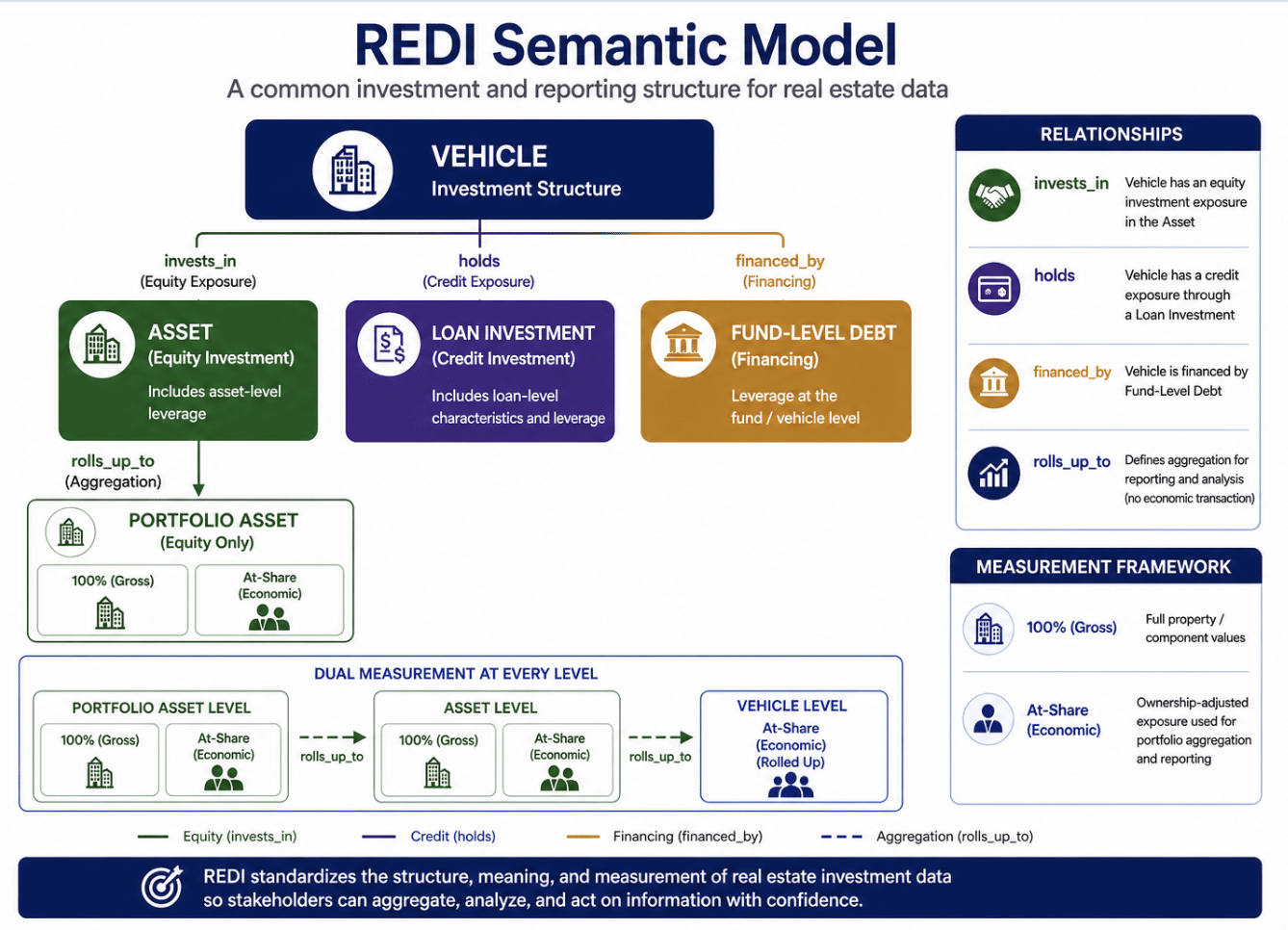
Source: REDI
Eggers highlighted that State Street services clients on both the public and private market side, and it is really important to make the firm clearly understands a client’s data requirement. He said: “Irrespective of whether we are responsible for 100%, 50% or 20% of client data, we need to ensure it fits into their data requirement and enables them to see a portfolio holistically.”

NEWSLETTER SIGN UP
And receive exclusive articles on securities markets

🏆 The 2026 Global Markets Choice Awards are here! 🌍 Nominations are officially OPEN for the celebration of excellence in global capital markets trading & technology. Nominate below:
https://www.jotform.com/form/260086385121150

Delaware Life Insurance Company is becoming the first insurance carrier to offer an index that contains cryptocurrency, adding the BlackRock U.S. Equity Bitcoin Balanced Risk 12% Index to its fixed index annuity (FIA) portfolio.
As the digital assets industry pushes toward
Franklin Templeton is expanding its tokenized fund suite, signaling growing institutional demand for blockchain-based fund infrastructure and regulated investment products moving onchain. Read the full article below:
$50 billion in active ETF inflows helped fuel a record year for @BlackRock 's iShares business, as investors continue to lean into active strategies.
Shanny Basar
Senior writer
A Senior Writer at Markets Media who became a financial journalist in 2000 after working in banking for over a decade....
More about this authorRelated articles
-

The final close of West Street Capital Partners IX was $9.6bn.
-

The transaction represents an important step for CVC's credit & insurance strategy.
-

Commodity market participants are navigating an increasingly complex market.
-

The AI-native firm will work with companies to bring Claude into their core business operations.
-

The company focuses on acquiring and owning stabilized, newly-constructed data centers.