





07.27.2026
On 9 July 2026 the FIA held a forum in Kuala Lumpur, Malaysia, for the first time and brought together over 300 participants from across the global derivatives ecosystem. The trade organization for the futures, options and centrally cleared derivatives markets said this reflected Malaysia’s growing importance as a regional marketplace for derivatives trading, risk management and industry collaboration.
Kenanga Futures, a Malaysian listed derivatives broker that is a subsidiary of Kenanga Investment Bank Berhad, has forecast a compound annual growth rate of 5% for annual volume on Bursa Malaysia Derivatives Berhad (BMD), a subsidiary of the Bursa Malaysia Group, and 3% for open interest.
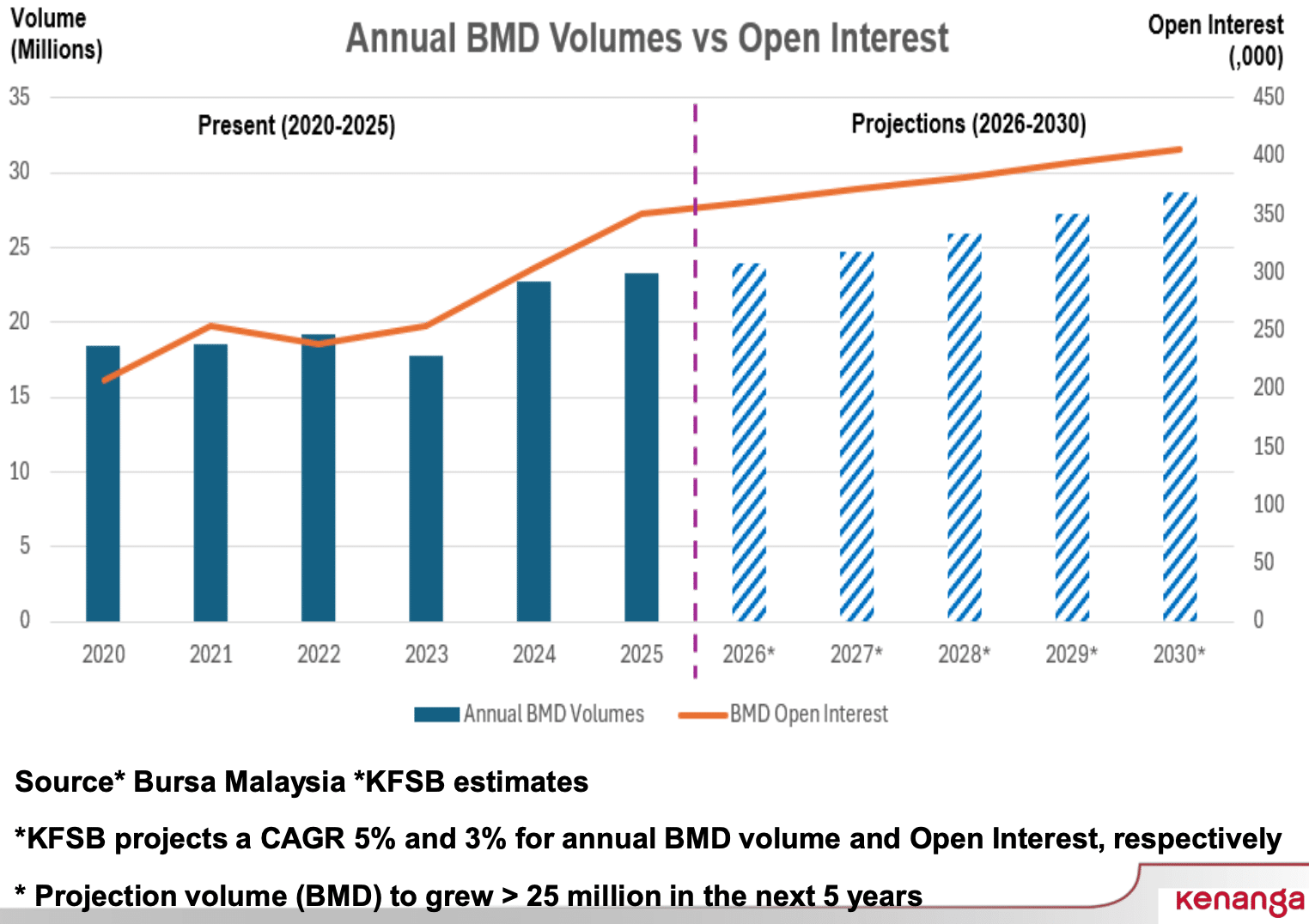
Source: Kenanga
Azila Abdul Aziz, chief executive and head of listed derivatives at Kenanga Futures, told Markets Media that volumes on BMD are projected to increase to over 25 million contracts in the next five years. She said: “We are in the sweet spot to grow in line with Asia and Malaysia can push its palm oil contracts. This is a growth story.”
She added that more than half, 60%, of overall market derivatives is driven by foreign participation with high-frequency trading and automated market growing in the past five years. Therefore, ease of access is critical, especially continuing sponsored access on CME Group, which began in 2010 and has been extended to 2028.
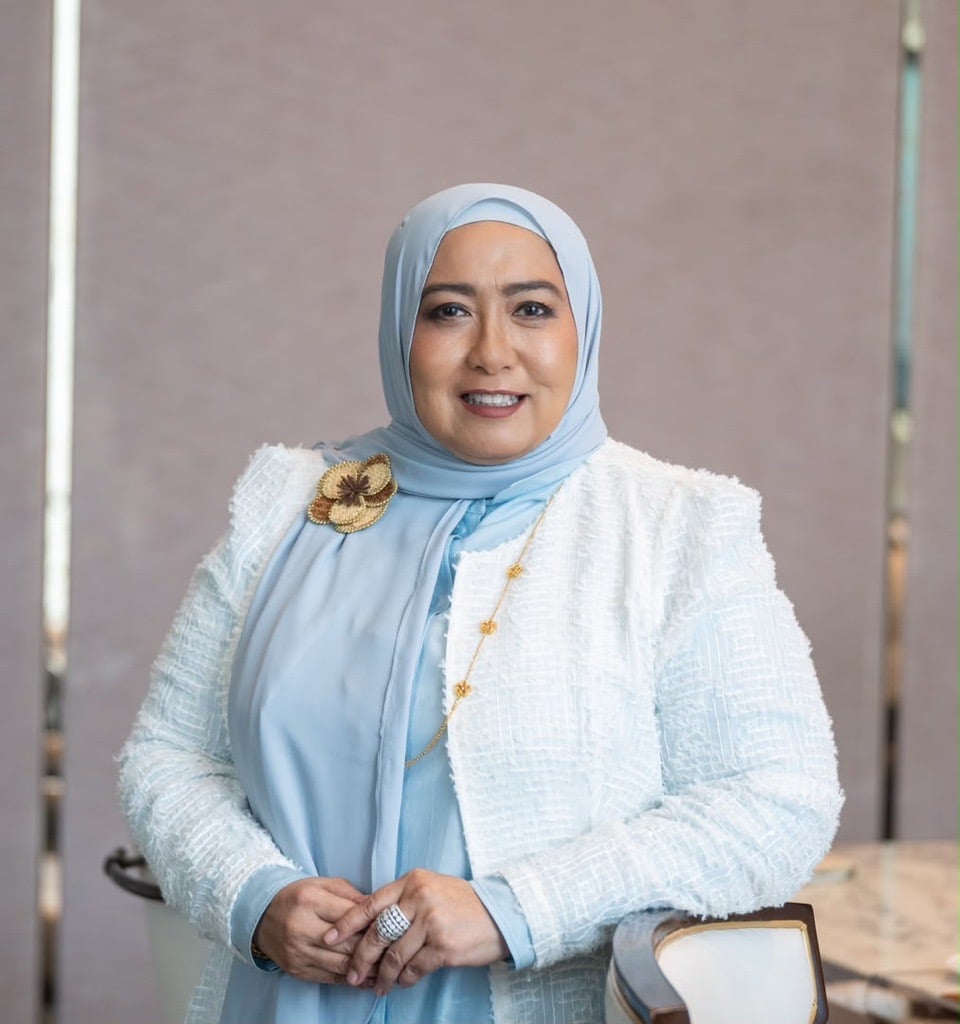
Azila Abdul Aziz, Kenanga
Access from CME’s Globex platform eliminates the need to support different market protocols and attracts more diverse range of buy-side and sell-side participants, including high-frequency traders, hedge funds, and global banks, according to Kenanga. Azila said: “We would need to hear something in 2027.”
In May this year Kenanga Futures launched its inaugural 2026 campaign, “Shining in Global Futures,” which runs until 31 July. The initiative combines education, risk awareness and market access to promote engagement in CME-listed derivatives.
Azila said in a statement that global markets are becoming increasingly dynamic. She added: “Against this backdrop, ‘Shining in Global Futures’, aims to make global futures markets more accessible while equipping traders with the K-Economy they need to manage risk and participate more effectively in.”
The expansion of Appointed Overseas Office (AOO) to deepen foreign participation is also boosting the Malaysian derivatives market.
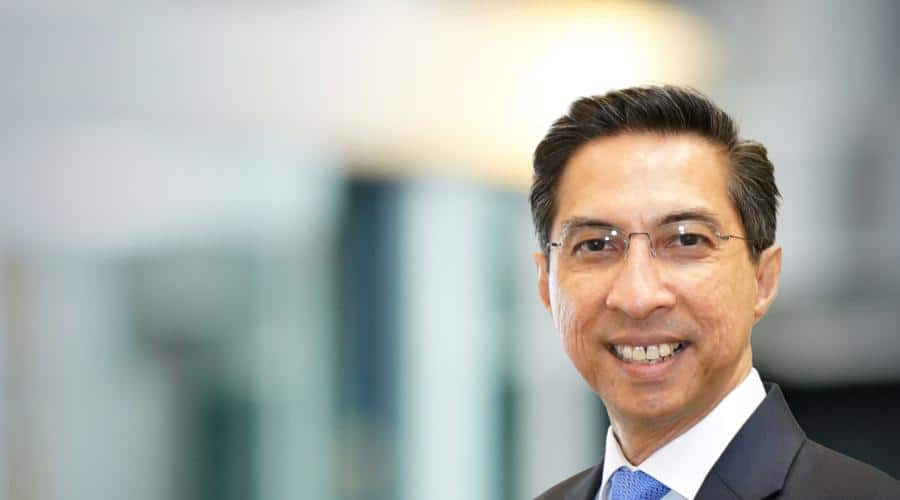
Dato’ Fad’l Mohamed, Bursa Malaysia
“Our strength has always been attracting global money into Malaysia, and we have been very successful,” added Azila. “We need to scale up in terms of our ability to support sophisticated customers, but also improve liquidity in the domestic Malaysian market.”
For example, in January this year Bursa Malaysia launched the Mini FTSE Bursa Malaysia KLCI Futures on the country’s main benchmark index, which Azila said is gradually attracting retail volume.
Dato’ Fad’l Mohamed, chief executive of Bursa Malaysia, said in a statement: “The launch of FKLM marks another step forward in expanding access to derivatives trading, making participation more inclusive for both experienced investors and the broader public. By widening market accessibility, we are reinforcing liquidity and supporting the sustainable growth of Malaysia’s capital market.”
Diversification
Bursa Malaysia’s derivatives market said on LinkedIn that it had record annual volume for the second consecutive year in 2025, reaching 23.3 million contracts, an increase of 2% year-on-year. On 9 October 2025, the market set a new single-day trading record.
However, crude palm oil futures made up the majority, 84%, of market activity at 19.62 million contracts, up 4% year-on-year. Azila said there is potential for the palm oil contract to be included in a global commodities index as this would attract new types of players and create a captive demand for the commodity.
To diversify volume away from palm oil derivatives, Kenanga believes there is potential to develop more shariah compliant derivatives as Malaysia aims to deepen its Islamic finance ecosystem.
In May this year Bursa Malaysia named Azizan Abdul Aziz as director of its Islamic capital market, a new role in addition to his current position as chief financial officer. The exchange said the appointment reflects Bursa Malaysia’s continued focus on strengthening its Islamic capital market proposition alongside its broader strategic priorities.
There is also potential to develop downstream futures products to drive higher market liquidity and BMD is exploring the introduction of scarcity-based futures contracts, particularly in strategic critical minerals such as rare earth elements.

NEWSLETTER SIGN UP
And receive exclusive articles on securities markets

🏆 The 2026 Global Markets Choice Awards are here! 🌍 Nominations are officially OPEN for the celebration of excellence in global capital markets trading & technology. Nominate below:
https://www.jotform.com/form/260086385121150

Delaware Life Insurance Company is becoming the first insurance carrier to offer an index that contains cryptocurrency, adding the BlackRock U.S. Equity Bitcoin Balanced Risk 12% Index to its fixed index annuity (FIA) portfolio.
As the digital assets industry pushes toward
Franklin Templeton is expanding its tokenized fund suite, signaling growing institutional demand for blockchain-based fund infrastructure and regulated investment products moving onchain. Read the full article below:
$50 billion in active ETF inflows helped fuel a record year for @BlackRock 's iShares business, as investors continue to lean into active strategies.
Shanny Basar
Senior writer
A Senior Writer at Markets Media who became a financial journalist in 2000 after working in banking for over a decade....
More about this authorRelated articles
-
The U.S asset manager intends to use HashKey's multi-jurisdictional platform over time.
-
Securities daily average value rose to its the highest in 18 years.
-
Total commodities volume rose 21% year on year.
-
This marks RLUSD’s entry into one of the most sophisticated digital assets markets.
-
CIBC will initially provide liquidity in OTC FX options.