






09.09.2026
Pulse AI Addresses Inflection Point in Trading Analytics
09.09.2026
BestEx Research, an execution algorithm and trading technology provider for global equities and futures, has launched Pulse AI, the first artificial intelligence-native interface for trading analytics to enable institutions to optimize execution costs before trading, rather than just analyse costs after execution.
Pre-trade models have traditionally been used to justify, rather than optimize execution costs, according to Hitesh Mittal, founder and chief executive of BestEx Research. Mittal told Markets Media that trading analytics are at an inflection point.

Hitesh Mittal, BestEx Reasearch
“The old generation of tools were designed to tell you what has already happened, to measure cost, demonstrate best execution and produce reports,” he added. “We are building the next generation to help you decide how to trade.”
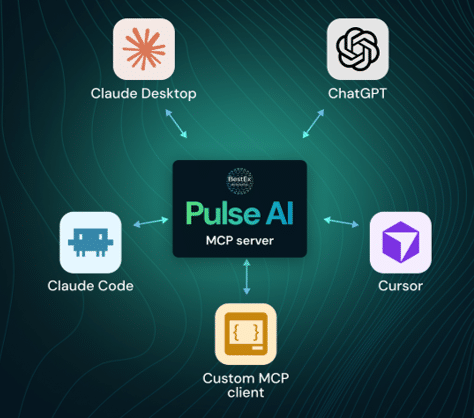
Pulse AI is available through three interfaces: a traditional dashboard, an API that can plug directly into clients’ portfolios to create optimized workflows, and an AI agent. Mittal argued that the use of AI is a differentiator because the analytics become more accessible and faster to use.
For example, traders do not need to wait weeks for their internal quants to perform analysis. Instead they can ask Pulse AI questions using natural language such as “what are the most liquid hours for the E-mini S&P 500?”, “when does liquidity migrate in the WTI crude oil roll?,” or “What is the expected cost of trading 100 contracts of Brent at different times of day?”
Firms have traditionally fitted their analytic model to historical trading data. Mittal said: “Rather than matching historical data, our model is about predicting the cost of something that has not been traded.”
He admitted that using AI always involves the risk of hallucinations, but claimed that AI is just an interface for BestEx’s model and the model itself is not built using AI. BestEx’s model is robust, transparent and found to be very accurate against years of out-of-sample execution data that was not used to fit the model. In addition, it is being constantly refined as the model is used by clients.
Most of the testing has been performed using the Claude AI model, which provides very descriptive answers, but clients can use any AI assistant. Nick Ashwin, head of futures product, at BestEx, told Markets Media: “The large language model has been trained to answer questions in the way that most traders ask the question.”
Source: BestEx Research
Many institutions are implementing AI in their trading operations. Mittal said: “Pulse AI is not just about putting AI on top of a database, which everybody can do.”
He argued that the biggest differentiator of Pulse AI is the power of the underlying predictive model. Pulse AI uses an approach called meta orders, which uses tick data to construct the aggregate demand and supply in a particular instrument on a given day. This collective intelligence from market data is verified against BestEx Research’s institutional execution data. The answers reflect current liquidity conditions and arrive with supporting visualizations and interpretation that a trader and their team would otherwise have to assemble by hand.
“It is the first modern pre-trade and post-trade product that has not been built as a PDF or a dashboard,” Mittal added. “This is the first model that has been built to answer not what happened, but what might happen if I trade this asset using these strategies.”
Pulse AI was launched in August this year for pre-trade analysis across futures with equities scheduled to be added in the fourth quarter of this year.
Broker-neutral TCA
Broker-neutral post-trade transaction cost analysis is due to be added in early 2027. BestEx Research said fair comparison and evaluation of broker performance has been a challenge for institutional investors because each broker measures the flow it executed using its own methodology, and presents results limited to that slice, so they are not easily comparable.
Pulse AI puts all of a buy-side firm’s execution under a single methodology and makes that analysis conversational.
“A trader can chat with their AI assistant about execution quality, get help navigating changing market conditions, or set an agent to work through their TCA overnight and find a rigorous analysis of performance across brokers waiting at their desk in the morning,” added Mittal. “It’s a fundamentally different relationship with the data than a quarterly report can produce.”

NEWSLETTER SIGN UP
And receive exclusive articles on securities markets

🏆 The 2026 Global Markets Choice Awards are here! 🌍 Nominations are officially OPEN for the celebration of excellence in global capital markets trading & technology. Nominate below:
https://www.jotform.com/form/260086385121150

Delaware Life Insurance Company is becoming the first insurance carrier to offer an index that contains cryptocurrency, adding the BlackRock U.S. Equity Bitcoin Balanced Risk 12% Index to its fixed index annuity (FIA) portfolio.
As the digital assets industry pushes toward
Franklin Templeton is expanding its tokenized fund suite, signaling growing institutional demand for blockchain-based fund infrastructure and regulated investment products moving onchain. Read the full article below:
$50 billion in active ETF inflows helped fuel a record year for @BlackRock 's iShares business, as investors continue to lean into active strategies.
Shanny Basar
Senior writer
A Senior Writer at Markets Media who became a financial journalist in 2000 after working in banking for over a decade....
More about this authorRelated articles
-

The firm is the first FCM to provide access to Kalshi and has launched Clear Street Private Markets.
-

The firm has extended algorithmic trading beyond the U.S. and Canada for the first time.
-

Members can source block liquidity while working algorithmic strategies in the broader marketplace.
-

The integration of dbHedge into LiquidityFX augments smartTrade’s existing tools for internalising FX flow.
-
The briefing touches on emerging technologies and outlines considerations for using AI.