






09.15.2026

Digital assets prime brokerage FalconX, investment bank Cantor Fitzgerald and U.S. based clearing firm Phillip Capital have all recently taken steps to expand institutional access to event contracts on Kalshi, the CFTC-regulated prediction market.
In August this year FalconX and Kemet, an execution and risk platform for institutional digital asset derivatives, announced a collaboration to enhance institutional exposure to contracts on Kalshi. Ash Ashmawy, chief executive of Kemet, told Markets Media that the firm has been building infrastructure for the 24/7 lifecycle of digital asset derivatives for nearly four years. Kemet provides FalconX with the infrastructure to access Kalshi and the prime broker is a minority investor in the firm.
“Prediction markets are a very interesting avenue for liquidity for several desks that we support,” he added. “This is a proof point for institutional flow starting to show up in these event contracts.”

Ash Ashmawy, Kemet
Ashmawy said prediction markets have become more prevalent in conversations and the contracts are attracting more liquidity, especially in the run up the U.S mid-term elections in November. He added: “Everyone is getting into ready mode in anticipation of potentially flow, especially at the institutional level.”
Joshua Lim, head of markets at FalconX, told Markets Media that institution are primarily interested in prediction contracts on economic data, political markets, using event contracts to hedge against adverse outcomes to their broad crypto thesis, such as whether the Clarity Act is passed in the U.S and for financialized binary markets. FalconX does not cover sports prediction markets.
Prediction markets are a very precise way to express a view that they would only previously express with deltas or vanilla options, according to Lim. Using traditional delta instruments, which are sensitive to the price of an underlying asset, provides broad exposure as they depend on both the price of the asset and the probability of an outcome.
“Funds like prediction markets as they just target the specific probability of something,” he added. “They decouple the magnitude of the outcome from the probability of an outcome.”
FalconX is looking to expand the emerging category around corporate micro and corporate specific contracts with certain banking partners. For example, the contracts could relate to how many cars Tesla manufactures in a quarter or whether Michael Saylor from bitcoin treasury firm Strategy sold any bitcoin in a week. In contrast, it is hard to obtain a clean expression of that event through the Strategy stock price, which incorporates embedded expectations around the price of bitcoin.
Lim said: “These are things that our trading desks are increasingly asked for.”
The digital asset prime broker already has between 15% and 20% of the options market in crypto, according to Lim. Therefore, he argued that FalconX can translate that expertise, including pricing models, to prediction markets via Kemet.
“If we are facing people bilaterally on trades, we need tooling to access listed prediction market liquidity to hedge and to also passively get out of risk,” said Lim.
Through the Kemet platform, event contracts route through the same algos, land in the same book, and clear the same risk model as options, perpetual futures and spot. Andy Ross, head of institutional at Kalshi, said in a statement that for prediction markets to reach their full potential with institutional participants, they need to fit into the same execution stack and risk systems institutions rely on. Ross said: “This collaboration between Kemet and FalconX is another step forward in helping institutions fully incorporate Kalshi event contracts into how they trade, manage risk, and make decisions.”
Lim argued that a differentiator for FalconX is its regulatory status.

Joshua Lim, FalconX
“We were the first firm in crypto to get a a swap dealer registration in the U.S. to offer regulated bilateral derivatives on crypto, so that gave us a lead with hedge funds,” Lim added. “The institutional investors trading these types of frontier markets, such as prediction markets or compute markets, usually come from crypto.”
Currently most institutional liquidity is in the bilateral space for event contracts, and sizes tend to be between $1m and $10m, much smaller than in vanilla derivatives. Lim described the prediction markets as “very early’ and similar to crypto options between 2019 and 2020 before derivative volumes took off in the first large institutional cycle for crypto. He expects it will take about five years before event contracts are in the toolkit of most hedge funds, especially as regulation is still uncertain.
Lim said the upcoming U.S mid-term elections are already boosting prediction markets as they have proved to be” pretty reliable” predictor of election outcomes in previous cycles. ETF issuers have also filed with the SEC to launch prediction market products, which should also prove to be a catalyst if they are approved.
Cantor Fitzgerald
In August this year Cantor Fitzgerald announced the launch of institutional trading for prediction markets on Kalshi, with additional venues expected to follow.The firm said it has become one of the first full-service investment banks to provide institutional clients with access to block trading in event contracts on a CFTC-regulated exchange.
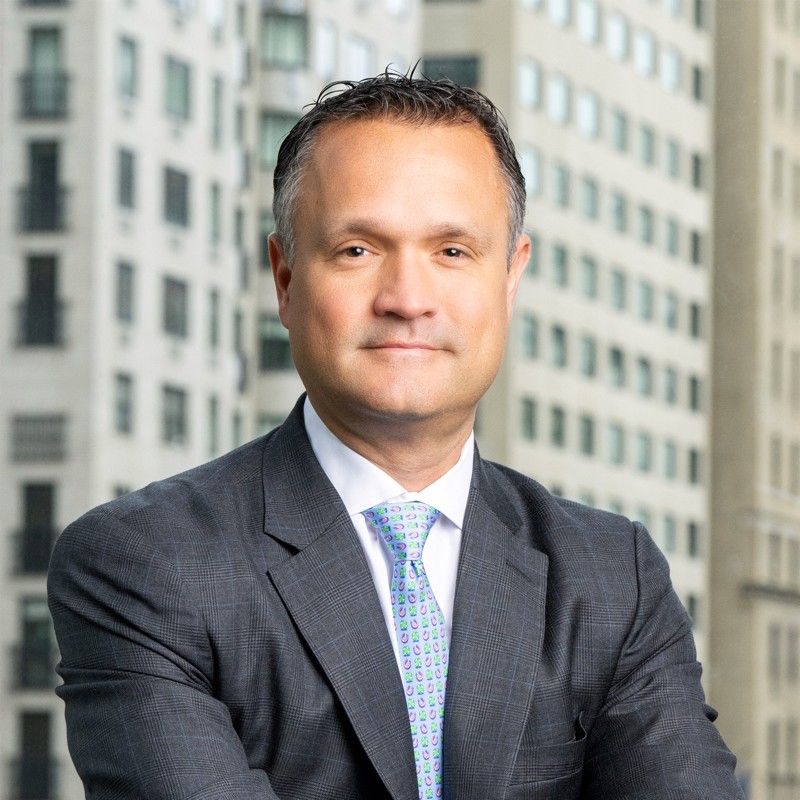
Pascal Bandelier, Cantor
Pascal Bandelier, co-chief executive and global head of equities at Cantor, said in a statement that prediction markets are growing rapidly, but institutional participation has not kept pace because investors have lacked the ability to transact at scale on a regulated exchange.
“The liquidity is here,” added Bandelier. “With the launch of block trading, institutional investors can now access block trading in event contracts through an institutional intermediary they know and trust.”
Cantor is also collaborating with Susquehanna Predictions as a leading liquidity provider in prediction markets, to provide institutional-scale pricing and liquidity for its prediction markets coverage. Joe Grubb, head of business development at Susquehanna Predictions, said in a statement that the next area of material growth for prediction markets will be large institutional risk transfer.
Grubb said: “We are able to price and execute custom, tailored contracts for institutional counterparties desiring to hedge both general market and bespoke industry risk currently unserved by traditional insurance markets.”
Phillip Capital
In another example of event contracts becoming available through existing infrastructure and relationships Phillip Capital, a registered futures commission merchant (FCM), has announced a partnership with Kalshi.

Fillipo Lecchini, Phillip Capital
The ability to incorporate Kalshi event contracts into existing trading, hedging and portfolio-management frameworks will allow participants to evaluate and manage risk more holistically while drawing on the operational and analytical efficiencies available through an established FCM relationship. This potentially reduces basis risk and enables more precise hedging of complex economic and business outcomes.
On 15 September 2026 Phillip Capital announced that clients can execute trades through their preferred trading platform and the FCM can clear their Kalshi activity. The FCM expects to clear the full range of eligible contracts without limiting the offering to specific market categories.
Filippo Lecchini, chief executive of Phillip Capital, said in a statement: “By providing our clients with access to Kalshi event contracts alongside our broader product suite, we can help institutions more effectively transfer risk, express views and manage exposures across a wider range of outcomes.”
Technology providers
Capital markets technology providers are also helping to ensure that event contracts are available through existing infrastructure in existing workflows.
ION announced in September this year that Coinbase has selected ION’s XTP to support event contract clearing for Kalshi. ION and Coinbase partnered to support Kalshi’s listing of event contracts in December 2025. XTP allows FCMs to run event contracts alongside their existing exchange-traded derivatives and over-the-counter businesses in a single solution allowing fast onboarding, low operational lift, and seamless scaling as volume grows.
Toni Gemayel, head of prediction markets at Coinbase, said in a statement: “XTP’s real-time processing capability allows us to manage growing prediction market volumes while maintaining the back-office stability and execution standards.”
In August this year TS Imagine said it had integrated prediction markets data into its platform, enabling institutional clients to use market-implied event probabilities within existing risk management workflows.
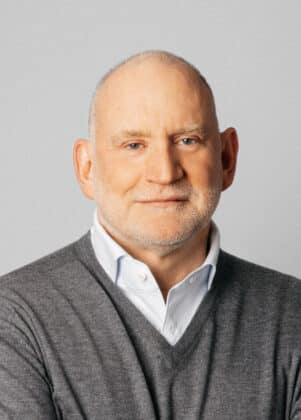
Rob Flatley, TS Imagine
Rob Flatley, founder and chief executive of TS Imagine, said in a statement that prediction markets add a forward looking, event-specific view of how market participants are pricing defined outcomes. He added: “By connecting that signal to portfolio positions and existing risk analytics, our clients can translate changes in event probabilities into portfolio-level insight.”
Trading Technologies International (TT), a capital markets technology provider, also said in August this year that it will support connectivity to OG.com, Crypto.com’s CFTC-regulated exchange and clearinghouse. Connectivity to Crypto.com’s regulated prediction markets experience, OG.com, is scheduled to go live on the TT platform in the fourth quarter of 2026.
Alun Green, managing director, futures and options for TT, said in a statement that there is a strong and growing appetite among institutional clients to expand their participation in regulated prediction and digital asset markets. TT will additionally provide full support for Crypto.com’s new margin-based crypto futures contracts at launch.
Steve Humenik, chief legal officer of OG.com and EVP of Crypto.com, said in a statement: “Partnering with Trading Technologies allows us to effectively bring OG.com’s innovative prediction markets products directly into the workflows of the world’s leading market participants.”
TT had announced in June this year that it will support clients’ ability to execute trades on a range of U.S.-regulated prediction markets, beginning with trading connectivity to Kalshi.
Green said in a statement: “Over the past several months, we’ve seen increased institutional demand among our clients for these growing markets, with a clear desire to ensure that they can employ the same advanced trading functionality they leverage in other asset classes.”

NEWSLETTER SIGN UP
And receive exclusive articles on securities markets

🏆 The 2026 Global Markets Choice Awards are here! 🌍 Nominations are officially OPEN for the celebration of excellence in global capital markets trading & technology. Nominate below:
https://www.jotform.com/form/260086385121150

Delaware Life Insurance Company is becoming the first insurance carrier to offer an index that contains cryptocurrency, adding the BlackRock U.S. Equity Bitcoin Balanced Risk 12% Index to its fixed index annuity (FIA) portfolio.
As the digital assets industry pushes toward
Franklin Templeton is expanding its tokenized fund suite, signaling growing institutional demand for blockchain-based fund infrastructure and regulated investment products moving onchain. Read the full article below:
$50 billion in active ETF inflows helped fuel a record year for @BlackRock 's iShares business, as investors continue to lean into active strategies.
Shanny Basar
Senior writer
A Senior Writer at Markets Media who became a financial journalist in 2000 after working in banking for over a decade....
More about this authorRelated articles
-

There has been a shift from experimentation towards commercialisation and industrialisation.
-

Global dataset provides daily, item-level pricing data to help understand the drivers of inflation.
-

DBS, OCBC and UOB completed Singapore dollar transactions using tokenised deposits.
-

The new location will accommodate more than 125 employees focused on AI and cloud transformation.
-

The U.S. investment bank has opened an office in Paris.