






09.23.2026

Market participants said the proliferation, growth, social and ethical issues and the determination of the value of prediction contracts demand a policy reaction from Congress.
Brian Quintenz, board member of prediction market Kalshi and former commissioner at the Commodity Futures Trading Commission, spoke on a panel about prediction markets at the Financial Markets Policy Conference 2026 hosted by the Georgetown Psaros Center for Financial Markets and Policy on 23 September 2026 at the Georgetown University campus in Washington D.C.
He explained the genesis of Kalshi. Co-founders Tarek Mansour and Luana Lopes Lara worked in traditional finance and saw occasions where institutions wanted to hedge the outcome of a significant event such as Brexit or the U.S. presidential election, but their structured products did not work very well. Instead, they wanted a legal, regulated contract that is simple and available to everyone. Kalshi took two and a half years to get a regulatory license from the CFTC, and another year and a half to launch.
Quintenz argued that the Commodity Exchange Act allows event contracts to represent almost anything that has financial, commercial, or economic consequence.

Brian Quintenz, Kalshi
“The way the law is structured is rational,” he added. “It meets the historical purpose of derivatives markets, and that is why we have such a proliferation of contracts today where many people are finding value, utility, and risk management purposes.”
He continued that new products always challenge assumptions but markets can be improved with more thoughtful, detailed, appropriate regulatory structures. For example, the derivatives market CBOT was sued when it first introduced grain futures without any physical delivery, as they were seen as gambling. Grain futures were eventually approved by the Supreme Court.
“Congress can always change the statute,” said Quintenz. “This is the appropriate venue for this discussion as they are elected and are accountable to the American public for policy decisions of such an important magnitude.”
Rostin Behnam, distinguished fellow, Georgetown Psaros Center for Financial Markets and Policy, global head of policy and corporate affairs at Bloomberg and former chairman of the CFTC, said on the panel that prediction markets have social benefits, but also potentially social risks, and agreed that Congress should act.
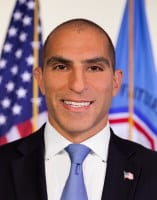
Rostin Behnam, Georgetown Psaros Center for Financial Markets and Policy
“I think the proliferation, growth, social and ethics issues and the actual value to prediction contracts ultimately demand a policy reaction from Congress to say this is a new asset class,” Benham said. “Given the current state of markets and the demand for a large pool of products outside core economic indicators, it is really important that Congress gives a more prescriptive sense to the CFTC and the executive branch.”
Amanda Fischer, policy director and chief operating officer at Better Markets and former chief of staff and senior counselor to the chairman of SEC, agreed that derivatives, such as grain futures, play an important role in price discovery and allowing producers to hedge. However, she argued that many prediction contracts, such as on sports or pop culture, do not enable risk management or help producers in the economy.
“We think that has gone far afield, particularly in the last 18 months,” she added. “We think that sports contracts clearly fall under historical state and tribal gaming laws, far from the core purposes of derivatives markets.”
In addition, Better Markets believes that although contracts on elections have a financial and economic impact, elections are “too sacred” in democracy and the risk of failure in that market is too high. In addition, Better Markets is concerned about household balance sheets, particularly for young Americans. The organisation is carrying out research into how prediction markets may be altering consumer behavior and diverting money from core investing into consumption and gaming.

Amanda Fischer, Better Markets
Fischer also highlighted that the CFTC has about 500 employees and has lost a quarter of its employees in the last year and a half, so it does not have the resources to regulate proliferating prediction markets.
Jim Angel, associate professor of finance at Georgetown University McDonough School of Business, was also doubtful on the panel on whether the CFTC has sufficient resources to police prediction markets. He said: “If Congress really wants the CFTC to do it, they need to give them the budget and the manpower to do the job well.”
Benham also questioned whether the CFTC has the capacity to police the core derivatives markets and prediction markets. He said: “This growing market requires a different expertise, different customer protection issues, and a lot of contracts are being listed every day which the CFTC is not historically used to.”
Angel was in favour of prediction markets and argued they fundamentally produce information, risk management and entertainment. He said: “If we channel people’s gaming instincts into things like the equity market, they bring in information, liquidity, capital, risk-bearing capacity, which all help the economy grow.”
However, he also said the industry needs to worry about the social harms of excessive gaming and the addiction of compulsive gambling. Angel added there is a big public policy issue to be faced of whether prediction market regulation should be based on gaming regulation or financial regulation.
“What we see happening now with prediction markets is an amazing collision in multiple dimensions,” said Angel. “We see a collision between state and federal regulation, between the SEC and CFTC, between national and international regulation, and between traditional financial regulation and gaming regulation.”
Terry Duffy
Terry Duffy, chairman and chief executive of CME Group, was interviewed at the conference before he steps down as CEO on 1 March 2027 and is succeeded by Lynne Fitzpatrick, current president and chief financial officer.
Duffy said the growth of markets needs to come from the credibility of regulation. When creating new products, there needs to be a commercial participant on both sides, ahead of speculators, according to Duffy. He has described some prediction markets as providing useful information, while others, particularly some sports contracts, as simply gambling dressed up in the language of financial markets.
Duffy said: “What’s most important is core principle 3 of the Commodity Exchange Act, which means that this contract in not acceptable under legislation.”
He gave the example of the current CFTC approving 2,500 event contracts through self-certification without any of them going through a public review.

Terry Duffy, CME Group
“One of the examples I like to use is that I would like to know what the Nathan’s Hot Dog Eating Contest has to do with economics in the United States but we have contracts on that,” he said. “These are susceptible to manipulation and this is what sets the industry back.”
In August last year CME Group partnered with FanDuel, the online gaming company owned by Flutter Entertainment, to launch fully funded, event-based contracts on economic indicators such as the S&P 500 and Nasdaq-100, prices of oil and gas, gold, cryptocurrencies, GDP and CPI. Duffy said FanDuel wanted CME to list some sports contracts that he was “very uncomfortable” with because he thought they are susceptible to manipulation.
“I do believe that sports contracts are gambling, and should be regulated by the states,” Duffy added. “There could be some benefits to prediction markets but we are creating too many products that are designed around speculation.”
In June this year CME sued the CFTC over the regulator’s decision to allow Kalshi to list bitcoin perpetual futures, which do not have an expiration date. Duffy argued that perpetuals use a funding rate in order to keep the contract tied to the spot market, which is a payment between two participants, so the contract is defined as a swap under the Dodd-Frank Act of 2010.
“I hate to put customers into a contract that is deemed a swap, but they are treating it as a future,” he said. “I don’t want people to be told they have a tax liability, or are in violation of the law.”
The CFTC was also wrong to authorize the perpetual Bitcoin future without a public review, according to Duffy, as the contract is a novel and complex product.
“That is not my language, it is theirs,” he added. “I thought they ran roughshod over the process, and I think it is important for users to know exactly what product they are trading under what regulatory regime.”
Duffy also discussed 24/7 trading, which he believes will happen in “every product on the planet,” but only when the banking system is also 24/7. CME has started trading a small gold contract and a silver contract 24/7.
“We are trying to list a 24/7 10-barrel oil contract that’s been stayed at the CFTC, which is kind of strange because Kalshi has a prediction market on oil about what the price of oil is going to do in the next 15 minutes,” said Duffy. “They have that market today, yet a highly regulated exchange in the United States cannot list 24/7 on a small contract, so I think that is a bit of an issue.”
In August this year CME and Silicon Data, which provides GPU market intelligence and benchmarking backed by global trading firm DRW, filed to launch two compute futures. Duffy said the Commerce Department has said there is a national security issue related to listing compute contracts.
“We filed our contract for compute but Kalshi has already listed prediction markets on this for months,” added Duffy. “Compute is a very interesting product but I and others have referenced that it could be the next oil of the United States.”

NEWSLETTER SIGN UP
And receive exclusive articles on securities markets

🏆 The 2026 Global Markets Choice Awards are here! 🌍 Nominations are officially OPEN for the celebration of excellence in global capital markets trading & technology. Nominate below:
https://www.jotform.com/form/260086385121150

Delaware Life Insurance Company is becoming the first insurance carrier to offer an index that contains cryptocurrency, adding the BlackRock U.S. Equity Bitcoin Balanced Risk 12% Index to its fixed index annuity (FIA) portfolio.
As the digital assets industry pushes toward
Franklin Templeton is expanding its tokenized fund suite, signaling growing institutional demand for blockchain-based fund infrastructure and regulated investment products moving onchain. Read the full article below:
$50 billion in active ETF inflows helped fuel a record year for @BlackRock 's iShares business, as investors continue to lean into active strategies.
Shanny Basar
Senior writer
A Senior Writer at Markets Media who became a financial journalist in 2000 after working in banking for over a decade....
More about this authorRelated articles
-

Tokenization, prediction markets, perpetuals & extended hours are market expanders, not cannibalization risks.
-

There is growing interest in prediction markets from quant research teams, macro & systematic hedge funds.
-

Prediction markets need to fit into the existing execution stack and risk systems used by institutions.
-

MFA said appropriate oversight will strengthen investor confidence and increase participation.
-

Commodity derivatives are the prediction market's fastest-growing product.