






08.25.2014
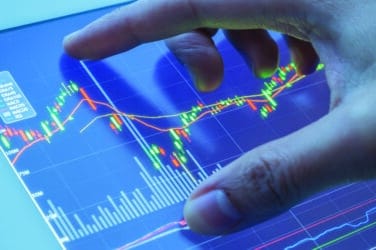
The past year has seen a significant uptick in the demand for data visualization, driven by the fact that the range of available analytics and data exceeds what can be looked at in a standard row-and-column format. This is particularly true in the equity space, but it’s also occurring in other asset classes such as FX and options.
Today, tier 1 asset managers deal with multiple brokers, each offering their own pre-trade and post-trade analytics. “I’ve got my own indicators and technicals on the market, and I’m getting information from all the different lit venues and dark pools,” John Adam, global head of product management at trading systems provider Portware, told Markets Media. “How do I make sense of it?”

John Adam, Portware
Current investments in big data are largely focused on revenue generating opportunities in the front office, but the future is likely to see much more focus on client retention, compliance function support, and enterprise risk management and governance, according to research firm Aite Group.
“The capital markets have been relatively slow to adopt big data strategies, but they have begun to make some impact in a select few areas of the markets over recent years, including within sentiment analysis for trading, risk analytics, and market surveillance,” said Virginie O’Shea, senior analyst at Aite Group, in a release.
Although some trading desks are buckling under what they perceive to be information overload, others are looking at the same data and finding a way to visualize it, and that data becomes an information advantage.
“It’s the same data available to the same people,” Adam said. “Whether it’s a complaint or an advantage depends on one’s perspective and also the technology input.”
Traditionally, the firms that were more likely experiment were smaller hedge funds. “With data visualization, I would have typically expected to get asked first by hedge funds and then two or three years later, have a very large multi-region, multi-asset manager approach it cautiously and come out as the second wave,” said Adam.
Currently, the trend has reversed. It’s the large asset managers who are taking a very sophisticated view of data visualization.
The ‘actionability’ of the information is the reason why there’s so much demand for data visualization. Formerly, traders had to rely on a spreadsheet that took days to compile, purporting to show market trends or average market impact for a broker, or the efficacy of a particular algorithmic trading strategy.
The key factors in data visualization are real-time and actionable. “I don’t want to show somebody a data visualization unless they can act upon it within the same screen,” said Adam. “It’s not ‘draw me a chart and then I’m going go back and think about what I need to do.’ It’s ‘draw me a chart and let me act directly from the chart.’”
Portware’s focus over the next two years is making products predictive and adaptive, or ‘learning agents.’
“There is an expectation that if I have these metrics and I have this data available to me, not only is the trader acting on it, but the EMS itself has the capability to think and anticipate what the trader wants and what the market is going to do,” Adam said. “I have an adaptive platform that learns traders’ preferences and the behavior of the market, and makes smarter decisions the next time.”
Featured image via apinan/Dollar Photo Club

NEWSLETTER SIGN UP
And receive exclusive articles on securities markets

🏆 The 2026 Global Markets Choice Awards are here! 🌍 Nominations are officially OPEN for the celebration of excellence in global capital markets trading & technology. Nominate below:
https://www.jotform.com/form/260086385121150

Delaware Life Insurance Company is becoming the first insurance carrier to offer an index that contains cryptocurrency, adding the BlackRock U.S. Equity Bitcoin Balanced Risk 12% Index to its fixed index annuity (FIA) portfolio.
As the digital assets industry pushes toward
Franklin Templeton is expanding its tokenized fund suite, signaling growing institutional demand for blockchain-based fund infrastructure and regulated investment products moving onchain. Read the full article below:
$50 billion in active ETF inflows helped fuel a record year for @BlackRock 's iShares business, as investors continue to lean into active strategies.
Terry Flanagan
Managing Editor
Terry Flanagan is Managing Director at Markets Media Group, where he oversees the Markets Media, Traders Magazine, and GlobalTrading platforms....
More about this authorRelated articles
-
Volume is increasingly aggregating around the closing auction on stock exchanges.
-

The AI-native interface for trading analytics enables institutions to optimize execution costs before trading.
-

The firm is the first FCM to provide access to Kalshi and has launched Clear Street Private Markets.
-

The firm has extended algorithmic trading beyond the U.S. and Canada for the first time.
-

Members can source block liquidity while working algorithmic strategies in the broader marketplace.