





11.08.2011
The ongoing debate about China’s real estate market as a bubble or no bubble racks the brains of hedge fund managers.
Hedge funds that have taken an increased interest in the U.S. luxury real estate market may score from big investment wins in the near future, according to Steve Shafer, chief investment officer of Covenant Investors, a 282 million hedge fund, based in Oklahoma City.
“Luxury real estate encompasses all three of our investment themes,” said Shafer, whose firm manages both institutional and high net worth assets. “We view these as cyclical investments, bought at or near the bottom of the real estate market cycle, which will produce an income stream of 3-5%.”
Perhaps not surprisingly, Shafer is confident that the end users behind such real estate investments will be wealthy Asian investors—those that have taken an interest in investing in “new urbanism,” a concept behind the production of new resorts and vacation properties. Covenant is currently investing properties located in Rosemary Beach, and Seaside, Florida, as well as Seabrook, Washington.
Some of today’s “wealthy Asian investors” are Chinese, and have been experiencing heighted scrutiny on their own real estate market—over speculation that it’s a bubble. Shafer thinks not.
“The leverage behind residential (Chinese) real estate is relatively low,” he told Markets Media. “It’s largely a function of excess capital in China that needs to be ‘parked’ somewhere because the government has controls on where people can invest. As long as alternatives are controlled by the government, the government will also control the degree and intensity of money being withdrawn from residential real estate en route to other investments.”
Covenant Investors is not currently investing in the Chinese real estate market.
While some investors today note that hedge funds should be as transparent and liquid as possible, luxury real estate investments serve a purpose for Covenant. The firm mandates that a portion of a portfolio belongs in hard assets as a hedge against inflation.
Still, others believe that opening the gateway for Asian investors to buy U.S. real estate will ultimately transfer wealth from “debtor nations” of the west to the “creditor nations” of the east. Regardless, Shafer cited his investments will pay off.
“We hope to sell our investment properties as a ‘collection’ of boutique vacation destinations within five years,” commented Shafer.

NEWSLETTER SIGN UP
And receive exclusive articles on securities markets

🏆 The 2026 Global Markets Choice Awards are here! 🌍 Nominations are officially OPEN for the celebration of excellence in global capital markets trading & technology. Nominate below:
https://www.jotform.com/form/260086385121150

Delaware Life Insurance Company is becoming the first insurance carrier to offer an index that contains cryptocurrency, adding the BlackRock U.S. Equity Bitcoin Balanced Risk 12% Index to its fixed index annuity (FIA) portfolio.
As the digital assets industry pushes toward
Franklin Templeton is expanding its tokenized fund suite, signaling growing institutional demand for blockchain-based fund infrastructure and regulated investment products moving onchain. Read the full article below:
$50 billion in active ETF inflows helped fuel a record year for @BlackRock 's iShares business, as investors continue to lean into active strategies.
Terry Flanagan
Managing Editor
Terry Flanagan is Managing Director at Markets Media Group, where he oversees the Markets Media, Traders Magazine, and GlobalTrading platforms....
More about this authorRelated articles
-
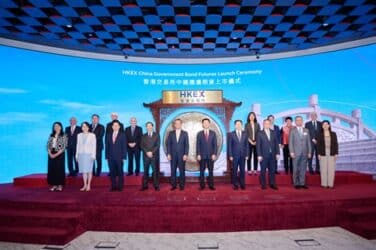
This marks a significant step in Hong Kong’s fixed-income and currencies ecosystem.
-

This deepens the integration of Chinese assets into the international financial infrastructure.
-
OTC Clear will be able to settle RMB funds directly via the Cross-Border Interbank Payment System.
-
The contract is a milestone in developing Hong Kong’s fixed income and currencies ecosystem.
-

Market participants outside China will be able to acquire exposure to the SHFE flat steel market.