




Jim Downs, CEO, Connamara Systems

Jim Downs, Connamara
It’s no secret that exchanges have undergone a drastic transition in recent decades, moving from physical trading pits to electronic versions. While it is true that trading in most major asset classes — equities, fixed income, futures, foreign exchange — is now electronic, the number of products, commodities, and services that are not traded electronically is still vast. These are fragmented markets with little price transparency that affect the bottom line of manufacturers, miners, agricultural producers, transportation companies, and banks. And this lack of transparency is particularly true in emerging economies without a long history of exchange trading.
The good news is that today’s technology makes it easier than ever for niche markets to enjoy the benefits of price discovery that only an exchange can offer. Importantly, technology allows these new markets to be up and running in no time with a moderate investment of capital. The challenge, of course, is to select the right technology partner who will deliver in a timely and cost-sensitive manner.
To that end, we thought it would be helpful to compile a list of things to consider when selecting an exchange technology partner. Here are the questions you need to ask to decide whether there’s a fit or not.
Is this firm’s technology cutting-edge? It goes without saying that you want your tech to be top-notch — anything less than that, and it’s hard to survive, much less thrive, in today’s world. Speed is important, but so are things like compatibility, scalability, and resiliency. These things can be difficult to determine at first glance, but here are some more specific questions you should ask: What is the firm’s benchmark for speed, and will they share the details of their benchmarking? What is their core architecture? What is the age of their technology?
Does this firm have domain expertise? On the other side of the coin, it’s not enough to simply have the technology focus and expertise — you want a partner that understands both technology and trading. What is the breadth of the firm’s expertise across traditional asset classes like equities, fixed income, derivatives, and FX? What experience do they have with new asset classes? Do they have expertise with exchange matching engines as well as auction markets and RFQ (request for quote) markets? Do they understand the unique needs of different types of market participants — commercial users, traders, brokers, speculators and investors? There are so many different ways to trade today, and while the industry is more accessible than ever, it has also become more complex than ever. If your technology partner doesn’t fully understand the dynamics and liquidity of your market, the product is unlikely to meet your needs, or if it does, it will take a lot more time and effort.
Will this firm be flexible to my needs? “One size fits all” is nice in theory, but it rarely works out in practice, at least in our industry. As mentioned above, trading is far too complex, and there are far too many variables in play for one approach to work for everything. Ask about the firm’s licensing and pricing models. Do they have a pricing model that accommodates the funding challenges for start-up exchanges? Ask about their approach to software engineering. Be sure that you are getting a proposal tailored around what makes the most sense for you, not what is easiest for the technology partner. Are they willing to work with you to clearly define your needs and requirements and devise a short-term and long-term development road map?
Will this firm be a partner now, but a competitor later? Any firm you’re talking to will be able to do software engineering, but are they truly a software engineering firm? If they have other business affiliates or aspirations, they may actually end up being a competitor to you. You should ask: Are they owned, in whole or part, by an existing exchange? Do they have any joint ventures, partnerships, or exclusive support arrangements with an existing exchange? Are their development priorities driven by any affiliate or major customer? You want a firm that will be your partner and help you grow — the best way to do that is with a firm that is 100% dedicated to software engineering.
Are these people that I want to do business with? This one goes for any industry: beyond the technology, it’s important to do business with people of integrity — intellectual integrity, professional integrity, and personal integrity. You should choose a firm that you believe wants to help your business grow and succeed. They should have a history of successful delivery and of partnering with clients for the long-term. They should provide personal service to the point where they almost feel like an extension of your business. Ask about the ongoing support you will receive beyond the initial build. Ask for specific examples of projects similar to yours in terms of complexity, cost and delivery times. Ask for several client references and speak to those references directly. Ask those references about the strengths and weaknesses of the firm. Above all, do business with good people.
—
We realize this is a long list of questions (admittedly more than five overall), but they are crucial for such an important decision — if you end up picking the wrong firm, you may never get another chance to execute your vision the way you want to.
Any questions about our questions? Drop us a line at info@connamara.com.

NEWSLETTER SIGN UP
And receive exclusive articles on securities markets

🏆 The 2026 Global Markets Choice Awards are here! 🌍 Nominations are officially OPEN for the celebration of excellence in global capital markets trading & technology. Nominate below:
https://www.jotform.com/form/260086385121150

Delaware Life Insurance Company is becoming the first insurance carrier to offer an index that contains cryptocurrency, adding the BlackRock U.S. Equity Bitcoin Balanced Risk 12% Index to its fixed index annuity (FIA) portfolio.
As the digital assets industry pushes toward
Franklin Templeton is expanding its tokenized fund suite, signaling growing institutional demand for blockchain-based fund infrastructure and regulated investment products moving onchain. Read the full article below:
$50 billion in active ETF inflows helped fuel a record year for @BlackRock 's iShares business, as investors continue to lean into active strategies.
Related articles
-

Clients can manage multi-currency interest rate risk on ICE with greater capital efficiency.
-

New designation helps investors identify listed companies leading the low-carbon transition.
-

The acquisition of Octus will transform LSEG’s presence in credit and private market data.
-
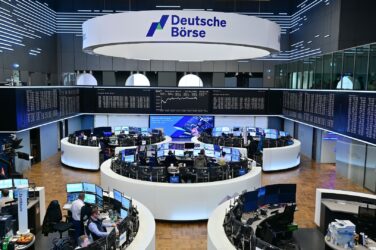
More assets from institutional and private investors in Europe are flowing into capital markets.
-

Duffy hopes its compute futures will be approved "sooner rather than later."