






08.25.2026

Fund managers Vanguard and Wellington Management completed their first tokenized collateral trades on Nasdaq Calypso and Canton Network.
Yuval Rooz, co-founder & chief executive at Digital Asset, the blockchain technology provider, said on X: “Collateral management is one of the biggest opportunities for public blockchains.”
Collateral management is one of the biggest opportunities for public blockchains, and I've said it more than a few times.
Now we're proving it. Working alongside giants like @Nasdaq @Wellington_Mgmt and @Vanguard_Group to capture this onchain activity in real time.
Roland Chai…
— Yuval Rooz (@YuvalRooz) August 24, 2026
Roland Chai, head of digital liquidity networks at Nasdaq, said on LinkedIn that 25% of collateral is tied up in corrective and non-interest-bearing measures, with the average tier 1 bank holding over $35bn in idle capital. Consultancy ValueExchange has estimated that operational costs make up over 50% of the total cost of a collateral trade, so tokenization could bring significant efficiencies for counterparties.
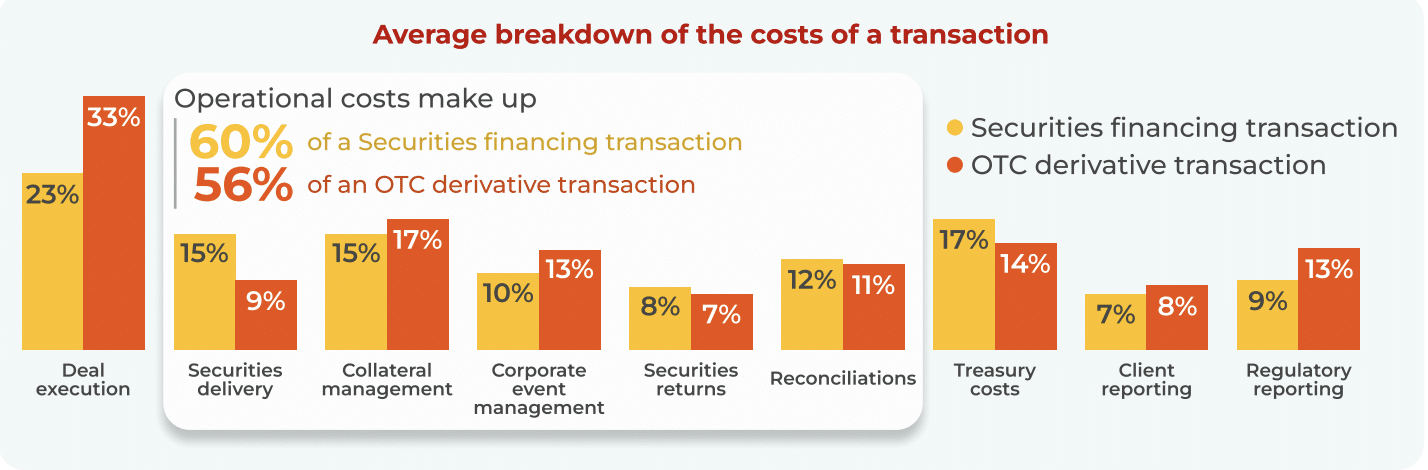
Source: ValueExchange
Chai said: “Tokenizing collateral and the use of distributed ledger technology are a significant unlock for the industry, but market leaders have needed clear proof that tokenized collateral can operate within the same institutional workflows and with the same confidence that markets demand.”
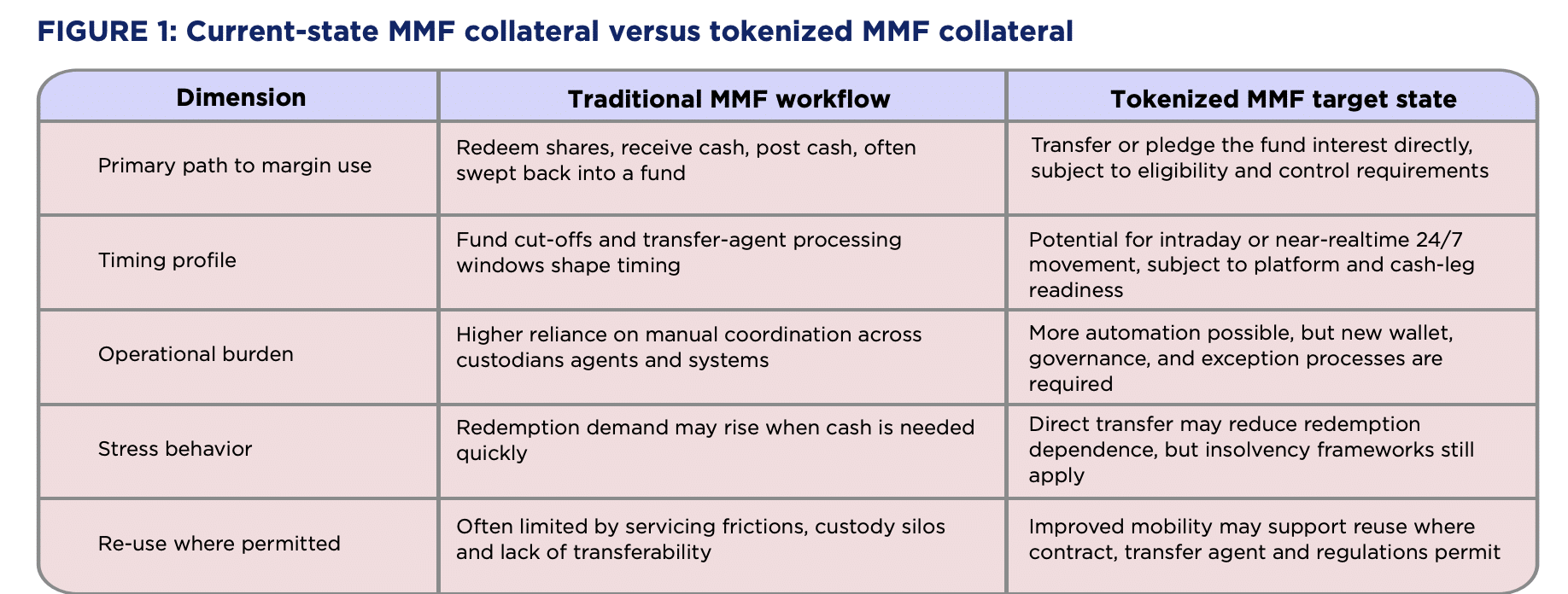
To provide this proof, asset managers Vanguard and Wellington Management have completed their first tokenized collateral trade. The managers’ money market funds were tokenized using Nasdaq technology and issued as digital tokens on the Canton Network, Digital Asset’s blockchain with built-in privacy controls.

Roland Chai, Nasdaq
The entire workflow operated on Nasdaq’s collateral management platform, Calypso, in the existing front-to-back environment without manual intervention required at the point of settlement, according to Chai. Nasdaq Calypso generated standard margin calls and collateral movement was executed entirely onchain.
“Crucially, it was conducted within existing operational frameworks, with the same security and integrity that institutional markets require, and at the scale that makes it meaningful,” added Chai. “Ultimately, it offers a clear and open path for other institutions, other asset classes, and other tokenization platforms to connect to this infrastructure.”
Source: ISDA & GDF
DTCC Tokenization Service
In July this year Nasdaq and Canton Network were among the 30+ participants who took part in the initial launch of the DTCC Tokenization Service. The central U.S. post-trade market infrastructure converted real world assets in its custody into tokens, which were used in a series of real production trades across asset classes involving both traditional and crypto-native firms. Some firms have estimated that the DTCC Tokenization Service could increase balance sheet efficiency between 30% to 50% when it fully launches in October.
During the July 15 event, trades were executed on Nasdaq for later conversion into tokens at the DTCC. Brian Steele, president of clearing & securities services at DTCC, said in a statement: “In one use case, a DTC Participant executed a trade to purchase a Nasdaq-listed security, and then DTC tokenized those shares and made them available on blockchain rails.”
2/ The @NasdaqExchange Stock Market served as the marketplace where trades were executed for later conversion into tokens at DTCC, demonstrating how tokenization can work within existing market rules while supporting liquidity, transparency, and investor protection.
— Nasdaq (@Nasdaq) July 24, 2026
4/ The Invesco QQQ ETF — which tracks the Nasdaq-100 — was one of the key securities used during the exercise. A benchmark for investors seeking exposure to the companies driving innovation. @InvescoUS
— Nasdaq (@Nasdaq) July 24, 2026
"Nasdaq believes that collaboration across trading and post-trade ecosystems is essential for tokenization to scale." — Chuck Mack, SVP, North American Markets, Nasdaq
Read more in the Nasdaq Newsroom: https://t.co/vZOgj6dwQx
— Nasdaq (@Nasdaq) July 24, 2026
,

NEWSLETTER SIGN UP
And receive exclusive articles on securities markets

🏆 The 2026 Global Markets Choice Awards are here! 🌍 Nominations are officially OPEN for the celebration of excellence in global capital markets trading & technology. Nominate below:
https://www.jotform.com/form/260086385121150

Delaware Life Insurance Company is becoming the first insurance carrier to offer an index that contains cryptocurrency, adding the BlackRock U.S. Equity Bitcoin Balanced Risk 12% Index to its fixed index annuity (FIA) portfolio.
As the digital assets industry pushes toward
Franklin Templeton is expanding its tokenized fund suite, signaling growing institutional demand for blockchain-based fund infrastructure and regulated investment products moving onchain. Read the full article below:
$50 billion in active ETF inflows helped fuel a record year for @BlackRock 's iShares business, as investors continue to lean into active strategies.
Shanny Basar
Senior writer
A Senior Writer at Markets Media who became a financial journalist in 2000 after working in banking for over a decade....
More about this authorRelated articles
-

This adds 24/7 trading capability to Hong Kong’s evolving tokenisation ecosystem.
-

The QQI ETF invests in companies outside the U.S.
-

Morgan Stanley Institute for Sustainable Investing polled 900 institutional investors.
-

Year-to-date net inflows of $432.4bn are the highest on record.
-

Fixed income is the largest asset class in global finance.