






02.18.2026

BlackRock has invested in Uniswap Labs, a decentralized finance (DeFi) ecosystem, and Apollo Global Management, the alternative asset manager, has formed a partnership with Morpho, a network for onchain lending.
On 11 February 2026 BlackRock’s tokenized money market fund (BUIDL) became available to trade on UniswapX, a protocol from Uniswap Labs in partnership with Securitize, the tokenization platform for real world assets. The process from initiating an order to confirming a trade takes place on the Securitize platform, overseen by its SEC regulated broker-dealer and alternative trading system (ATS).
Uniswap said in a statement: “This integration will enable onchain trading of BUIDL, both unlocking new liquidity options for BUIDL holders, and marking a significant step in bridging the gap between traditional finance and DeFi.”
Rob Hadick, general partner at cross-border crypto venture fund Dragonfly, said on X:
Very obvious that this is the canary in the coal mine for CeFi/DeFi convergence in the same way Larry Fink was for BTC ETFs and tokenization 3 years ago. https://t.co/qjCfCG5skg
— Rob Hadick >|< (@HadickM) February 11, 2026
UniswapX’s request-for-quote framework is automated system that allows investors to identify the most competitive quote from an ecosystem of market participants whitelisted by Securitize. Trades settle atomically onchain through immutable smart contracts that simultaneously exchange funds and tokenized securities once all the relevant criteria have been met.
Robert Mitchnick, global head of digital assets at BlackRock, said in a statement that this collaboration is a “notable” step in the convergence of tokenized assets with DeFI. Mitchnick added: “The integration of BUIDL into UniswapX marks a major leap forward in the interoperability of tokenized USD yield funds with stablecoins.”
BlackRock has also made a strategic investment within the Uniswap ecosystem.
Jorge Serna, chief executive Europe at Securitize, said on X:
UniswapX uses an RFQ model, not a traditional AMM.
Instead of pool-based passive liquidity, LPs compete to fill signed intents. Best price wins. Settlement is atomic.
That structure is much closer to how regulated markets think about execution.
— Jorge Serna (@jserna) February 12, 2026
And the DS Protocol enters at settlement time.
Transfer controls are enforced in the transaction itself.
If the trade violates eligibility, whitelisting, or security-specific restrictions → it simply cannot settle.
Rules are execution-layer enforced.
— Jorge Serna (@jserna) February 12, 2026
This is structurally different from “let’s just wrap an RWA and throw it in a pool.”
We’re integrating decentralized price discovery with:
• SEC-registered BD infra
• ATS supervision
• Transfer agent records
• Enforced transfer restrictionsThe right way.
— Jorge Serna (@jserna) February 12, 2026
RWAs won’t scale onchain without liquidity.
Liquidity won’t scale without clear rules.
The path forward isn’t deregulation.
It’s programmable regulation.That’s what this integration starts to demonstrate.
More to build. 🚀
— Jorge Serna (@jserna) February 12, 2026
Darren Shoemaker, director of product, transfer agent at Securtiize, said in a blog that this collaboration bridges institutional-grade regulation with onchain liquidity, creating a new model for how tokenized assets can be traded transparently, efficiently, and under regulatory supervision.
Shoemaker said: “By integrating UniswapX technology into the Securitize Markets platform, we’re setting a new precedent: regulated assets, traded transparently, on decentralized infrastructure, utilizing existing, regulated frameworks.”
Apollo/Morpho
On 13 February the Morpho Association said it had entered into a cooperation agreement with Apollo Global Management and they will work together to support onchain lending markets on Morpho’s protocol.
The statement said: “Under the agreement, Apollo or its affiliates may acquire MORPHO tokens through a combination of open-market purchases, over-the-counter transactions, and other contractual arrangements, subject to an overall ownership cap of 90 million MORPHO tokens over a 48-month period as well as transfer and trading restrictions.”
In the same month Morpho also said it has been integrated into Taurus-PROTECT, a digital asset custody and servicing technology solution for more than 40 financial institutions across four continents.
“By natively integrating Morpho Vaults into Taurus-PROTECT, Taurus enables clients to allocate capital directly onchain all within their existing regulatory frameworks, approval workflows, and operational controls,” said Morpho.
Something big is happening.
Citadel, BlackRock, and Apollo aren’t buying tokens — they’re buying infrastructure access.
Morpho is a lending protocol that lets institutions deploy capital programmatically without building the stack themselves. TradFi isn’t “exploring” DeFi… https://t.co/bQVlGm1Mly
— andrew chapello (@chapello) February 14, 2026
Andrew Chapello, product at stablecoin company Ramp, said on X: “TradFi isn’t ‘exploring’ DeFi anymore. They’re changing their plumbing.”
DeFi growth
Ishmael Asad, crypto research at digital asset fund manager Bitwise, said on X:
2) BLACKROCK x UNISWAP
BlackRock made a strategic investment "within the Uniswap ecosystem" of an undisclosed amount 💰
It also enabled its tokenized treasury BUIDL to trade w/ Uniswap's onchain liquidity via Securitize, who will facilitate trades thru whitelised participants pic.twitter.com/FXjXnXKcCl
— Ishmael Asad (@AsadIshmael) February 17, 2026
4) APOLLO x MORPHO 🦋
Under Apollo Global Management's agreement with Morpho, Apollo may acquire up to 90 million $MORPHO tokens over 4 years – worth over $125M at today's prices
Apollo will also be working with Morpho to support onchain lending markets on Morpho's protocol pic.twitter.com/faXaR6aJew
— Ishmael Asad (@AsadIshmael) February 17, 2026
6) Takeaway 🌄
Major TradFi companies are investing in DeFi protocols for two reasons:
1. A comeback is coming for DeFi as the regulatory environment continues improving
2. DeFi will cannibalize their industry if they're not a part of it
They're not willing to be left behind
— Ishmael Asad (@AsadIshmael) February 17, 2026
Jeff Dorman, chief investment officer at digital asset financial institution Arca, said in a blog that much of Wall Street’s adoption is not flowing through existing crypto infrastructure. He added: “TradFi firms are building their own rails, issuing their own stablecoins, and keeping the economics for themselves.”
As a result, he believes this is not necessarily going to mean anything for the value of existing tokens.

Jeff Dorman, Arca
Dorman said the BlackRock and Apollo partnerships are strong validations of DeFi infrastructure and institutional capital is bullish for the ecosystem. However, he argued that this is not necessarily bullish for the underlying tokens unless economics are explicitly designed that way.
“We continue to see adoption happening at the application and infrastructure layer while token design remains governance-heavy and economically thin,” Dorman added.
In contrast, Matt Hougan, chief investment officer at Bitwise, said in a blog that DeFi “could lead us out of crypto winter.”
“Crypto investors are tired of promises; they want to see real users, revenues, and value,” said Hougan. “DeFi fits the bill.”
He gave the examples of Uniswap regularly trading more volume than Coinbase and Aave, the onchain lending protocol, earning more than $100m in annual revenues. However, Hougan acknowledged that DeFi-linked crypto assets have been poor investments as Aave, the second-largest DeFi token, has fallen 50% over the past year and the Uniswap token has been flat over the past five years.
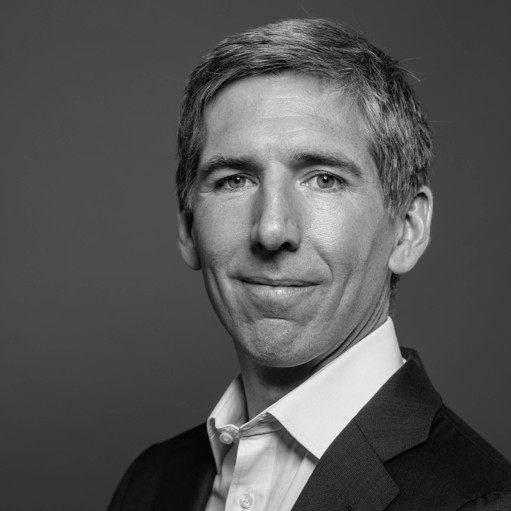
Matt Hougan, Bitwise
Hougan explained that the primary problem for DeFi tokens is their tokenomics i.e. the dynamics that drive their value. He said: “Most DeFi tokens were created as ‘governance’ tokens: They allow you to vote on how the protocol operates, but have no claim on revenues or profits.”
In order to change this, Aave announced that it is changing from a governance-only token to one where token holders have a clean claim on protocol revenues.
Hougan said: “Improving tokenomics. Institutional investment. Strong usage. In bear markets, you want to look for areas that show strength. It sure looks like DeFi is one of them.”

NEWSLETTER SIGN UP
And receive exclusive articles on securities markets

🏆 The 2026 Global Markets Choice Awards are here! 🌍 Nominations are officially OPEN for the celebration of excellence in global capital markets trading & technology. Nominate below:
https://www.jotform.com/form/260086385121150

Delaware Life Insurance Company is becoming the first insurance carrier to offer an index that contains cryptocurrency, adding the BlackRock U.S. Equity Bitcoin Balanced Risk 12% Index to its fixed index annuity (FIA) portfolio.
As the digital assets industry pushes toward
Franklin Templeton is expanding its tokenized fund suite, signaling growing institutional demand for blockchain-based fund infrastructure and regulated investment products moving onchain. Read the full article below:
$50 billion in active ETF inflows helped fuel a record year for @BlackRock 's iShares business, as investors continue to lean into active strategies.
Shanny Basar
Senior writer
A Senior Writer at Markets Media who became a financial journalist in 2000 after working in banking for over a decade....
More about this authorRelated articles
-

Morgan Stanley Institute for Sustainable Investing polled 900 institutional investors.
-

Year-to-date net inflows of $432.4bn are the highest on record.
-

Fixed income is the largest asset class in global finance.
-

Erik Hirsch has been named executive co-chairman.
-

The asset manager has been in the process of adding more than 50 new client-facing roles.