






12.19.2025
Blockchain to Unlock Collateral Movement, More Efficient Financing
12.19.2025
FT Partners, an investment banking firm focused on the financial technology sector, hosted a webinar, Tokenization of Real World Assets: The State of Play, on 16 December 2025.
Adena Friedman, chair and chief executive of Nasdaq, said the U.S. equities market needs to preserve its incredible depth of liquidity and speed of trading, with just between 10 and 20 microseconds of latency, despite four to five billion messages every day. However, she believes blockchain can make a huge difference over time in post-trade by improving the time to settlement and the nature of the securities upon settlement.

Adena Friedman, Nasdaq
In addition, Friedman said blockchain offers a more immutable record, allows better tracking of ownership over time, and could also modernize corporate actions and investor voting.
“There is a lot of potential that comes from placing securities into a new technology that we think will underpin markets,” she added. “But that is an evolution, not a revolution.”
Billy Hult, chief executive of Tradeweb said the firm, which operates electronic marketplaces for rates, credit, equities and money markets, had got behind blockchain in the last year and a half. He agreed with Friedman that the technology has a lot of potential to modernize settlement and enable 24/7 fixed income trading.
Hult highlighted that mortgage trading, one of the most important global markets, has inefficient settlement cycles that could be hugely transformed through blockchain, bring in new market participants and a more well-rounded client base.
“We really excited as a company to play a big role in this next evolution around increasing efficiency in fixed income,” he added. “Part of unleashing that next wave around velocity of trading is going to be figuring out a more efficient way around collateral management and settlement.”
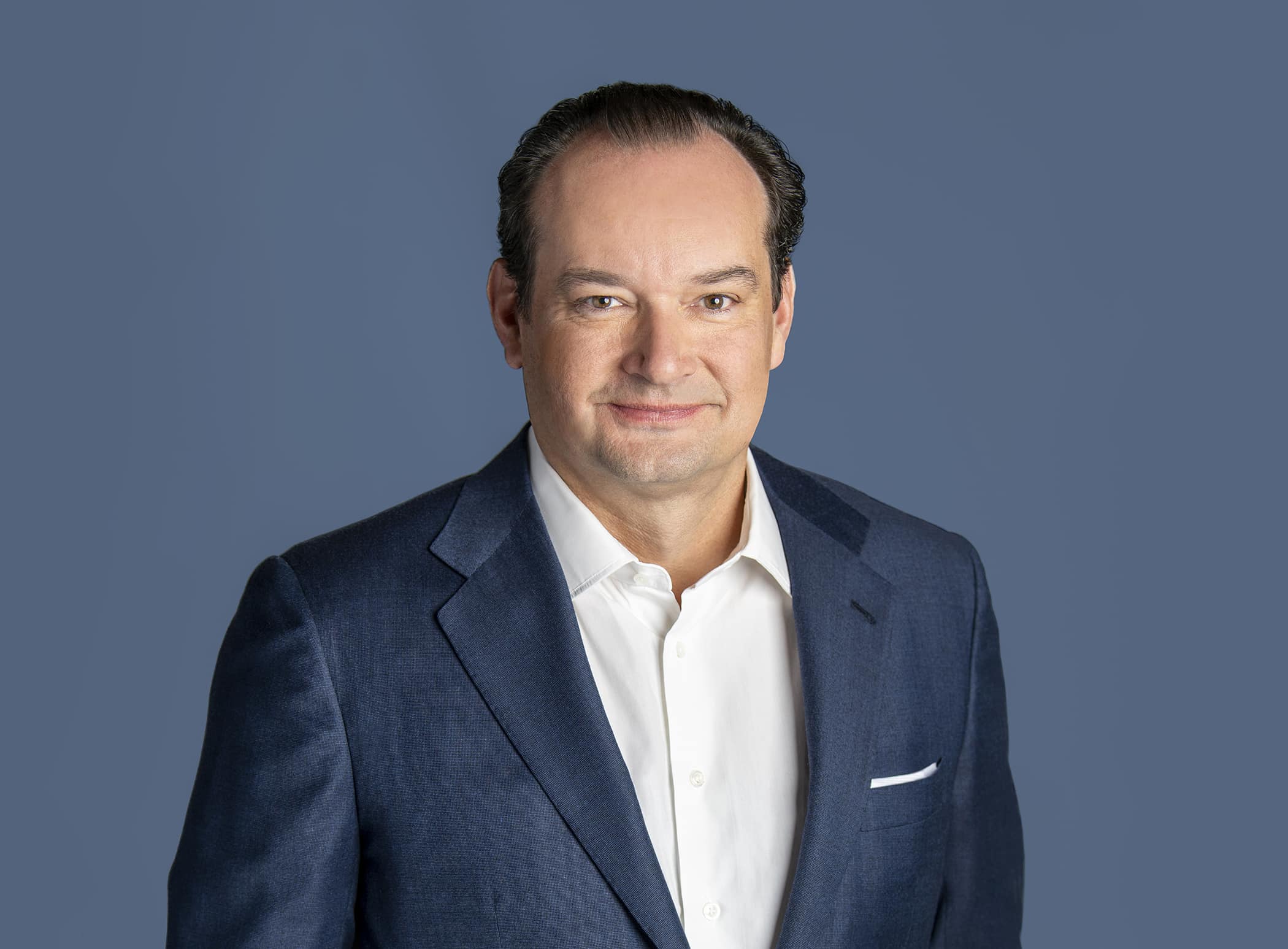
Billy Hult, Tradeweb
For example, in August this year Tradeweb helped execute the first real-time, fully onchain financing of U.S. Treasuries against the USDC stablecoin. Institutional investors accessed automated financing on a Saturday, outside of standard market hours. The trade settled atomically on-chain i.e. with simultaneous delivery versus payment using smart contracts.
Yuval Rooz, co-founder and chief executive of Digital Asset, which provides enterprise blockchain technology, agreed the value of the technology lies in post-trade and connecting assets more efficiently, without jeopardising liquidity. He highlighted that institutional players will only move onchain if privacy issues are solved.
Mike Cagney, co-founder & executive chairman of Figure, which aims to change capital markets with blockchain, said people use the technology for transactional efficiencies and potential liquidity benefits. However, he argued that blockchain’s biggest transformation will be on the financing side through more efficiently connecting capital sources and users bilaterally through onchain DeFi (decentralized finance) protocols.
Since 2018 Figure has originated over $22bn in home equity lines of credit onchain and about $66bn in trading volume. Figure has cut more than 150 basis points of cost out of the origination, aggregation and securitization process because of blockchain, according to Cagney.
“We have been able to stand up a liquid marketplace for mortgages, in part because of the certainty that blockchain provides,” Cagney added. “You can see in real time whether the loan is current or delinquent and that has facilitated the ability to trade.”
Figure went public this year and Cagney said he told the buy side that they should own tokenized versions of securities which they can cross–collateralize seamlessly with any other digital asset. He added: “There is real value to that because their stock loan book becomes a limit order book under their control.”
Don Wilson, founder and chief executive of market maker DRW, highlighted that digital assets can trade 24/7, but this requires 24/7 collateral movement. He said: “The two major unlocks are the ability to move collateral instantaneously 24/7 and the ability to borrow more efficiently against your assets.”
Friedman argued that instant settlement “sounds amazing” and takes an enormous amount of overnight risk out of the system but netting is critical for the functioning of equities markets.
“There’s too much money flowing through the system on any given day to have gross settlements,” she added.
She agreed there is a lot of trapped capital in clearing houses and clearing brokers, because it is very efficient to move.
“I do think that’s going to be a huge unlock as long as we have interoperability, which will be a critical component of making this technology ubiquitous across the industry,” Friedman added.
Winners and losers
Rooz said capital markets firms with an entire business model that is a complicated way of connecting A to B will be disintermediated unless they start using blockchain technology.
“There are many vendors involved in proxy and corporate actions, which makes the process very complicated and I think that it will be streamlined over time,” Rooz added. “Those firms that take advantage of the technology and offer the same services much more efficiently will be the new winners, and we are seeing that in multiple asset classes.”
Hult highlighted that firms who did not invest in electronic trading learnt painful lessons around the force of change.
“My instinct is that the strongest players in fixed income are paying a different level of attention to tokenization and where this is headed,”added Hult. “It feels like there is a lot of momentum.”
Wilson believes the biggest winners will be asset owners, and the companies who build the plumbing for this transformation. He said: “The big losers are the ones who fight the change, and say maybe this won’t really happen.”
Cagney argued that blockchain will provide banks’ prime brokerage businesses with new opportunities in DeFi. For example, they can participate as a lender in DeFi and the universe of available collateral will expand. He expects significant development and change over the next couple of years, as institutional credibility increases in this ecosystem.
“I think there’s a lot of enthusiasm there,” he added. “The big TradFi firms, especially the big sell-side firms, are leaning in very aggressively on this technology, more than the native crypto companies.”

NEWSLETTER SIGN UP
And receive exclusive articles on securities markets

It's been a month since we had our Women In Finance Awards in New York City at the Plaza! Take a look back tab some moments, and nominate for our upcoming awards in Mexico City and Singapore here: https://www.marketsmedia.com/category/events/
4
Citadel Securities told the SEC that trading tokenized equities should remain under existing market rules, a position that drew responses from various crypto industry groups. @ShannyBasar for @MarketsMedia:
SEC Commissioner Mark Uyeda argued that private assets belong in retirement plans, saying diversified alts can improve risk-adjusted returns and that the answer to optimal exposure “is not zero.” @ShannyBasar reporting for @MarketsMedia:
COO of the Year Award winner! 🏆
Discover how Jennifer Kaiser of Marex earned the 2025 Women in Finance COO of the Year recognition.
Shanny Basar
Senior writer
A Senior Writer at Markets Media who became a financial journalist in 2000 after working in banking for over a decade....
More about this authorRelated articles
-

They are laying the foundation for regulated, interoperable digital money that moves across markets.
-

This is the first time regulated public equity can be used directly in an onchain borrowing market.
-

These are real, regulated public shares: issued onchain and recorded directly on the issuer’s cap table.
-

The market has relied on manual processes and weekly pricing set by a limited group of dealers.
-

The commercial paper deal is one of the earliest debt issuances on a public blockchain.