






06.09.2026

Michael Selig, chairman of the Commodity Futures Trading Commission, said the agency will be a “responsible” regulator of perpetual futures, as the CFTC’s approval of the contracts has been opposed by Terry Duffy, chairman and chief executive of CME Group.
Selig spoke on Blockworks’ Empire podcast. He described the President’s Working Group on Digital Asset Markets report as laying out the roadmap for gold standard markets in the United States that incorporate crypto assets, blockchain, and all manner of new technologies. He added: “A core component of that is bringing the perpetual futures markets back to the U.S.”
On 29 May 2026 the CFTC said in a statement that it had approved the listing of the BTCPERP contract, a perpetual contract that references the spot price of bitcoin, as futures listed on designated contract market KalshiEX.
“The CFTC has not approved a new type of derivative in over a decade, so this was a big moment, a watershed moment,” added Selig. “We are excited to see other types of perpetual products come to market, but it is going to take time.”
Tarek Mansour, chief executive of Kalshi, told CNBC that the firm had crossed $1bn in perpetual futures trading volume in just one week since launching in the U.S.
KalshiEX submitted the contract for approval under Regulation 40.3 for review on the day before approval, on 28 May 2026, according to the statement.
Terry Duffy, chairman and chief executive of CME Group, has opposed perpetual contracts being designated as futures. He said at the Piper Sandler Global Exchange and Trading Conference on 4 June 2026 that the 40.3 ruling requires a full review with the industry being allowed to comment on novel or complex product.
“They did the review in less than 24 hours, which is a 40.2 self-certification for a novel and complex product which troubled me,” Duffy added. “I’ve had a lot of conversations with the agency so I’m really disappointed.”
The Commodity Exchange Act defines futures as a contract that is traded with a delivery or an expiration date, according to Duffy. A perpetual contract never ends, and tracks the spot rate of the underlying asset through a funding rate, which Duffy argued is a swap rather than a future and not suitable for institutional hedging.
He is also concerned that perpetual contracts in the European Union trade between 20 to 250 times leverage with an auto-liquidation model, and said this is not sustainable. In contrast, CME has the largest open interest of institutional crypto in the United States and extends maximum leverage of five to one.
“I’ve spent 30 years of my career building, nurturing, and bringing in retail participants into the market with tools and education so it is sustainable,” added Duffy. “I really believe the 2007 housing market has been supplanted by the speculation market, including prediction markets, and this could be a disaster waiting to happen.”

Duffy argued that his opposition to perpetual is not due to competition because between 85% and 90% of CME’s business is institutional.
“I have 135 million open positions on CME, more than any other exchange in the world, and am holding $400bn of capital on behalf of the largest institutions in the world,” Duffy added. “I’m not in there battling away for the small retail participants with no capital.”
Selig stressed that the CFTC’s mandate is for responsible innovation, and said “the responsible piece is important.” The agency is going to start with “reasonable” leverage of up to 10x in the United States, and going to start with crypto perpetuals.
The CFTC has reviewed data on perpetual style contracts launched on crypto exchanges Bitnomial and Coinbase. Thye have been offered at lower margin and leverage ratios, and Selig said they have worked well. He added that the agency has a mandate to make sure that investors and customer funds are protected, and to ensure that innovative products do not lead to a financial crisis.
“We want the innovation but we have to make sure that it’s not going to cause any sort of concerns in the broader market,” said Selig. “We’re studying it, evaluating it, but to start we’re keeping the leverage fairly limited.”
Selig agreed that perpetuals are not necessarily appropriate for every asset class, especially in the agricultural space or physical commodities space. For example, the CFTC does not expect to approve livestock, grain corn or cotton perpetual futures in the immediate future or in the medium term as the regulator has concerns around deliverable supply and how that would work.
In contrast, Selig said digital commodity perpetuals including ether, solana, or other tokens with similar characteristics that drive their value from their network can be self-certified.
“The perpetuals can’t be readily susceptible to manipulation, so it’s not anything goes,” added Selig. “Digital commodities have a quicker path to get into the United States through a perpetual contract.”
Digital securities, such as digital collectibles, non-fungible tokens, or memecoins would still need to go through a process with a regulator.
“We’re going to do this gradually to make sure that investors are protected and they don’t impact the $1.2 quadrillion underlying market,” said Selig.
Regulatory harmonization
Selig said it is new day for the SEC and the CFTC as the two agencies have joined forces on Project Crypto to ensure consistent regulation.
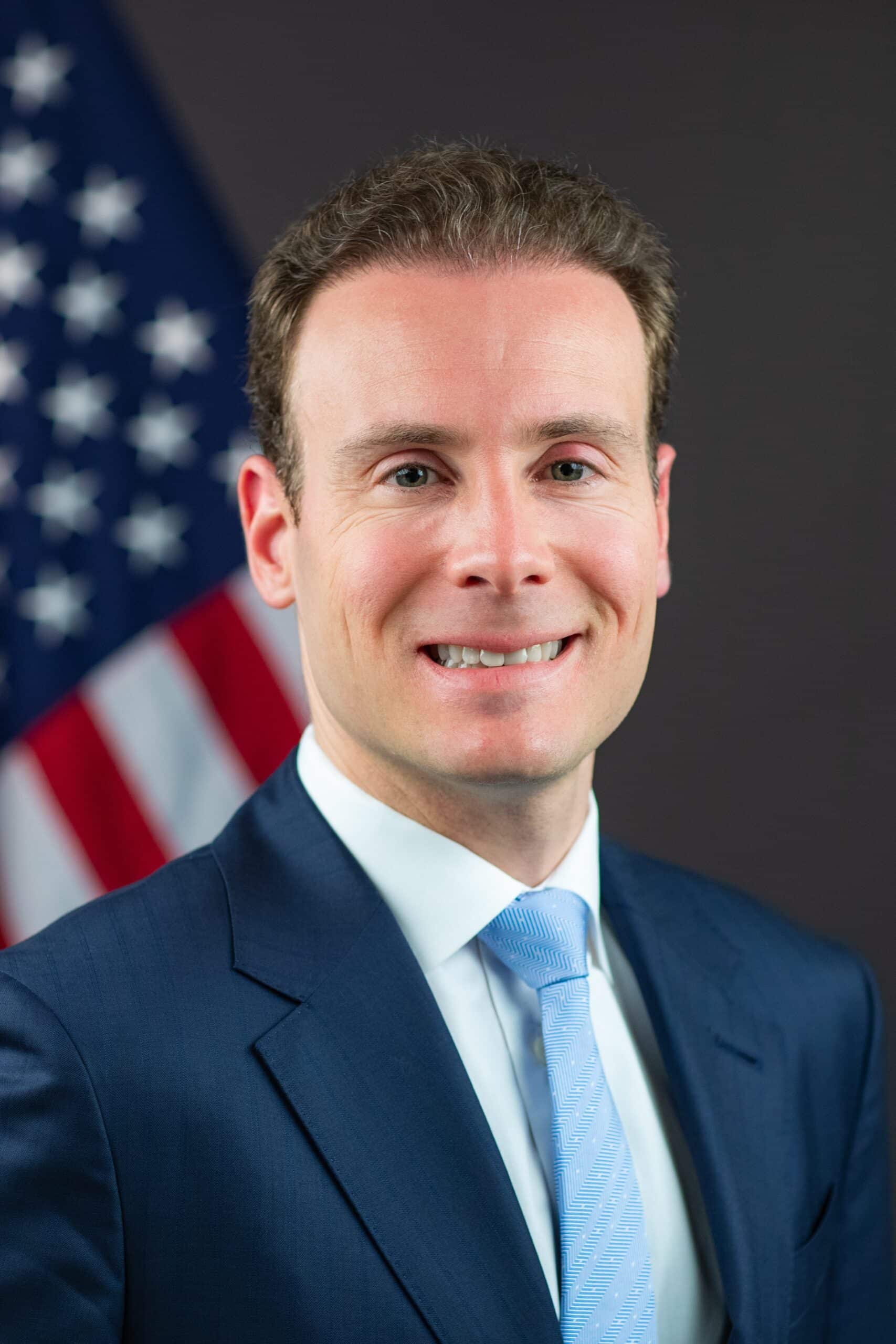
“If you are trading a perpetual onchain which is related to a commodity product, such as a bitcoin, the rules should not be different from trading an Nvidia perpetual on the security side,” Selig said. “We are working closely to get that done.”
The agencies are also keen to make it possible for a securities exchange to offer some commodity products, and vice versa, and to enable the market to offer cross-jurisdictional products. In addition, they want to ensure that definitions of a U.S. person, and whether the SEC or the CFTC has jurisdiction over certain persons that are offshore or onshore are consistent.
“We can’t have inconsistent standards or enforcement at one agency and not the other,” he added.
Selig highlighted that the inability to margin securities positions against commodity positions has been a “huge hindrance” for the industry.
“Broker-dealers and futures commission merchants [FCMs] are now posting duplicative margin so we are trying to fix that,” he said. “There’s a number of really exciting initiatives ahead.”

NEWSLETTER SIGN UP
And receive exclusive articles on securities markets

🏆 The 2026 Global Markets Choice Awards are here! 🌍 Nominations are officially OPEN for the celebration of excellence in global capital markets trading & technology. Nominate below:
https://www.jotform.com/form/260086385121150

Delaware Life Insurance Company is becoming the first insurance carrier to offer an index that contains cryptocurrency, adding the BlackRock U.S. Equity Bitcoin Balanced Risk 12% Index to its fixed index annuity (FIA) portfolio.
As the digital assets industry pushes toward
Franklin Templeton is expanding its tokenized fund suite, signaling growing institutional demand for blockchain-based fund infrastructure and regulated investment products moving onchain. Read the full article below:
$50 billion in active ETF inflows helped fuel a record year for @BlackRock 's iShares business, as investors continue to lean into active strategies.
Shanny Basar
Senior writer
A Senior Writer at Markets Media who became a financial journalist in 2000 after working in banking for over a decade....
More about this authorRelated articles
-

The launch marks a global first for the bank & the first offering of its kind by an international bank in UAE.
-

The firm will soon connect U.S. and global crypto derivatives into a single regulated liquidity pool.
-

The rules could codify a new designated contract market registration, a crypto asset market.
-

Crypto firms operating in the UK will be brought into full FCA regulation for the first time.
-
There is demand for institutional-grade risk management tools across high-liquidity altcoin markets.