





07.21.2026

Kalshi hired Andy Ross as head of institutional in March this year to link with technology and middleware firms, set up a data business and convert banks and asset managers to trade on prediction markets.
His previous roles include financial markets UK head at Standard Chartered and working in the capital markets management team at London Stock Exchange Group. While at LSEG, Ross was chief executive of CurveGlobal, an interest rate derivatives venture between the exchange and a number of leading dealer banks, which ceased trading in January 2022.

Andy Ross, Kalshi
Ross told Markets Media that he joined Kalshi because it is a high growth start up and because prediction markets are “phenomenally interesting.” He described them as the “biggest change to financial markets since the eurodollar.”
“Prediction markets provide price signals and atomise risk in a way that did not exist before,” Ross added. “The wisdom of crowds means a trader does not need the fastest machine and they can build their own models.”
An example of this new price signal was shown in May this year when Target reported its first quarter results. The retailer reported its largest revenue beat since November 2021, but its share price dropped 8% when markets opened.
Jake DeMatteo, markets at Kalshi, said on LinkedIn: “Kalshi traders who called transactions above 2.5% at 5¢ locked in a 20x return – not because they timed the tape, but because they read the fundamentals correctly. Kalshi’s KPI markets let you take a direct position on the metric itself, stripped of sentiment, macro noise, and options Greeks.”
Ross added that Kalshi contracts are 90% accurate 90% of the time. For well-traded markets, once a contract has been traded roughly $40,000 – $60,000 and is a month from expiry, Kalshi prediction contracts have a Brier score of 0.05, so they are 95% right about 95% of the time, according to the firm. Brier scores are a widely used metric to measure the accuracy of probabilistic forecasts, with standard meteorological forecasting having a Brier score of 0.1.
Institutional interest
Kalshi said in a statement in May this year that it had raised $1bn, valuing the firm at $22bn, as institutional adoption accelerated. Over the previous six months, institutional trading volume had increased 800%, according to the statement.
The firm said it would use the new capital to scale adoption across hedge funds, asset managers, proprietary trading firms, and insurance companies and expand its product suite, including block trading capabilities, risk products, and deeper broker integrations tailored to institutional demand.
One integration was announced in February this year when Tradeweb Markets, an operator of electronic marketplaces for rates, credit, equities, and money markets, said in a statement it will expand institutional access to Kalshi’s prediction market data and analytics, advance market infrastructure for prediction markets and also made a minority investment in Kalshi. The companies aim to integrate probabilistic, forward-looking risk signals directly into core trading workflows used by Tradeweb’s more than 3,000 institutional clients.
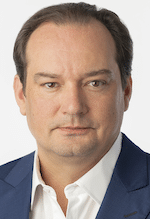
Billy Hult, Tradeweb
Billy Hult, chief executive of Tradeweb, said in a statement: “Prediction markets are increasingly becoming a key part of the trading landscape, and have the potential to become an indicator for institutions to dynamically assess macro risk and allocate capital more effectively.”
In terms of block trading, Ross said: “Jump Trading and Susquehanna have publicly announced they are working with us, along with many others.”
Galaxy Digital, the digital asset fund manager, said in a statement in June this year that it is launching an over-the-counter desk for event-driven markets. The first trade executed was a $10m trade with crypto-native hedge fund Arca on Kalshi.
The asset manager’s global markets trading desk hosted a webinar on 10 June to discuss the growth in prediction markets and the increasing interest from institutions. Zane Glauber, global head of distribution at Galaxy, said on the webinar that prediction markets are the future of event-driven markets for institutions. Glauber said: “Prediction markets have gone from niche to mainstream, and the velocity of growth has been quite remarkable.”
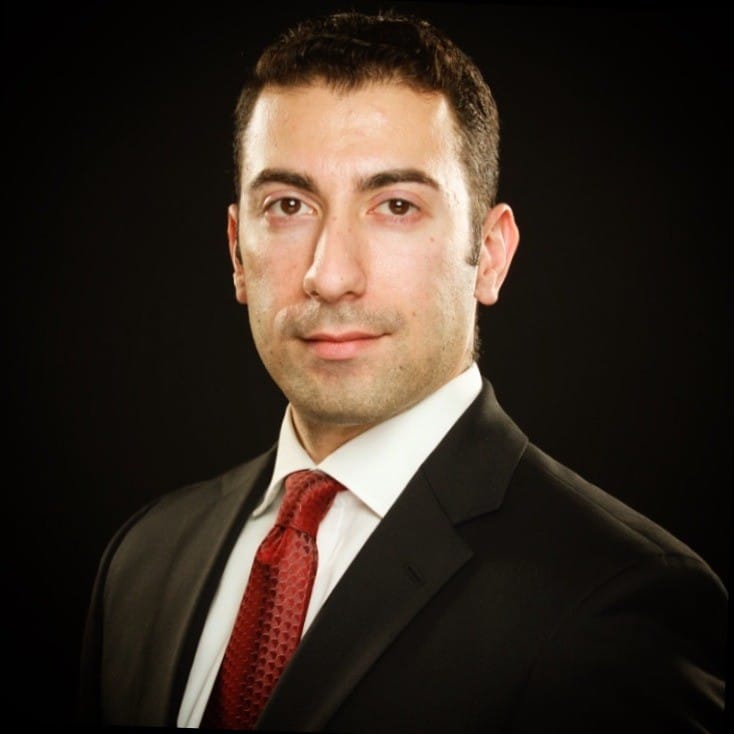
Josh Barkhordar, FalconX
Market maker FalconX said in a statement in May this year that it will provide institutional clients with access to event-driven markets on Kalshi through structured derivatives and block trade execution.
Joshua Barkhordar, head of sales at FalconX, said in a statement that prediction markets are transforming how risk is priced and traded, turning real-world events into investable opportunities. Barkhordar said: “We see this as a natural evolution of financial markets, where institutional capital, derivatives infrastructure, and new asset classes converge. Our role is to bring the scale, liquidity, and risk management frameworks institutions expect into this emerging category.”
Low-latency trading is also important to attract institutions.In July this year CryptoStruct integrated Kalshi to power ultra-low-latency access to regulated prediction markets. CryptoStruct said in a statement that because Kalshi is normalized into the same format as every other venue it supports, firms can blend it with their existing feeds and run cross-venue strategies without extra integration work.
Ross added on LinkedIn: “Low latency is one of the milestones you pass as you grow the institutional side of the Kalshi exchange. My thanks for the partnership with CryptoStruct GmbH on this for mutual clients.”
In July this year LO:TECH became one of the first firms licensed to distribute Kalshi data. Ross said in a statement: “Access to event market contract data is essential for enabling institutional participants to manage and hedge risk more effectively.”
LO:TECH said the Kalshi data runs through the same infrastructure as its trading and liquidity operations, so it arrives in one consistent format rather than a set of raw feeds to stitch together. Tim Meggs, chief executive of LO:TECH, said on X: “People who have come to us for this sort of data are using it for research, they’re using it for post-trade analysis, they’re using it for generating trade ideas.
Volume growth
Institutional interest has been growing as volumes have been increasing in prediction markets, especially in non-sports contracts.
Venture capital firm a16zcrypto said in a blog that weekly prediction market volume reached a record $14.4bn in the week ending 21 June 2026, up from roughly $5bn to $6bn at the start of this year. a16zcrypto added: “Total volume across all platforms is now more than 10x what it was a year ago.”
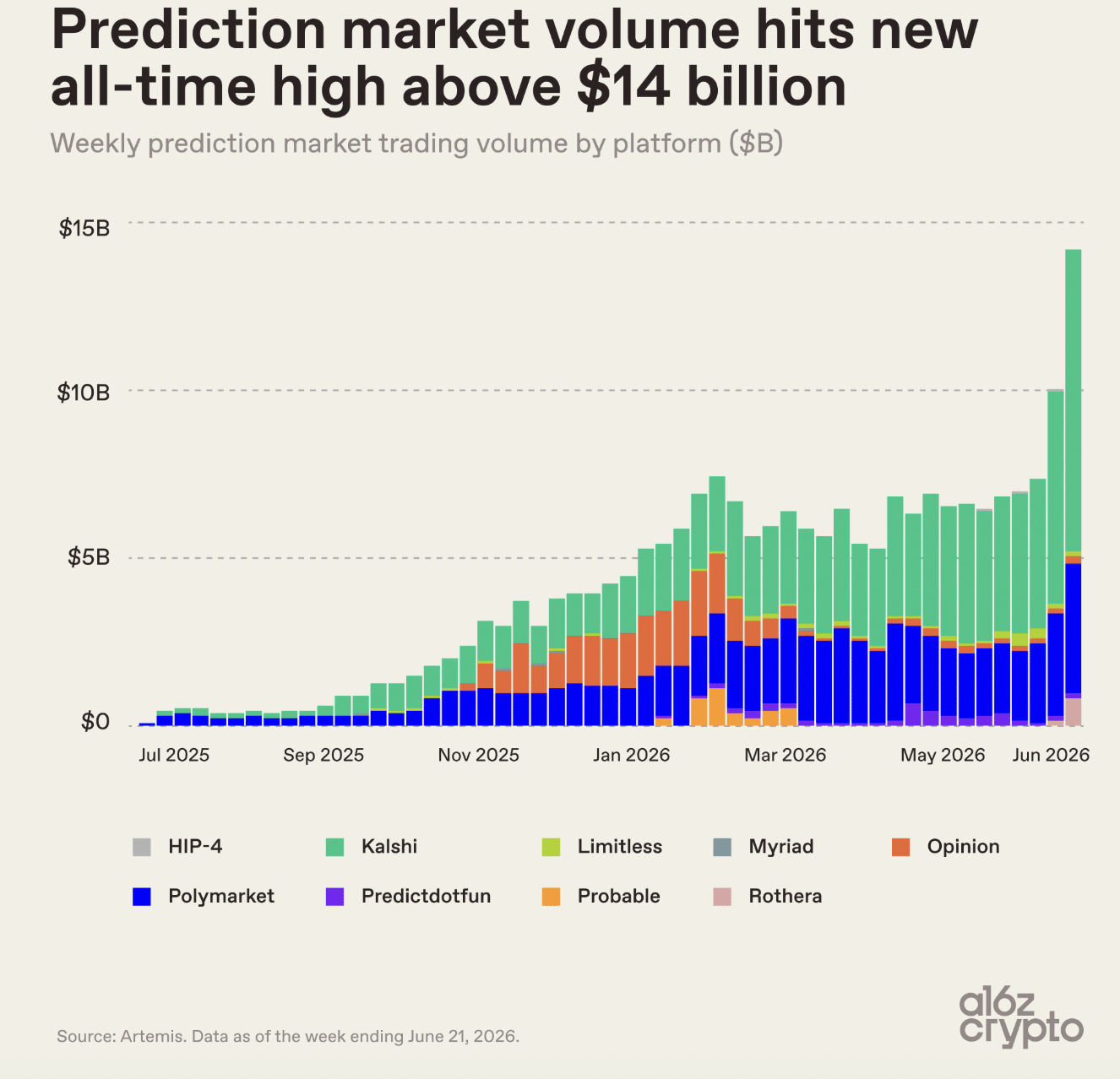
Source: a16zcrypto
a16zcrypto added: “Total volume across all platforms is now more than 10x what it was a year ago.”
Non-sports volume across categories including politics, economics, geopolitics, and current events, reached $3.6bn on Kalshi and Polymarket combined in the same week, according to a16zcrypto.
“That’s larger than total prediction market volume (sports included) was just last year,” said a16zcrypto.
Risks
There have been allegations that prediction markets facilitate insider trading. Ross said traders have to complete full anti-money laundering/know your customer checks and in the U.S. they have to provide a social security number. He added: “We can get alerts if they trade contracts related to their employment.”
For example, there have been reports that the operator of President Trump’s teleprompter is being investigated by the Commodity Futures Trading Commission for placing bets that specific words or topics would appear in a speech. Kalshi’s own surveillance systems reportedly flagged the trading activity and reported the activity to the CFTC.
In June this year Kalshi rolled out new market integrity measures based on the independent Surveillance Audit Committee’s first ever report.
In the same month Kalshi also partnered with StarCompliance, a provider of employee and firm compliance technology solutions. StarCompliance is expanding its digital asset and traditional security employee compliance framework, enabling firms to ensure compliance with policies by monitoring prediction market activity on Kalshi from one centralized compliance platform.
Kelvin Dickenson, chief product officer at StarCompliance, said in a statement that prediction markets represent a rapidly emerging area of employee conduct and misuse of material non-public information risk. He said: “As these markets evolve globally, firms need surveillance capabilities that adapt across jurisdictions and provide meaningful visibility into both onchain and off-chain prediction market activity.”
There have also been controversies over contracts not paying out when investors thought they had won and that prediction markets facilitate gambling.
“Contract design matters inside a regulated perimeter, for example, we do not pay out on deaths,” added Ross.

Tarek Mansour, Kalshi
Tarek Mansour, chief executive of Kalshi, argued in a podcast with venture capital from Sequoia that the platform provides price discovery.
Mansour said: ‘There’s a price discovery aspect to this where you’re on an open, transparent exchange where people are trading against each other. That makes it a financial market and that’s why it needs to be regulated as a financial market.”
He argued that Kalshi’s incentive structure incentivizes people to do research.
“The more liquid, the better the forecast, the more truthful my forecast, the more people look at it, the more my top of funnel increases,” he added. “I want the smart traders, which is a very different structure from the casino, which wants continuous money-losing behavior.”
Mansour acknowledged there will be losers, but highlighted that people also lose money in traditional financial markets, and that Kalshi throttles accounts that lose too much money. In addition, he argued that everybody can win on Kalshi.
“It’s a fair and neutral platform, and my incentive is to give as many tools as possible for people to do the right thing and do research,” he added.” And what we do, and what we do really well, is we do take this sort of issue of excessive behaviors pretty seriously.”

NEWSLETTER SIGN UP
And receive exclusive articles on securities markets

🏆 The 2026 Global Markets Choice Awards are here! 🌍 Nominations are officially OPEN for the celebration of excellence in global capital markets trading & technology. Nominate below:
https://www.jotform.com/form/260086385121150

Delaware Life Insurance Company is becoming the first insurance carrier to offer an index that contains cryptocurrency, adding the BlackRock U.S. Equity Bitcoin Balanced Risk 12% Index to its fixed index annuity (FIA) portfolio.
As the digital assets industry pushes toward
Franklin Templeton is expanding its tokenized fund suite, signaling growing institutional demand for blockchain-based fund infrastructure and regulated investment products moving onchain. Read the full article below:
$50 billion in active ETF inflows helped fuel a record year for @BlackRock 's iShares business, as investors continue to lean into active strategies.
Shanny Basar
Senior writer
A Senior Writer at Markets Media who became a financial journalist in 2000 after working in banking for over a decade....
More about this authorRelated articles
-

The move will consolidate Standard Chartered’s digital asset custody businesses.
-

Institutions want multi-chain optionality to move wholesale money across both web3 and tradfi ecosystems.
-

The use of stablecoins is attracting growing attention as a means of advancing payments through blockchain.
-

The remaining regulatory processes to complete the offer are expected around year end.
-
Fixed income is the largest asset class in global finance.