






07.20.2015
After several years of soft performance from trading, the mainstay business of Wall Street may have turned a corner.
Morgan Stanley was the most recent broker-dealer to cite financial strength from buying and selling securities on behalf of institutional clients. The global bank reported institutional securities net revenue of about $5 billion in the second quarter, up from $4.16 billion in the year-earlier period.
“Equity sales and trading net revenues of $2.3 billion increased from $1.8 billion a year ago reflecting strong performance across products and regions on higher levels of client activity,” Morgan Stanley said in a release. “Fixed income and Commodities sales and trading net revenues of $1.3 billion increased from $1.0 billion.”
To be sure, Wall Street traders are hardly popping Champagne corks. The business remains on the defensive amid market headwinds and regulatory and capital constraints. Trading-desk headcounts are significantly lower versus five and 10 years ago, and there can be no assurance that improved results from trading will sustain themselves.
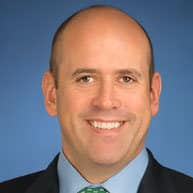
Harvey Schwartz, Goldman Sachs
But at least for now, there’s room for optimism, even if the reported numbers only beat weak year-ago comps, and strength is more in pockets rather than widespread across firms and asset classes.
Big banks are reaping the benefits from relentless cost-cutting over the past half decade. And more recently, the Greek debt situation played out in a best-case scenario for market participants, at least for now: plenty of turmoil and uncertainty brought in volatility, but then an apparent resolution resolved the crisis and averted lasting damage to market sentiment.
Goldman Sachs’ equities net revenue in the first six months of 2015 was the most for a first half in six years. “The environment has clearly been better, both from an activity level and also from a market-making perspective,” Goldman Chief Financial Officer Harvey Schwartz said on a conference call last week.
There are major challenges for banks as they endeavour to return trading to levels of five or ten years ago (which some observers would argue can’t be done, given the stricter regulatory climate).
Institutional fixed income markets remain liquidity-challenged. Chinese markets are teetering, and the Greece saga may not be over yet. And the U.S. Federal Reserve is expected to begin raising interest rates by the end of the year, putting an end to a long period of effectively free money.
Still, the market always has its issues, and bank executives are cautiously optimistic that the broader and more general trend for trading is a positive one.
“Healthy volatility is volatility in which client activity picks up and liquidity exists, clients feel confident,” Schwartz said. “Unhealthy volatility is the reverse of that, where clients get more conservative and they ‘de-risk’. And so as we go through these periods, the general trend…feels like volatility is picking up in a healthy way, but that doesn’t mean from time to time we’re not going to hit these kind of pockets.”
Featured

NEWSLETTER SIGN UP
And receive exclusive articles on securities markets

🏆 The 2026 Global Markets Choice Awards are here! 🌍 Nominations are officially OPEN for the celebration of excellence in global capital markets trading & technology. Nominate below:
https://www.jotform.com/form/260086385121150

Delaware Life Insurance Company is becoming the first insurance carrier to offer an index that contains cryptocurrency, adding the BlackRock U.S. Equity Bitcoin Balanced Risk 12% Index to its fixed index annuity (FIA) portfolio.
As the digital assets industry pushes toward
Franklin Templeton is expanding its tokenized fund suite, signaling growing institutional demand for blockchain-based fund infrastructure and regulated investment products moving onchain. Read the full article below:
$50 billion in active ETF inflows helped fuel a record year for @BlackRock 's iShares business, as investors continue to lean into active strategies.
Terry Flanagan
Managing Editor
Terry Flanagan is Managing Director at Markets Media Group, where he oversees the Markets Media, Traders Magazine, and GlobalTrading platforms....
More about this authorRelated articles
-

Money, assets and information are moving to always-on, data-rich and programmable digital networks.
-

By adding onshore capabilities, Citi can do more for clients in China’s domestic capital markets.
-

The move will consolidate Standard Chartered’s digital asset custody businesses.
-

Institutions want multi-chain optionality to move wholesale money across both web3 and tradfi ecosystems.
-

The use of stablecoins is attracting growing attention as a means of advancing payments through blockchain.