






09.16.2026
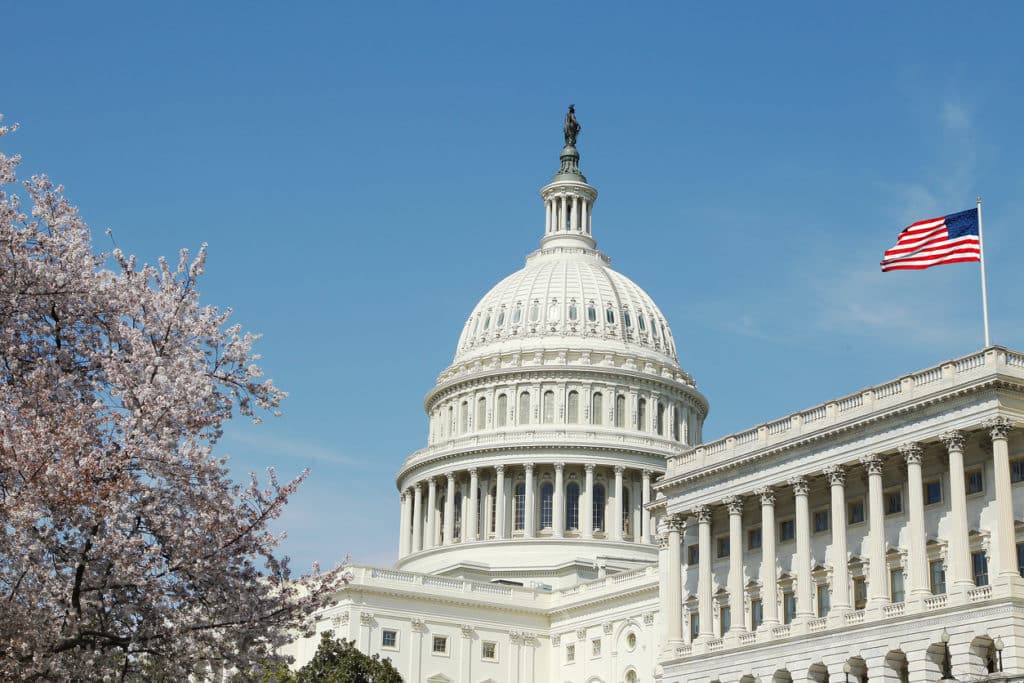
The U.S. Securities and Exchange Commission and Commodity and Futures Trading Commission are expected to use their existing powers to set rules for digital asset market structure after the U.S. Senate failed to vote through the CLARITY Act on 15 September 2026.
French Hill, chairman of the house committee on financial services and Glenn “GT” Thompson, chairman of the house committee on agriculture said in a statement: “Until statutory certainty is achieved, we look forward to partnering with the federal financial regulators as they utilize existing authorities to develop rules and issue guidance governing digital assets.”
today's CLARITY vote tally: 49-50. the graphic below details senators' votes on key items in the 119th congress, including today's vote on CLARITY
sen tillis preserved the ability for the bill to be re-introduced, and there is still a chance, though we don't know when
thanks to… pic.twitter.com/zJTvA4VmeN
— Alex Thorn (@intangiblecoins) September 15, 2026
Ryan VanGrack, vice chairman of crypto exchange and infrastructure provider Coinbase, said : “If Congress won’t deliver clarity through legislation, agencies can advance it through regulation. Either way, progress doesn’t stop.”
Crypto isn’t going anywhere – and neither is the push for clear rules of the road.
The SEC and CFTC are aligned on establishing a regulatory framework that protects consumers and fosters innovation.
If Congress won't deliver clarity through legislation, agencies can advance it… https://t.co/5TPztckAAA
— Ryan VanGrack (@RVanGrack) September 15, 2026
Michael Lie, global head of digital assets Flow Traders, said in an email to Markets Media that the prime broker’s belief in the shift toward 24/7 trading means that comprehensive regulation around digital assets is now only a matter of “when” and not “if”, and regulatory regimes in Asia and Europe, like MiCA, have already gone into effect with more milestones on the horizon.
Lie said: “We also look forward to learning more about the proposed innovation exemptions from the regulators following the recent proposals to update transfer agent rules along with other market structure changes on the horizon.”
While I’m disappointed by today’s Senate vote, it doesn’t change the fact that crypto’s fundamentals are stronger than ever.
Billions of dollars are moving onchain, leading payments companies and financial institutions are adopting blockchain technology, and entrepreneurs around…
— Chris Dixon (@cdixon) September 16, 2026
Chris Dixon, managing partner at venture capital firm a16zcrypto, said: “Billions of dollars are moving onchain, leading payments companies and financial institutions are adopting blockchain technology, and entrepreneurs around the world are building new financial products that bring money into the internet age.
Our work in DC is far from over. We’ll keep working for clear rules that protect consumers and let entrepreneurs build.”
Christopher Perkins, head of Franklin Crypto, said: “Its utility is undeniable and the market knows it.”
CLARITY failed for now.
But crypto moves forward.
There is no stopping it.
Federal preemption, enshrinement and clarity (no pun intended) would have been helpful.
But the truth is that crypto can thrive as regulators fill in the gaps with a principles-based approach.
Its…
— Christopher Perkins 🦅🌎⚓️NYC (@perkinscr97) September 16, 2026
Robert Leshner, chief executive of tokenization platform Superstate, said the Act not passing means lines between tokens and securities are still unclear.
The Clarity Act failing today makes everybody a loser, all because partisan jockeying beat out common sense:
The lines between tokens and securities are no more clear.
Entrepreneurs will still prefer to build and raise capital offshore.
Investors will receive no more…
— Robert Leshner (@rleshner) September 15, 2026
Leshner added: “Investors will receive no more information, or protections.
Developers have no additional safeguards for decentralized systems.
Banks are stuck with stablecoins able to pay rewards (yield).
There are zero ethical guardrails for government employees and crypto.
The list goes on.”
James Butterfill, head of research at digital asset fund manager CoinShares, said in a statement that the U.S. digital asset industry has suffered a blow following the failure to advance the CLARITY Act but described it as “incrementally negative rather than a major shock.”
Butterfill said. “That uncertainty will now persist for longer, potentially slowing investment and innovation in the U.S.”
He added that a procedural route back to another vote remains open, but that the tightening political calendar poses a significant challenge.
Michael Saylor, founder & chairman of bitcoin treasury firm Strategy, said:
With CLARITY stalled, I expect the SEC, CFTC, and Treasury to advance rules under existing law, banks to expand Bitcoin custody and loans against it, and more capital to favor Bitcoin and digital credit. GENIUS supports stablecoin adoption. Progress need not wait for Congress.
— Michael Saylor (@saylor) September 16, 2026
Paul Howard, senior director at crypto market maker Wincent, said in an email to Markets Media that the result was not a surprise as prediction market PolyMarket gave the Act just 20% chance of passing. He argued that a key takeaway is that the industry has validated itself from the fringes of finance to being debated on the floor of the U.S. Senate.
“The vote is not a setback of the technology or direction of travel but more how ethical provisions and banking incumbents are concerned on protecting their market,” added Howard. “The result reinforces the importance of dealing with established institutional counterparties with ethical practices and deep liquidity, a battleground where firms like Wincent, Coinbase, Galaxy and other household names lead everyday.”
James Thorne, chief market strategist at Canadian broker Wellington-Altus, said crypto is not waiting for Washington.
The Era of Democratic Delay in Crypto Is Ending
The collapse of the Clarity Act is a disappointment, but it should not surprise anyone who has watched Democrats’ long war on crypto.
For years, the Biden administration treated the industry not as a source of American innovation,… https://t.co/Dw1v8Ge7mC
— James E. Thorne (@DrJStrategy) September 15, 2026
Thone added: “SEC chairman Paul Atkins made the path forward clear last week. The agency, he said, is “ready, willing, and able” to produce rules addressing the same questions that Clarity was meant to resolve.
The CFTC is ready to go as well. Under Atkins, Treasury secretary Scott Bessent, Kevin Warsh, and a Trump administration broadly committed to innovation, Washington has the personnel and the institutional capacity to provide workable rules, preserve market integrity, and let legitimate firms build.
That is not a perfect substitute for law. Rules can be reversed by a future SEC chairman or CFTC leadership. Statutes are more durable.”
John Reed Stark, president of John Reed Stark Consulting, disagreed that the SEC could impose new digital asset regulation. He said: “Under a false flag of “fostering innovation,” Atkins is attempting to usurp Congressional authority to market a Ponzi scheme, deploying the deep state to decree what Congress has specifically declined to do.”
Breaking News: Stick A Fork In The CLARITY Act — It's Done. Expect a similar fate for the bogus SEC crypto rule that SEC Chairman Paul Atkins has proposed. Under a false flag of "fostering innovation," Atkins is attempting to usurp Congressional authority to market a Ponzi…
— John Reed Stark (@JohnReedStark) September 16, 2026
Reed Stark said: “And stay tuned for the next salvo when a surprise co-author and I file our blockbuster comment letter, which will make it clear that the Atkins Crypto-Deregulatory charade will fail five times over because it:
1. Exceeds the SEC’s exemptive authority under Securities Act Section 28 and Exchange Act Section 36, statutes now read de novo because Chevron is dead;
2. Rests on findings the record cannot support and the SEC’s own decade of litigated positions squarely contradicts;
3. Disregards the reliance interests that record created;
4. Cannot be sustained by any honest economic analysis; and
5. Arrogates to the SEC a decision of vast economic and political significance that belongs to Congress, which considered the CLARITY Act for over a year and declined to enact, precisely the regime the Atkins Proposal would decree.
The fifth argument is my favorite and perhaps the most obvious and compelling. Here’s why:
The CLARITY Act’s tortured journey is not, as Atkins will undoubtedly claim, irrelevant legislative noise. It is the single most probative fact in the case: living, docketed, roll-call-voted proof that the crypto market-structure question belongs to Congress. The rule is an attempt to disappear and moot the U.S. Senate.
And now the part that should make the Trump White House squirm: the deepest irony of this spectacle is that the SEC’s crypto end run is precisely the species of bureaucratic lawmaking this administration was elected condemning and has spent its tenure formally denouncing. This is the administration that celebrated Loper Bright as the emancipation of the citizenry from unelected bureaucrats.”

NEWSLETTER SIGN UP
And receive exclusive articles on securities markets

🏆 The 2026 Global Markets Choice Awards are here! 🌍 Nominations are officially OPEN for the celebration of excellence in global capital markets trading & technology. Nominate below:
https://www.jotform.com/form/260086385121150

Delaware Life Insurance Company is becoming the first insurance carrier to offer an index that contains cryptocurrency, adding the BlackRock U.S. Equity Bitcoin Balanced Risk 12% Index to its fixed index annuity (FIA) portfolio.
As the digital assets industry pushes toward
Franklin Templeton is expanding its tokenized fund suite, signaling growing institutional demand for blockchain-based fund infrastructure and regulated investment products moving onchain. Read the full article below:
$50 billion in active ETF inflows helped fuel a record year for @BlackRock 's iShares business, as investors continue to lean into active strategies.
Shanny Basar
Senior writer
A Senior Writer at Markets Media who became a financial journalist in 2000 after working in banking for over a decade....
More about this authorRelated articles
-

Digital assets are new rails that can coexist with existing market infrastructures.
-

Federal regulators will use existing authorities to develop rules governing digital assets.
-

The EU approval positions Archax to serve growing institutional demand for tokenised RWAs.
-

Financial institutions are funding the provider of data services for 24/7 onchain finance.
-

Catherine Clay has been CEO of S&P Dow Jones Indices since last November.