






06.26.2026

On Saturday mornings in 2025 and January 2026 a working group completed a series of live repo trades across the Canton network, Digital Assets’ blockchain for financial institutions with built-in privacy controls, using tokenized U.S. Treasuries and stablecoins to provide instant liquidity outside normal banking hours. The trades were successful and widespread adoption beyond the working group is likely to be accelerated by the launch of DTCC’s tokenization project.
For the first time, intraday repos were conducted cross-border using multiple currencies and multiple asset classes, including European Government Bonds, U.S. Treasuries, Euro cash, and US Dollar cash in January this year. Consultancy The ValueExchange hosted a webinar, Tokenized collateral goes global, on 18 June 2026 to discuss these transactions with members of the working group.
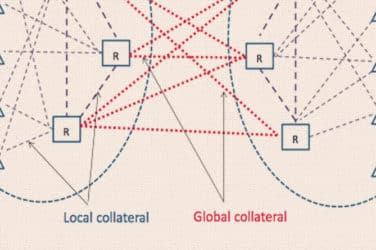
The ValueExchange has calculated that the current manual processes in collateral management means that an average financial institution loses $340m a year in interest. Approximately 25% of collateral is also being posted across an average of 65 different locations around the world, and being pre-funded, which increases costs.
The repos in January this year used tokenized deposits at London Stock Exchange Group’s Digital Settlement House (LSEG DiSH) instead of stablecoins to create a true onchain cash option. Bud Novin, head of payment systems, post trade solutions, London Stock Exchange Group, said on the webinar that LSEG DiSH was developed to provide the true onchain equivalent of cash in traditional finance.

Bud Novin, LSEG
Novin highlighted that stablecoins are a basket of underlying Treasuries and cannot be used to meet margin requirements at a clearinghouse call or for contractual cashflows. Tokenized commercial bank deposits can only be used between a bank and its customers, and are not interoperable between banks.
LSEG keeps cash at each of the top commercial banks, which it can tokenize and deliver to market participants to use as collateral, which is an easy way to finance intra-day transactions.
“We essentially provide a token for commercial bank money on-exchange that anybody can pay and receive as long as they sign up to the rule book,” added Novin. “They don’t need to have an account at the banks.”
Collateral mobility
Chris Zuehike, partner at market maker DRW and global head of Cumberland, DRW’s crypto trading operation, said on the webinar that the firm has been involved in blockchain since 2014 as it was clear that this would be a powerful technology for the movement of value.
“The inability to move collateral in near real time 24/7 represents a headwind to risk management in the industry,” Zuehike added. “Financing of trading is limited to the pace at which traditional capital markets rails work, which forces inefficient decisions.”
In order to improve infrastructure a blockchain needs privacy, composability and auditability, which Canton provides according to Zuehike. The right service providers, including traditional prime brokers, also have to use a blockchain and he said that all came together about a year ago.

Chris Zuehlke, DRW
“We were faced with the opportunity to change the way this fundamentally works,” added Zuehike. “Last year was the chance to prove it.”
He continued that the ability to finance trading in a more efficient manner, such as having the ability to sit in yield-bearing assets up until the moment of the trade, is the “next efficient frontier.”
Zuehike added: “That’s a fascinating capability for a trading organization, Thinking about risk 24 /7 and the balance sheet deployment to facilitate these transactions is leaping to the next efficient frontier, so all our traders and treasury teams are starting to think in that context.”
Joel Stainton, head of EMEA futures & options and OTC clearing at Bank of America, agreed on the webinar that the technology to speed up collateral movement has existed for some time but regulation had to allow this acceleration without increasing risk. In the event of any default, the counterparty needs to able to seize the necessary collateral and liquidate it, so they need 100% operational control over the collateral at all times.
“We now have a way of speeding up collateral mobility without losing operational control, and that is the key,” added Stainton. “We did these first trades remarkably smoothly on a weekend with a very good turnaround time which proved that it really works.”
Dan Eckstein, fixed income distribution and strategy at market maker Virtu, continued on the webinar that there had been a “lot of fanfare” internally about what had been accomplished on those Saturdays. Eckstein sat down with different parts of the firm and said he had some of the most engaging conversations with the treasury and operations departments. He said: “They can see this technology being really useful around intraday margin calls.”
DTCC
Joseph Spiro, digital assets product director at the Depository Trust & Clearing Corporation (DTCC), continued on the webinar that tokenization is a focus for the U.S. post-trade market infrastructure.
“Tokenizing assets and providing infrastructure to use blockchain for collateral and many other use cases is the next phase in our industry,” said Spiro. “DTCC is focused on providing the same safety, stability, investor protections, compliance and controls that the market has grown accustomed to in the last 50 years.”

Joseph Spiro, DTCC
Spiro continued that market participants believe that tokenising assets loses the deep liquidity that exists in traditional financial market.
“The ability to quickly and easily transform back and fort, from digital to traditional and back again, is what really unlocks everything,” added Spiro.
Therefore, one of core tenets of DTCC’s tokenization service is provide that interoperability between the old and new worlds. Users can tokenize an asset their DTCC participant account, put it on a blockchain chain of heir choice, and then return it back to its traditional form
“Collateral is the best first use case,” added Spiro. “By creating interoperability between blockchains, between the old world and the new, we can all get there together in a ‘crawl, walk, run’ as opposed to a big bang that hat would scare most people,”
Elisabeth Kirby, head of market structure at Tradeweb, agreed on the webinar that the ability to have traditional assets trading alongside onchain assets will be critically important. She added: “We’re not just going to flip a switch and find that everything will be tokenized.”
Instead, this will be an evolutionary process, in which some asset classes and trade types are tokenized more quickly than others, and the marker will want to preserve liquidity and market function.
Kirby said the repo trades have worked really well, thanks to a lot of hard work by a number of different participants.

Liz Kirby, Tradeweb
“DTCC’s pilot program is going to be transformational for adoption,” she added. “I think we’re poised to see meaningful growth and a pretty serious inflection point.”
Eckstein continued that the DTCC launch is going to be “received very, very well” by the marketplace and he expects interest from a lot of counterparties outside the working group. He would like to see growth of different liquidity providers for different types of trades, including prime brokers.
He also expects additional use cases. For example, stablecoin issuers or tokenized money market fund issuers have expressed interest in holding the underlying collateral in a tokenized form.
“That may be a really good opportunity for a market maker ni traditional markets like Virtu to leverage Tradeweb to make markets in tokenized versions of U.S. treasuries,” he added. “I think that could be an interesting way to reach new customers and create new types of trades that have not existed before.”
Some market participants have asked whether tokenization could create new on- and off-chain frictions but Spiro argued that tokenization helps to ease frictions. For example, onchain collateral enables 24/7 instantaneous delivery-versus- payment settlement and transparency on a blockchain, which makes reconciliations irrelevant.
Spiro said DTCC is rolling out its tokenization service this year. In July this year DTCC will demonstrate use cases in a production environment.
“In October the service will be open for business,” said Spiro. “This is all for real world production use cases, not tests, not experiments and all very much in the present tense.”
Stainton said 2026 will predominantly remain the year of the test trade and 2027 will be the year of minimum viable products. He added that the DTCC’s October launch is a key part of that process, alongside absolute regulatory clarity.
“The path to adoption for traditional finance is definitely there,” said Stainton.

NEWSLETTER SIGN UP
And receive exclusive articles on securities markets

🏆 The 2026 Global Markets Choice Awards are here! 🌍 Nominations are officially OPEN for the celebration of excellence in global capital markets trading & technology. Nominate below:
https://www.jotform.com/form/260086385121150

Delaware Life Insurance Company is becoming the first insurance carrier to offer an index that contains cryptocurrency, adding the BlackRock U.S. Equity Bitcoin Balanced Risk 12% Index to its fixed index annuity (FIA) portfolio.
As the digital assets industry pushes toward
Franklin Templeton is expanding its tokenized fund suite, signaling growing institutional demand for blockchain-based fund infrastructure and regulated investment products moving onchain. Read the full article below:
$50 billion in active ETF inflows helped fuel a record year for @BlackRock 's iShares business, as investors continue to lean into active strategies.
Shanny Basar
Senior writer
A Senior Writer at Markets Media who became a financial journalist in 2000 after working in banking for over a decade....
More about this authorRelated articles
-

The exchange can use Chainlink Data Streams to enable features like onchain lending, collateral.
-

The regulator is reviewing if tokenised collateral could be used safely by EU CCPs.
-
DLT could provide solutions capable of addressing longstanding inefficiencies in collateral management.
-
Legal and regulatory certainty is needed for adoption to scale.
-

This is the first cross-chain repo flow separating the venue from the networks where cash & collateral settle.